Distinguishing Between Metal Coupe Sunroofs and Targa Overhead Glass
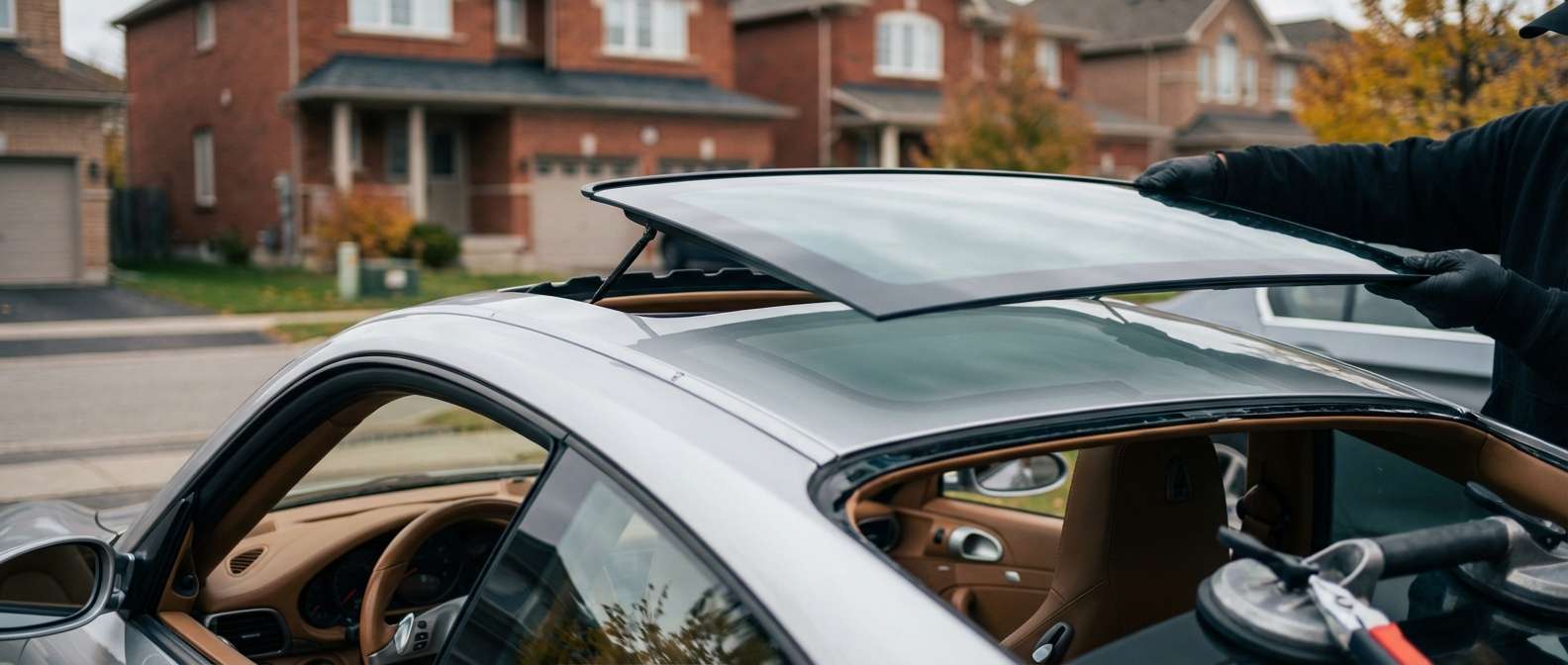
If you call asking for a replacement piece of sunroof glass for a standard Carrera Coupe, Carrera S, or GT3, there is a distinct structural reality to consider: the factory coupe sunroof panel is stamped, painted sheet metal rather than a glass pane. Porsche engineered the coupe's tilt-and-slide system with a steel panel sealed by a perimeter felt-and-rubber gasket (part number 996-564-231-02) that seats directly into the roof stamping. Glass replacement over the cabin only applies to the Targa 4 and Targa 4S models, which use a full panoramic sliding roof assembly manufactured from heavily tinted, dark anti-reflective laminated safety glass.
The Targa's sliding pane (OEM part number 997-562-329-01, which replaced 997-562-329-00) sits flanked by two full-length polished aluminum roof arches. Unlike traditional sunroofs that retract into a hidden pocket between the headliner and the outer roof skin, this expansive pane drops downward and glides externally beneath the separate lifting rear glass hatch. When assessing leaks or damage across Toronto and the GTA, I travel directly to your home or office to inspect the glass and mechanical hardware on site.
Structural and Mechanical Variations Across the Roof System
Because the Targa architecture carries roughly 130 extra pounds mounted at the highest point of the body compared to a fixed-roof car, the framework relies on tight tolerances to prevent binding. An electric roller blind operates on internal tracks beneath the front laminated glass to manage cabin heat, functioning independently of the panel's rearward travel.
| Roof Component | Carrera Coupe Sunroof | Targa 4 / Targa 4S System |
|---|---|---|
| Outer Panel Material | Painted sheet steel | Laminated solar-control glass |
| Retraction Method | Slides internally into ceiling cavity | Drops and slides under rear hatch glass |
| Primary Part Reference | 996-564-231-02 (Perimeter Seal) | 997-562-329-01 (Movable Glass Pane) |
| Interior Sun Protection | Manual sliding solid panel | Powered deployable fabric roller blind |
Mechanical Snags, Microswitches, and Water Leaks
Movement failures on the Targa usually trace back to alignment sensors rather than fractured glass. The sliding front roof panel relies on microswitches tied directly into the rear hatch latching mechanism; if the rear glass hatch is improperly latched or its sensor misreads, the module cuts power to the front roof drive cables to prevent the panels from colliding. When drive cables stretch or strip their plastic drive gears, the roof often jams diagonally in the tracks. If the assembly freezes completely, a manual hex-drive override screw sits tucked behind the overhead console switch panel in the interior headliner.
Water intrusion is another common problem shared by both the coupe's metal cassette and the Targa glass tracks. Four corner drain lines run through the A-pillars and C-pillars to discharge runoff. When debris blocks these pathways, water backs up and spills down into the rear footwells or stains the pillar upholstery. In many cases, addressing creaks and popping sounds along the polished aluminum arches requires cleaning the contact channels and treating the heavy rubber weatherstripping with dedicated Krytox fluorinated lubricants to counter natural body flex.