C-Pillar Vent Glass Construction on the B17 Sentra
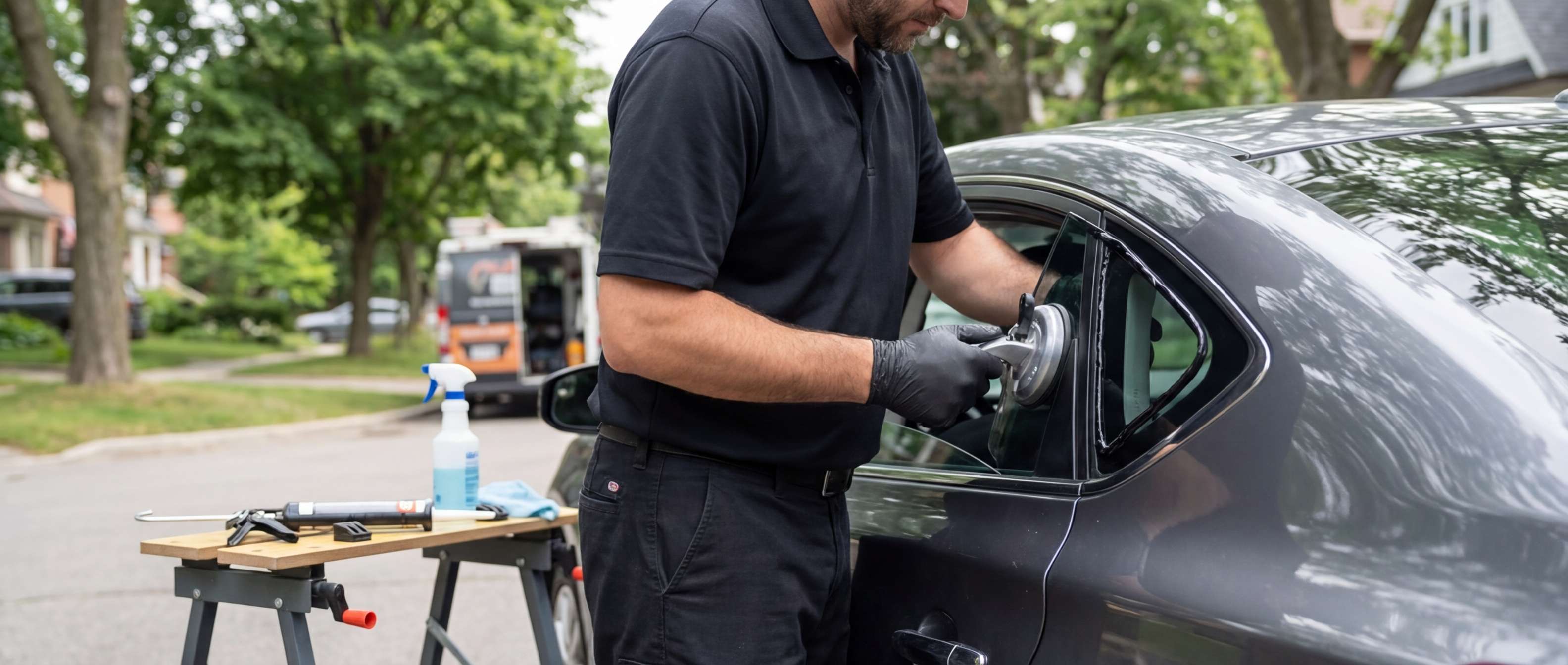
Unlike many compact sedans that house a small partition window inside the rear door frame, the fixed side window on this vehicle sits completely outside the door assembly. It is anchored directly to the vehicle body stampings between the rear door shut-face and the trunk pillar. Because it is a bonded stationary quarter glass rather than an operational door vent, there are no internal run channels, division bars, or window regulator brackets involved.
The unit itself is pressed from single-pane tempered safety glass tinted in factory green solar-control. It contains no defroster grids, embedded radio antennas, or wiring pigtails. What makes it mechanically unique is the outer perimeter: the glass comes formed inside an integrated polyurethane encapsulation frame that carries the exterior bright chrome moulding. This pre-assembled chrome trim locks tightly against the outer quarter panel contour and meets the trailing edge of the rear door window weatherstrip.
Interchange and Factory Part Cross-References
Nissan kept the side aperture sheet metal identical across the entire production span of the B17 platform. Whether replacing broken glass on a base S trim, an SV, an FE+ S, a luxury-oriented SL, or the turbocharged SR Turbo and NISMO variants, the glass geometry never changed. The replacement glass mounts cleanly into the body opening using the exact outer perimeter dimensions established in 2013.
| Position | Nissan Reference | Glass Composition | Integrated Exterior Trim |
|---|---|---|---|
| Passenger Side (RH) | 83300-3SG0A | Tempered Solar Green | Encapsulated Chrome Reveal |
| Driver Side (LH) | 83301-3SG0A | Tempered Solar Green | Encapsulated Chrome Reveal |
Because the factory exterior chrome moulding is bonded directly to the glass substrate during manufacturing, trying to salvage the metallic trim from a shattered unit is impossible. When an impact shatters the tempered panel, the chrome strip twists or kinks, requiring a complete assembly swap. When I replace this window, my workmanship is backed for as long as you own the car, alongside a one-year warranty on the replacement glass itself.
Interior Surroundings and Exterior Fit
Achieving a flush, quiet seal on this stationary window requires careful positioning relative to the interior and exterior trim boundaries. On the inside of the cabin, the glass perimeter is framed directly by two main cabin panels:
- The C-Pillar Interior Trim: This molded plastic trim overlaps the forward structural flange of the window pinchweld and must align without rubbing the inner glass border.
- The Rear Parcel Shelf: The lower bottom border of the quarter glass sits right along the outer edges of the rear deck trim cover, requiring clean interior clearances to prevent cabin rattles.
- Door Gap Clearance: On the outside, the leading edge of the assembly forms the secondary seal gap against the rear door frame, meaning the glass depth must sit perfectly level with the door's chrome beltline.
Setting the assembly too deep creates a step that disrupts airflow over the rear roof pillar, while setting it too high causes the encapsulated chrome border to catch the wind past the rear door trailing edge. Proper alignment against the quarter panel aperture guarantees the glass sits flush with the original factory lines.





