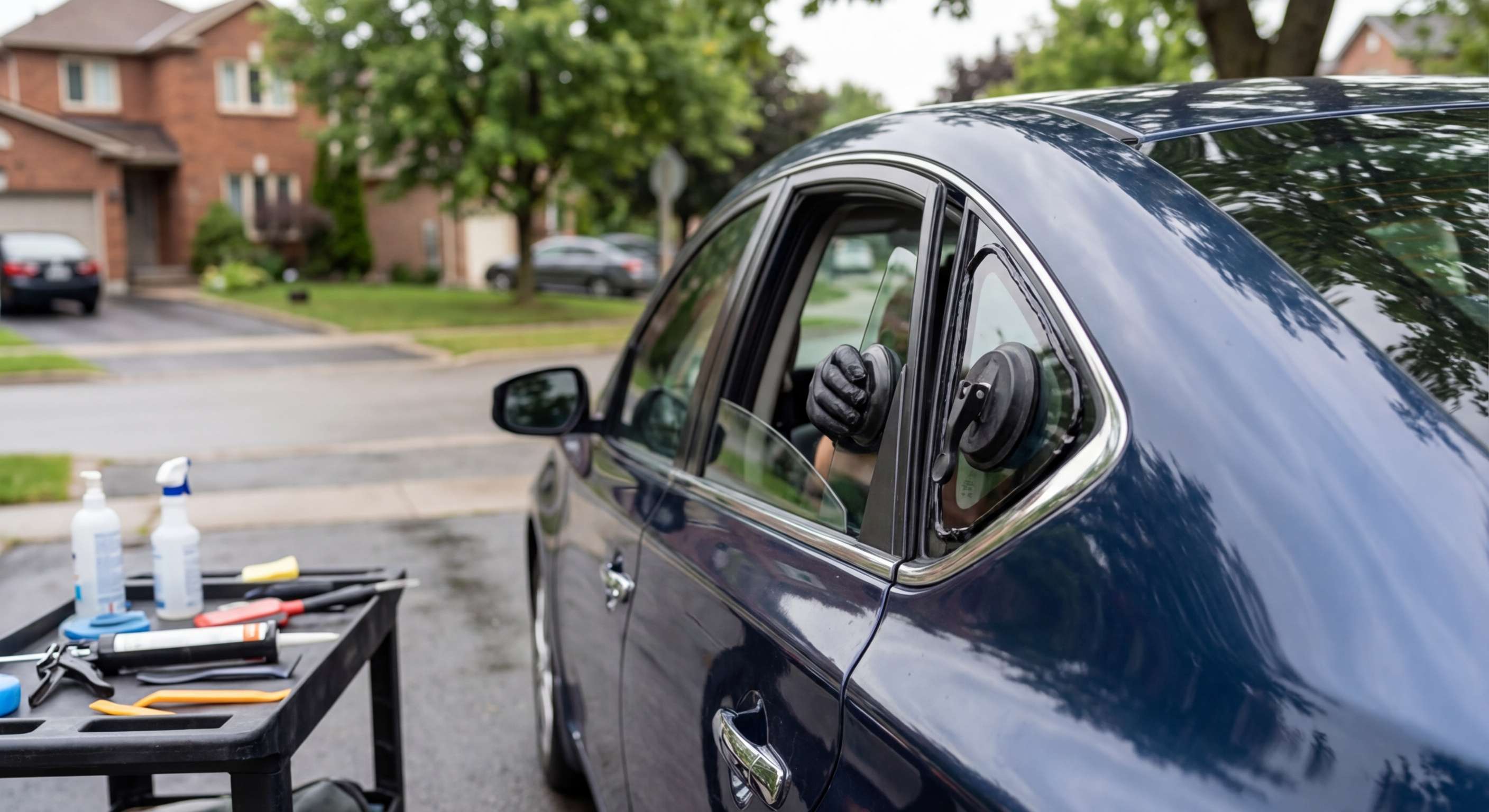
Checking the Beltline Chrome and Encapsulated Moulding
Before any replacement window touches the car, the integrated exterior surround needs a close look. On this vehicle, Nissan used an encapsulated single-pane tempered unit where the rubber moulding and the lower chrome accent strip are permanently bonded to the glass at the factory. Whether the vehicle is a base S, an FE+ S, SV, SR, SL, or the turbocharged NISMO trim, the bottom edge of the glass carries a dedicated bright chrome moulding that must match the vehicle's horizontal door beltline trim. Because this chrome piece is not sold separately from the dealer under part numbers 83301-3SG0A for the driver side or 83300-3SG0A for the passenger side, any distortion, ripple, or detachment in the pre-assembled moulding means the entire unit cannot be used.
I verify that the green solar-control tint matches the original factory shading across the rest of the cabin glass. Thieves often smash this small rear stationary window thinking it avoids cabin alarms or proves cheaper to fix than roll-down front door glass, leaving shattered tempered safety fragments throughout the rear seat and quarter garnish area. I exclusively source aftermarket glass from manufacturers like Pilkington, PGW, FYG, and XYG, so I inspect the edge profile of parts like NAGS FQ25767GT to confirm the factory encapsulation cleanly mirrors the original Nissan design without irregular plastic flashing or pinched corners along the lower brightwork.
Aligning the Fixed Glass Against the C-Pillar Body Lines
Unlike the glass inside the rear doors that moves on mechanical regulators, this quarter window sits completely stationary behind the rear door frame directly on the unibody pinchweld. Before setting the replacement, the adjacent C-pillar sail panel, the edge of the rear roof drip moulding, and the rear quarter fender panel must be clear of glass shards and debris. The interior C-pillar trim panels and lower garnish panels also sit right against the inner glass perimeter, so checking clearances before the adhesive sets is essential to avoid trim interference during interior reassembly.
Once set into position, the primary check is the visual line along the vehicle's flank. The bottom chrome strip on the quarter assembly must create an unbroken, level sightline with the chrome weatherstrip running along the top of the rear passenger door. If the window sits even two millimeters too high or low, that bright chrome strip immediately looks crooked against the door sheet metal. The exterior gap between the encapsulated perimeter moulding and the painted C-pillar must be uniform from the top apex down to the rear fender corner, ensuring the exterior rubber lip seals evenly against road wash and wind noise without puckering.





