Identifying the Altima Sunroof Configuration Across Trim Levels
Determining which roof setup your Altima carries starts by identifying your trim badge, because the base S model never left the factory with a cut roof or glass track. Nissan offered the power tilt-and-slide electric moonroof as an optional equipment package on the mid-tier SV and sport-oriented SR trims, while building it directly into higher trims including the SL, Platinum, and the limited Edition ONE. The panel itself is a single-piece unit built from dark-tinted tempered safety glass that mounts inside an encapsulated perimeter frame, leaving no exterior sheet-metal gaps when closed.
You can quickly confirm whether you are working with the correct roof glass by inspecting the surrounding hardware rather than hunting for electronic sensors embedded in the panel. Unlike the front windshield, this roof glass carries no integrated rain sensors, defroster wires, or forward-facing camera brackets. Directly beneath the tinted surface, the vehicle uses a manually operated sliding sunshade under base part number 91250-6CA1A with its dedicated grab handle 91275-6CA1A. At the front leading edge, a mechanical wind deflector pop-up mechanism rises automatically along the 91282 track guides as the electric drive motor retracts the glass rearward.
Factory Component Numbers and Frame Hardware
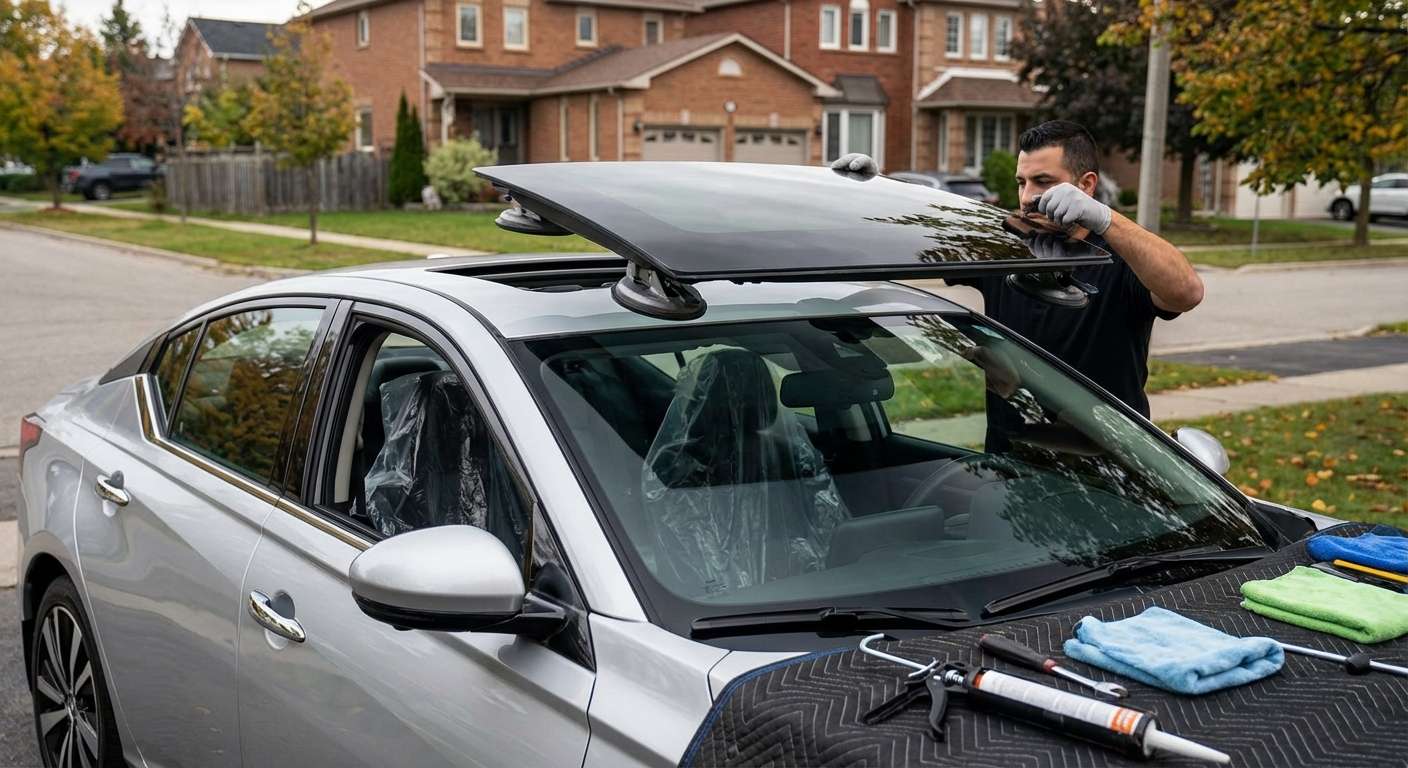
The sixth-generation Altima uses the factory reference number 91210-6CA1A for the complete glass lid assembly, paired with the perimeter weatherstrip seal 91246-6CA1A. Because aftermarket catalogs do not consistently track this specific lid under a standardized NAGS code, identifying the original factory stamping on the glass bug confirms the fit. The replacement panel comes pre-bonded to its perimeter encapsulation frame, which ties into the vehicle structure through side mount brackets stamped 76892-9HE1B on the left and 76893-9HE1B on the right.
When I fit an aftermarket replacement panel to your car, I cover the glass against material defects for one year and back my workmanship for the lifetime of the vehicle. Securing the side brackets properly to the internal sliding guide tracks is critical to preventing high-speed buffeting. Four corner drain spouts channel water down through hoses tucked inside the A-pillars and C-pillars, and ensuring these remain entirely unobstructed prevents water from spilling over the internal cassette into the headliner.
Correcting Alignment Gaps and Cab Wind Noise
A damaged or shattered panel on this car can often be serviced without lowering the entire interior headliner, provided the side guide mechanisms and electric drive cables remain straight. The glass lid fastens directly to the side track runners using four Torx adjustment screws hidden behind flexible plastic rail side finisher covers. Removing these covers exposes the Torx fasteners, allowing me to release the broken or misaligned assembly cleanly.
Those same four Torx mounting points allow for mechanical height and flushness adjustments against the surrounding steel roofline. If the glass sits a millimeter too low at the front leading edge, air catches the weatherstrip lip at highway speeds, causing persistent whistle. If it rests too high at the trailing edge, runoff can bypass the primary perimeter seal faster than the corner drain tubes can evacuate it. Setting the replacement glass flush with the roof skin restores the airtight seal against the factory weatherstrip profile.