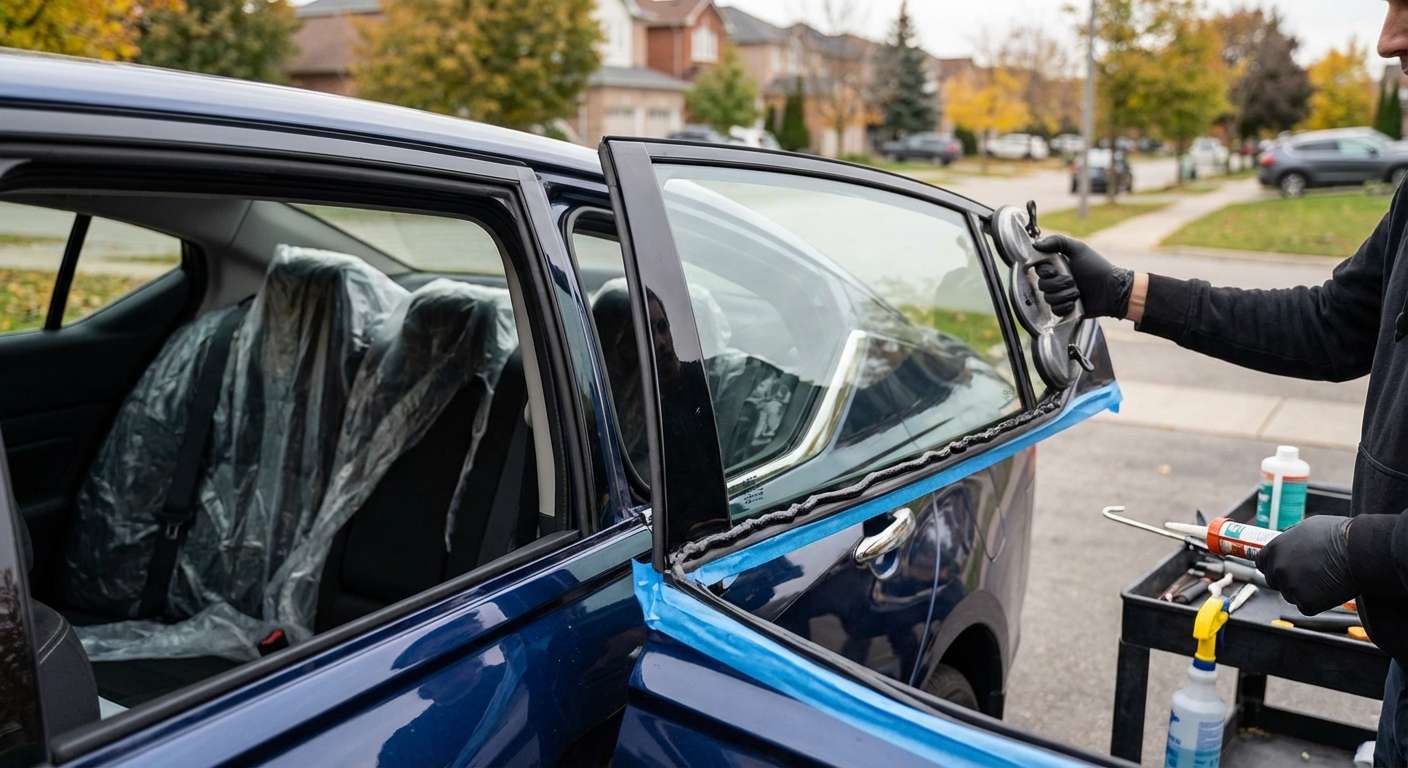
Identifying the Altima Rear Door Vent Glass Setup
When looking at the small triangular rear side window, many drivers assume it is bonded straight to the metal bodywork alongside the gloss-black "floating roof" C-pillar applique. On this car, that panel is actually a framed door vent window that swings open with the passenger door rather than resting permanently glued to the car body. Regardless of whether you drive an entry-level S, an SV, an SR, an SL, or the top Platinum trim, Nissan did not change the glass configuration between model grades. Every variant uses the exact same single-layer tempered safety glass built with standard factory solar-green tint, meaning you never have to guess whether your car came equipped with dark privacy glass from the factory.
You also do not need to worry about integrated electronic components when replacing this panel. The glass surface contains no embedded radio antennas, defroster grid wires, or sensor brackets. It consists strictly of the transparent green-tinted tempered piece wrapped in an encapsulated black rubber moulding that fits directly inside the door sash channel. The primary difference you need to communicate when requesting service is purely which side of the vehicle was damaged.
| Glass Position | NAGS Reference | Glass Composition | Factory Solar Tint |
|---|---|---|---|
| Driver Side (Left Rear Door) | FV27500 / FV27500 GTY | Tempered Safety Glass | Solar Green (Standard) |
| Passenger Side (Right Rear Door) | FV27501 | Tempered Safety Glass | Solar Green (Standard) |
Mechanical Architecture Inside the Rear Door Sash
Because the L34 platform utilizes a full-frame door shell, the stationary rear glass sits locked against a vertical metal division bar. This vertical run channel separates the fixed vent glass from the main roll-down drop glass. When thieves smash this small panel—often targeting it under the mistaken belief it will bypass the vehicle alarm—the entire encapsulated perimeter usually remains lodged within the frame channels while the tempered center crumbles into safety pebbles.
Whenever a broken window leaves your back seat exposed to the elements, I can usually be at your vehicle about an hour after you finish booking to get the replacement underway. Accessing the structural mounts requires working past the interior door panel, peeling the vapor barrier back, and releasing the lower division bar retaining bolt inside the door cavity. The main roll-down door glass often has to be lowered within its tracks so the division bar can angle back, freeing the encapsulated rubber seal of part FV27500 without damaging the surrounding exterior beltline weatherstrip.
Preventing Post-Repair Wind Whistle and Leaks
The trickiest part of servicing this specific vent window design is aligning the division bar run channel during reassembly. Because the fixed vent glass assembly relies on the tension of its encapsulated seal pressed tight inside the upper sash and against the division bar, any slight tilt will create a persistent highway whistle or allow rainwater to slip past the inner moisture barrier. The division channel must seat dead parallel to the roll-down glass path so the main window continues gliding up and down freely while the fixed glass remains completely sealed against the exterior black window moulding.





