Identifying the Correct Rear Door Vent Glass on Your S-Class
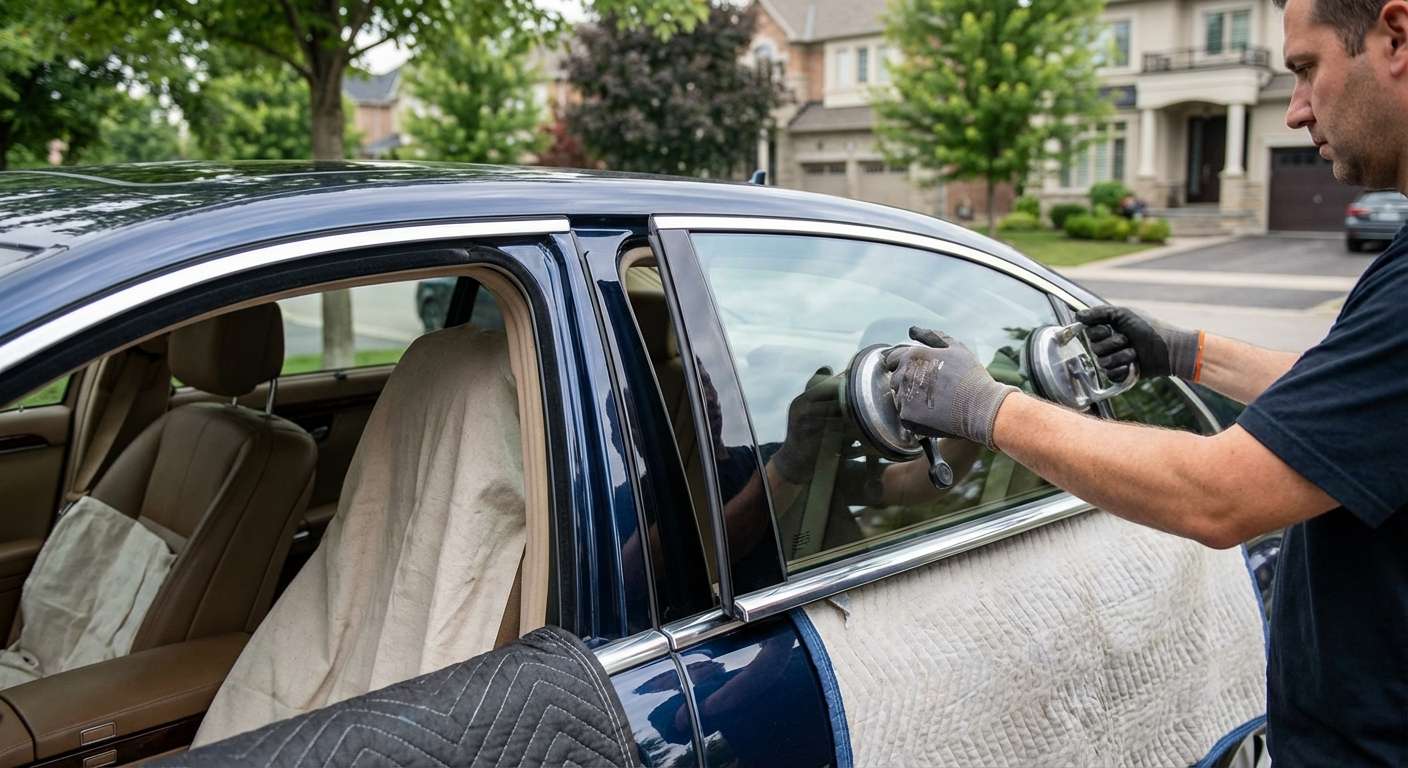
Determining which rear door vent glass sits in your door frame comes down to checking whether your car has standard green heat-absorbing glass or the double-glazed, infrared-reflective laminated safety glass. On this car, the stationary quarter glass is mounted directly into the rear passenger door frame rather than bonded to the rear pillar sheet metal. If you look closely at the glass stamp in the corner, vehicles equipped with factory Option Code 595 feature a specialized acoustic PVB interlayer sandwiched between two plies of glass. This construction reflects infrared heat, giving the pane a distinct blue, violet, or bronze sheen under direct sunlight, whereas standard Solargreen panes show a uniform green tint without the dual-pane thickness.
You can also identify the glass by checking for edge characteristics and how the glass handles impacts. The laminated double-glazed panels show a visible seam along the outer perimeter where the two glass layers meet the internal plastic layer. Over years of weather exposure, older acoustic units can develop milky, cloudy discoloration along those edges as moisture slowly affects the seal. When damaged by road debris or vandalism, these acoustic panes crack in a spiderweb pattern and remain held together by the interlayer, unlike single-ply tempered glass which crumbles entirely.
| Glass Feature | Standard Solargreen | Option Code 595 (Acoustic / IR) |
|---|---|---|
| Glass Structure | Single-layer tempered | Dual-layer laminated with acoustic PVB |
| Visual Hue | Even green tint | Subtle blue, violet, or bronze reflection |
| Edge Profile | Solid single edge | Dual plies with visible interlayer seam |
| Failure Mode | Shatters into small pebbles | Cracks but stays intact in the frame |
Structural Components Surrounding the Fixed Door Glass
The stationary rear glass rests directly behind the vertical division bar channel that guides the main roll-down window. Polished aluminum or chrome mouldings trace the upper door frame and the lower beltline right against the outer base of this pane. The glass itself seals inside a molded rubber encapsulation channel pressing firmly into the steel door frame, completely isolated from electrical components. There are no defroster lines, light sensors, or radio antennas embedded here; the radio and cellular antennas reside in the rear windshield, front bumper, and the roof-mounted shark fin.
Matching the exact color code and thickness is critical because installing a standard green pane next to an Option Code 595 roll-down window creates an obvious color clash along the chrome division bar. Dealer references list part number A2217300120 for the left-side stationary glass, and aftermarket replacements must match those exact dimensional and acoustic profiles. Every replacement pane I supply includes a one-year warranty against manufacturing defects, paired with lifetime coverage on my own workmanship to ensure your rubber seals stay completely water-tight and rattle-free.
Interior Panel and Division Bar Clearances
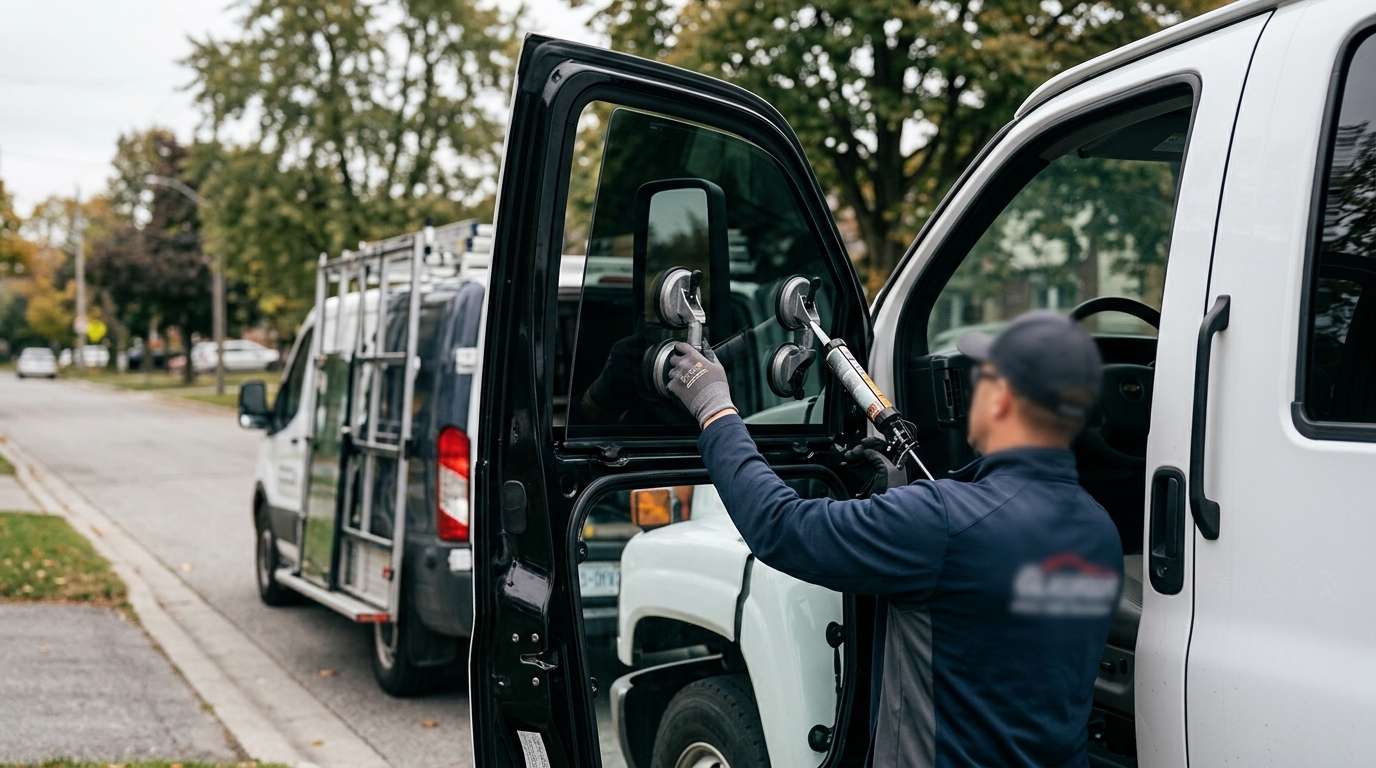
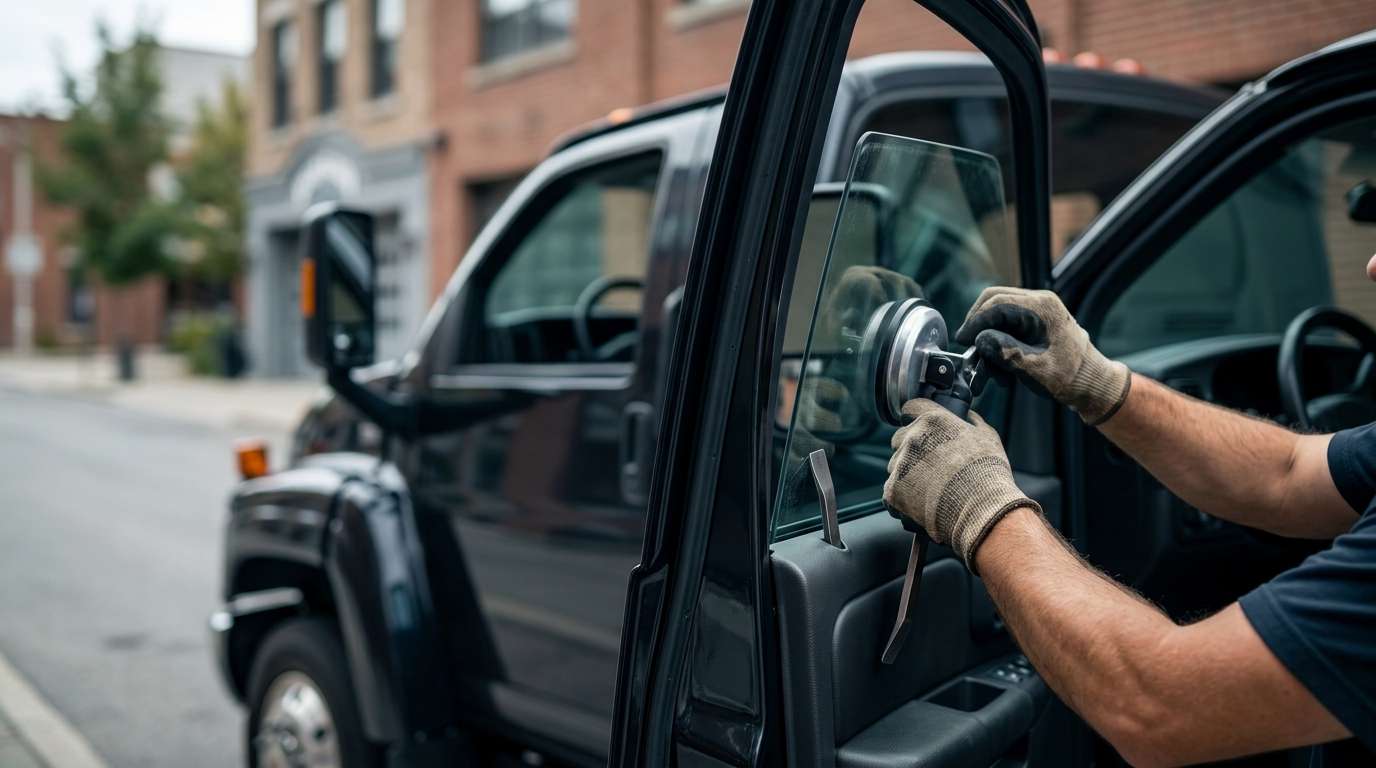
Because the fixed quarter glass is seated inside the door assembly rather than glued to the exterior body, servicing it involves accessing the mechanical framework behind the interior door card. The lower edge of the glass sits locked adjacent to the vertical run channel, secured by the lower guide track fasteners hidden beneath the moisture barrier. The interior leather panel, inner weatherstripping wipes, and the vertical division bar retaining hardware must be carefully released from inside the door cavity so the glass can slide out of its upper channel without scratching the polished exterior window trim.