Identifying Your Jaguar E-Pace Windshield Configuration
Ordering the correct replacement windshield for your E-Pace comes down to decoding the specific hardware package mounted behind your rearview mirror and embedded inside the glass laminate. While all models share acoustic noise-dampening glass, a solar-attenuating tint, and a lower-corner VIN window, the internal options differ widely across trims. Factory-installed glass spans multiple OEM references such as J9C17774, J9C37264, and J9C2999, which correspond to aftermarket NAGS reference series like FW04944 and FW05118.
You can identify which windshield variant is sitting in your vehicle by checking for three functional elements:
- Electrically Heated Defroster Grid: Look closely at the glass under direct light. If your climate control panel features a dedicated front windshield defroster button, you will see microscopic, vertical zig-zag heating wires running throughout the entire vision area. Installing a standard non-heated glass breaks this circuit and leaves dash fault codes.
- Head-Up Display (HUD) Wedge PVB: Check your dashboard top roll directly in front of the steering wheel. If there is a recessed projector unit beaming speed and navigation onto the glass, your vehicle requires HUD-rated glass. This variant contains an angled polyvinyl butyral wedge layer. If non-HUD glass is installed, the projected display produces an unreadable double image or ghosting halo.
- Sensor and Camera Arrays: Examine the exterior area around the rearview mirror bracket. Depending on whether your vehicle runs basic Autonomous Emergency Braking or full Lane Keep Assist, the trapezoidal bracket houses one forward-facing optical lens alongside round optical gel ports for the automatic rain and ambient light sensors, plus a separate cabin humidity sensor.
The Lower Corner Silhouette and Trim Hardware
A distinctive factory detail on the E-Pace is the black ceramic frit border. In the bottom driver-side corner, the original factory glass features a printed graphic silhouette showing an adult jaguar followed by a trailing cub. Most aftermarket replacement options omit this decorative Easter egg to bypass proprietary trademark designs, though the structural dimensions, solar rating, and acoustic properties remain identical.
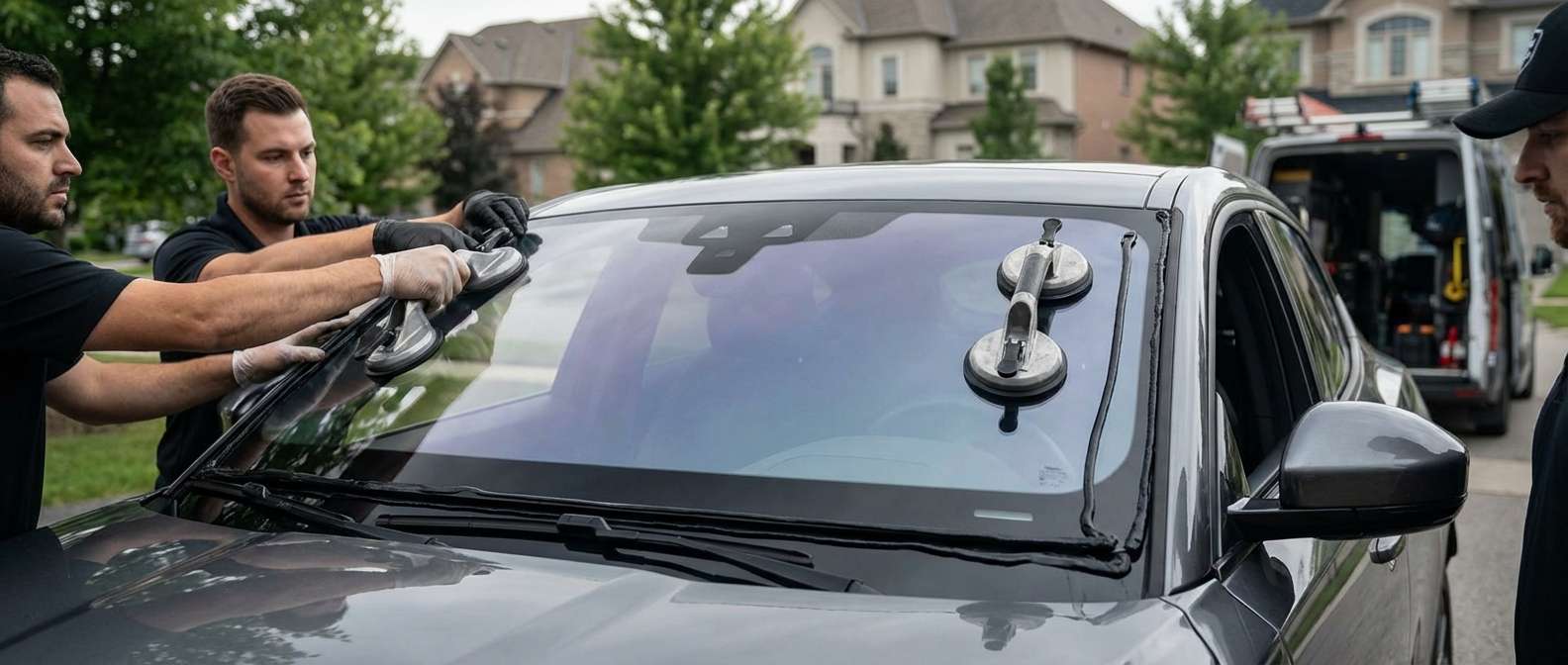
I can usually be on-site to handle your replacement within about sixty minutes of your call, bringing the exact hardware tailored to your Jaguar's build sheet. The glass seals flush against the PTA platform's steel and aluminum pinchweld, encased at the sides by A-pillar trim mouldings with internal retaining clips. The bottom edge mates to a two-piece plastic cowl grille that routes the washer fluid plumbing down to the wiper pivots, requiring clean seating during reassembly to keep road spray out of the cabin intake.
Post-Installation Inspection Checklist
Once the replacement glass is installed on your E-Pace, run through this vehicle-specific checklist before driving:
- Inspect the automatic rain sensor lens through the glass from outside to ensure the clear silicone pad is completely free of trapped air bubbles, which cause hyperactive wiper sweeps on dry days.
- Verify that the two-piece plastic cowl tray under the wiper arms clips firmly against the lower ceramic frit without bowing, ensuring water drains away from the cabin air filter intake.
- Check that both exterior A-pillar trim mouldings sit completely flush with the roofline and front fenders without loose edge clips.
- If your vehicle has the HUD, test the digital projection against a dark background to verify clean lines without ghosting or vertical displacement.
- If equipped with a heated windshield, engage the front defroster switch to ensure even warmth across both the driver and passenger heating zones without dead vertical strips.
- Confirm the interior rearview mirror cover and the upper camera shroud snap tightly into the headliner without rattling over road bumps.





