Identifying Acoustic Laminate or Tempered Glass on E-Pace Front Doors
To tell which front door glass your vehicle uses, roll down the driver side window slightly and look straight down at the exposed top edge of the pane. If you see a solid, single polished edge, your vehicle has standard solar-controlled tempered glass, which carries Jaguar reference number J9C2846 for the left side and J9C2845 for the right side. If you see two thin sheets of glass bonded around a clear vinyl interlayer, your vehicle has the optional acoustic laminated drop glass. Acoustic glass was standard equipment on upper-tier trims like the E-Pace HSE, 300 Sport, and vehicles optioned with the Meridian Surround Sound package, whereas base, S, and SE trims frequently left the factory with standard tempered panes.
You can also confirm the construction by reading the bug, which is the manufacturer bug stamped in the lower rear corner of the glass. A bug marked with the Roman numeral XI indicates laminated glass, whereas a pane stamped with the word TEMPERED or TOUGHENED confirms single-layer glass. Getting this distinction right before ordering is critical because acoustic glass dampens low-frequency highway thrum, and mixing a laminated pane on one door with a tempered pane on the opposite side disrupts cabin sound balance.
Distinguishing Privacy Tint and Green Solar Glass on Rear Doors
The rear door windows on this compact crossover feature full-frame window frames rather than the frameless styling found on older Jaguar sedans. Because of this framed design, the movable drop glass sits directly against heavy-gauge inner and outer beltline weatherstrips and an upright division channel that separates the sliding main pane from the stationary quarter glass. Rear drop glass comes in two distinct factory shade options: standard light green solar-control glass or dark factory privacy glass.
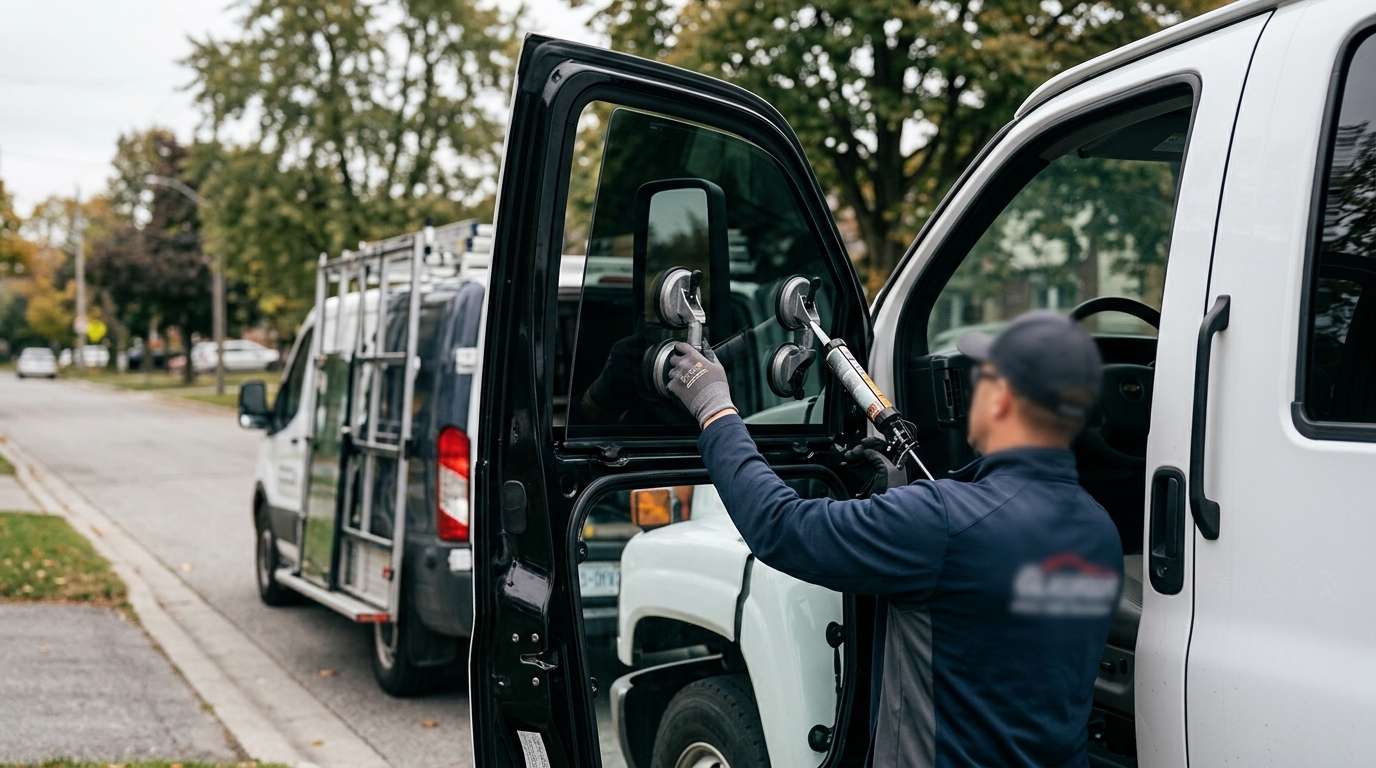
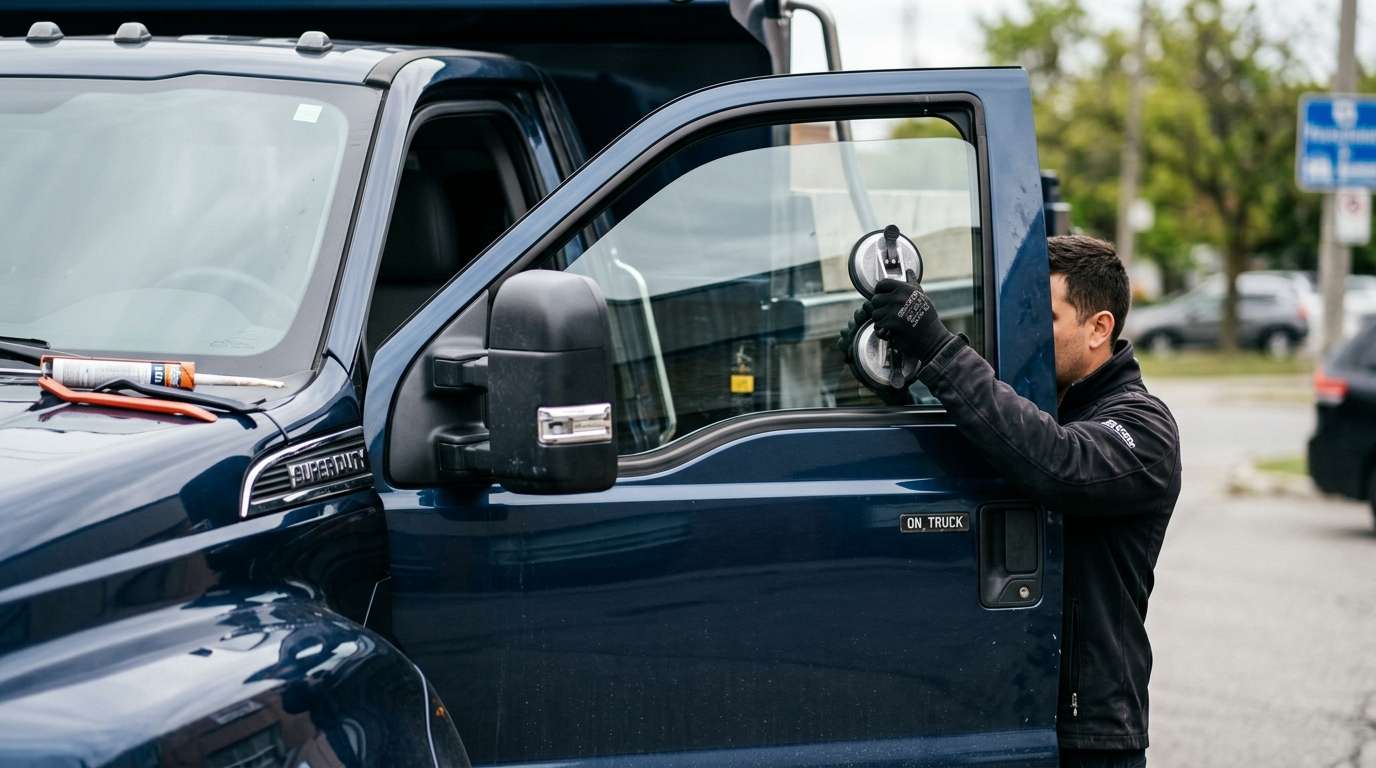
Checking your tint level is straightforward if you place a sheet of bright white printer paper behind the rear door pane in natural daylight. If the sheet remains plainly visible with a faint olive hue, the car is running standard solar glass. If the paper is barely legible from the exterior and the pane appears nearly black, you have factory privacy glass. When someone breaks a side window on an E-Pace in the rain, I typically head out immediately to secure the cabin, arriving about an hour after you book. Factory privacy glass has the dark dye melted directly into the molten glass mixture during production, which prevents the bubbling or peeling common to aftermarket window film.
Regulator Snags, Weatherstrip Rattles, and Limit Learning
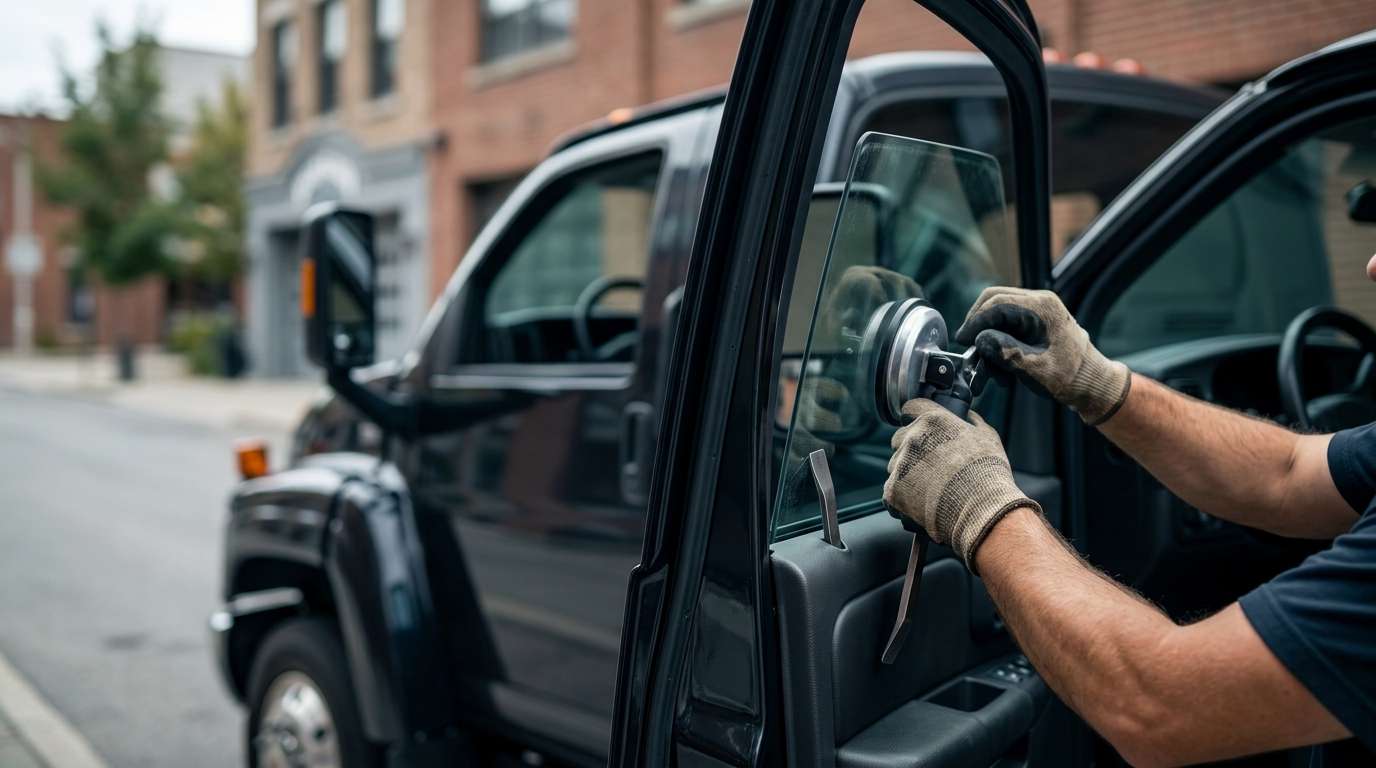
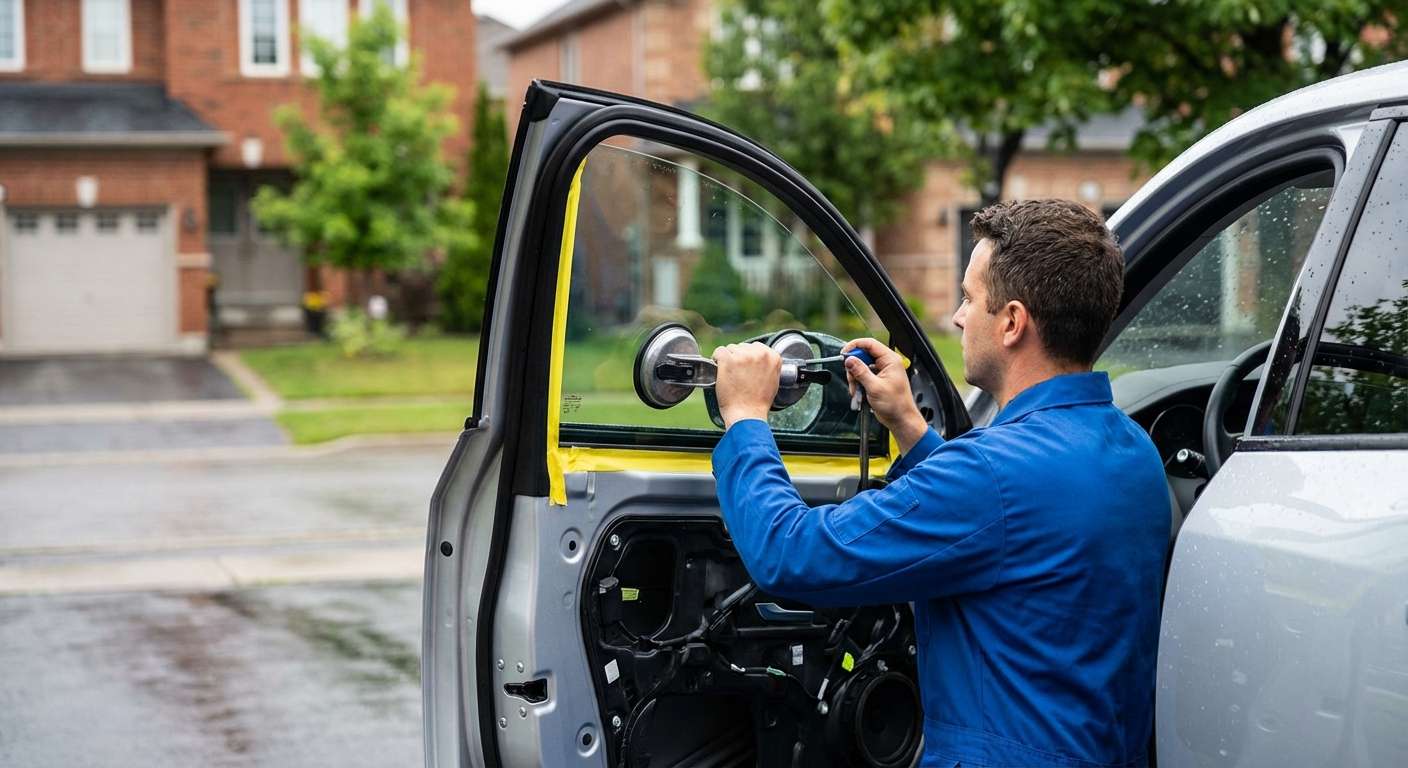
A frequent issue on these doors involves the internal cable-driven window regulator mechanism rather than the pane itself. The glass is anchored at the bottom edge by heavy plastic retention clamps that ride on twin vertical tracks; over time, the regulator drive cables can fray or snap, dropping the glass suddenly into the bottom of the door shell. When this happens, the glass often survives intact, but the interior door trim panel and the moulded plastic vapour barrier must come off so the clamps can be freed and remounted onto a fresh regulator assembly.
If you hear high-pitched air leaks or rattling sounds over rough pavement, the problem usually stems from displaced outer waist seals or friction inside the flock-lined glass run channels. Once new glass is bolted into the regulator carriers and the door card is clipped back into place, the electronic anti-pinch system requires a standard window motor reset. You sit inside with the doors closed, pull the window switch until the glass seats fully into the top channel, hold the toggle up for two seconds, lower it entirely without stopping, and hold the toggle down for another two seconds to store the top and bottom stop limits in the door control module.