Vandalism, Cargo Shifts, and Impact Damage on Rear Cargo Windows
Break-ins target the cargo area glass behind the second-row doors because tinted factory glass conceals high-value items, making these stationary side panels frequent casualties of forced entry. On this full-size SUV, the quarter glass sits right beside the folding third-row seats and the rear cargo hold. Shifting oversized sports gear, heavy luggage, or hardware supplies inside the cargo bay can strike the inner face of the pane, shattering the tempered panel outwards. Outside the vehicle, the sheer size of the rear quarter sheet metal makes the area vulnerable to low-hanging branches on rural roads or gravel tossed up on high-speed expressway lanes.
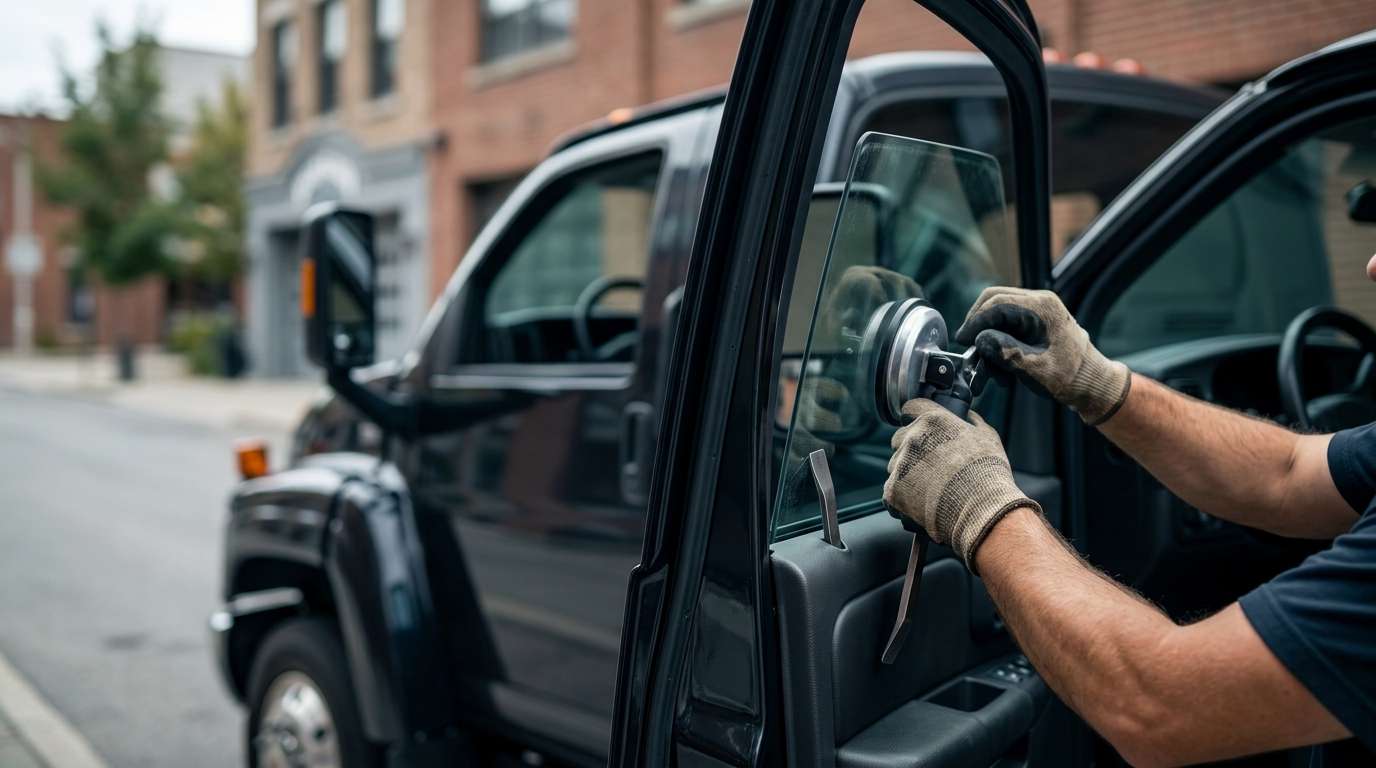
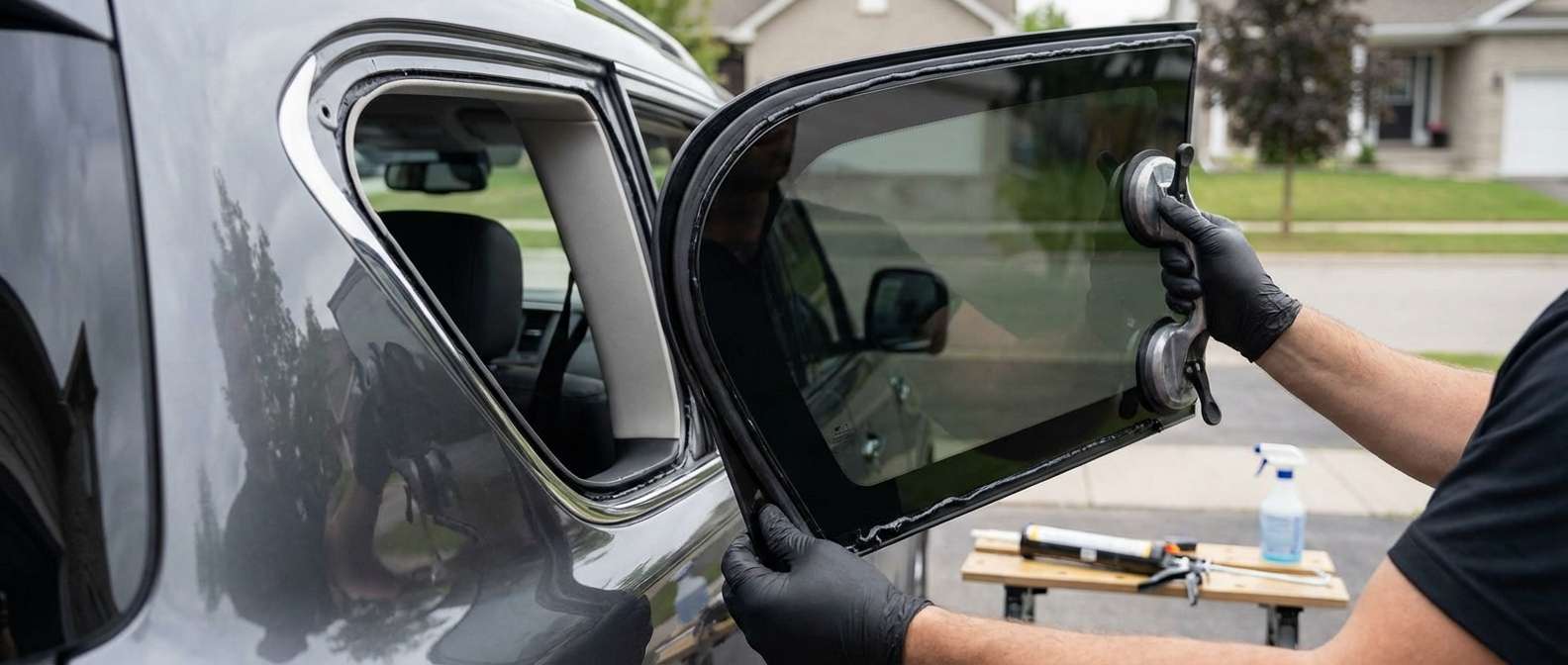
Because the factory units are manufactured with single-use hardware and integrated perimeter moldings, an impacted window cannot be salvaged or repaired once cracked. Any direct puncture or deep fracture requires full removal of the damaged panel and the installation of a matching aftermarket unit that mirrors the original deep dark privacy tint and the exact exterior dimensions.
Trim Accents and D-Pillar Architecture Distinctions
Replacing the right-hand panel demands strict attention to the exterior trim packaging because Infiniti split the styling across model grades. The Pure, Luxe, and Sensory editions carry bright chrome perimeter accents, aligning with the factory glass specification 83300-7JA0A. The Autograph and Sport grades feature blacked-out, dark moldings built directly along the glass perimeter, corresponding to the original layout of part number 83300-7JA0D. I bring my mobile setup directly to your driveway or workplace parking space across Toronto and the GTA so you do not have to drive an open, shattered luxury SUV through traffic.
The panel shares critical exterior boundaries with the upper roof rail moulding, the finished exterior D-pillar trim, and the lower rear quarter body sheet metal. Because the glass is stationary and lacks the mechanical hinges or power-venting motors found on earlier full-size SUV platforms, the replacement unit must sit flush against these bordering panels. Any misalignment will disrupt the continuous aerodynamic profile that stretches back to the tailgate.
Third-Row Interior Clearance and Single-Use Glass Design
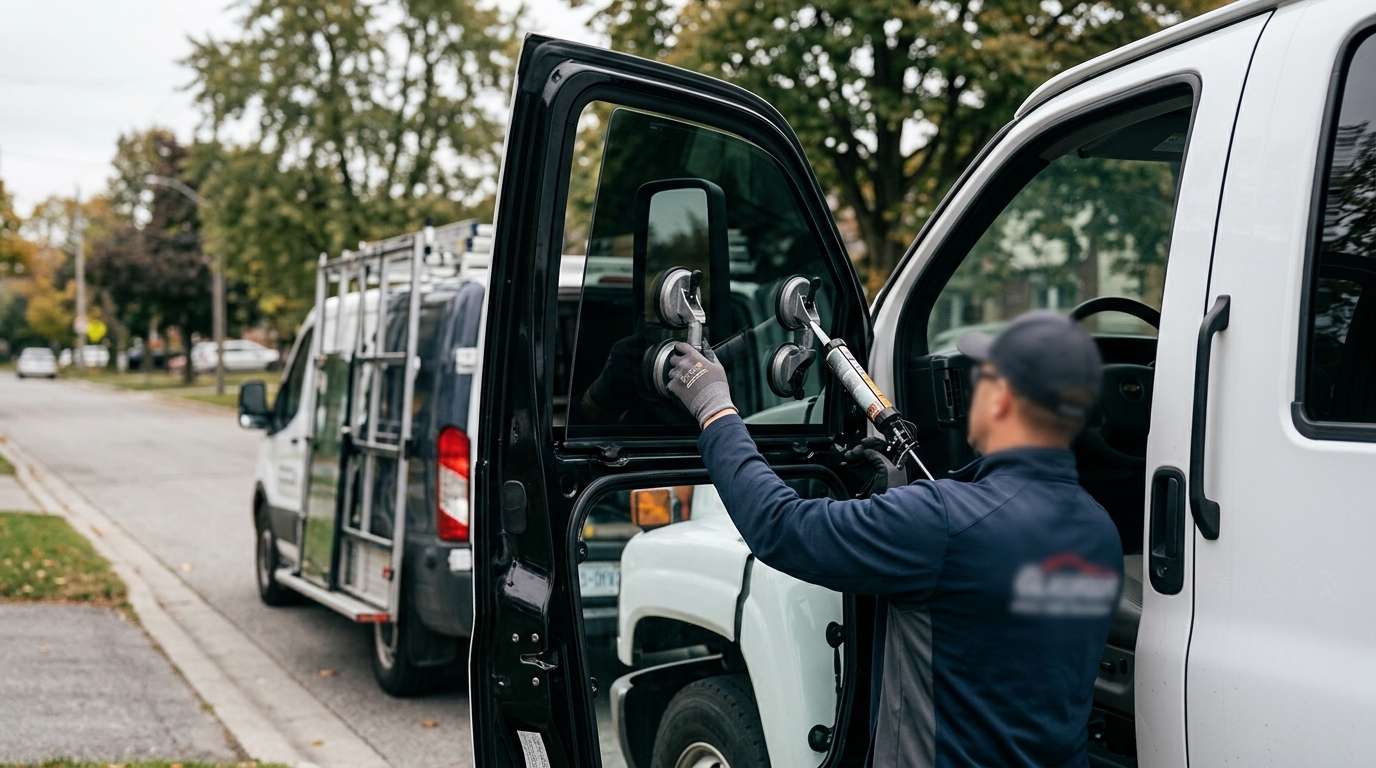
Accessing the structural aperture flange requires deconstructing the interior cabin around the rear cargo area. I remove the third-row lower quarter interior trim panels to reach the structural locator pins and interior retainers that seat the glass in its correct position. The quarter window does not house external rain sensors, wiper assemblies, or front-facing ADAS camera brackets, which simplifies the electronic disconnects, but clearing the interior plastics without marking the leather or composite trim requires meticulous care.
Once the damaged panel is extracted from the aperture, it cannot be reseated. The structural bonding area relies entirely on a fresh aftermarket glass assembly paired with newly positioned locator studs to seat square against the body line. The replacement panel matches the heavy dark tint of the opposite factory side, keeping the rear cabin shaded while maintaining the flush boundary against the exterior D-pillar trim.