Windshield Stress Points and Stone Impacts on the Sonata Front Glass
Low-slung sedans catch gravel differently than taller crossovers, and the rake of this front glass sends road debris skidding directly into the lower ceramic frit band. Impacts along the bottom edge frequently sit right above the wiper transmission linkage, hidden under the sweep of the blades until a crack travels up into the primary viewing area. When temperatures drop, thermal shock around the lower defroster area accelerates that damage, turning minor road pits into long horizontal fractures within minutes of turning on the cabin heat.
The fast-back roofline creates a specific aerodynamic profile where stones deflected from traffic ahead often hit the top third of the windshield. On trims like the Sonata Limited and N Line, this upper glass zone houses the mounting bracket for the Hyundai SmartSense forward-facing safety camera. A stone strike near that camera shroud can produce micro-cracks that disrupt the clear optical path the camera requires for Lane Keeping Assist, even if the driver's forward sightline remains mostly clear.
DN8 Glass Configurations and Hardware Variations
Matching the replacement glass to this car requires identifying the specific electronics tied to your trim level. The DN8 platform received an exterior refresh for the 2024 model year, changing forward styling cues while retaining specific optical hardware configurations across the board. The base glass sits under NAGS series FW05177, but the physical glass blank differs depending on whether your car is an SE, SEL Plus, or Hybrid.
| Sonata Trim Level | Acoustic PVB Layer | Heads-Up Display (HUD) | Forward Camera Mount |
|---|---|---|---|
| SE / SEL | Standard Solar Tint | No | Standard SmartSense |
| SEL Plus / N Line | Sound-Dampening Laminate | No | Standard SmartSense |
| Limited / Hybrid Limited | Sound-Dampening Laminate | Wedge Interlayer | Standard SmartSense |
Trims featuring a Head-Up Display require a specialized optical wedge interlayer inside the laminated glass sandwich. If standard laminated glass is fitted to a car designed for HUD projection, the projected speed and navigation data appear as a double blur or ghosted image on the glass. Higher trims also depend on acoustic sound-dampening laminate to isolate road roar from the four-cylinder turbo engines; fitting glass lacking this dampening layer results in an immediate increase in highway wind noise through the front cabin.
Bonding Failures, Perimeter Hardware, and Noise Leaks
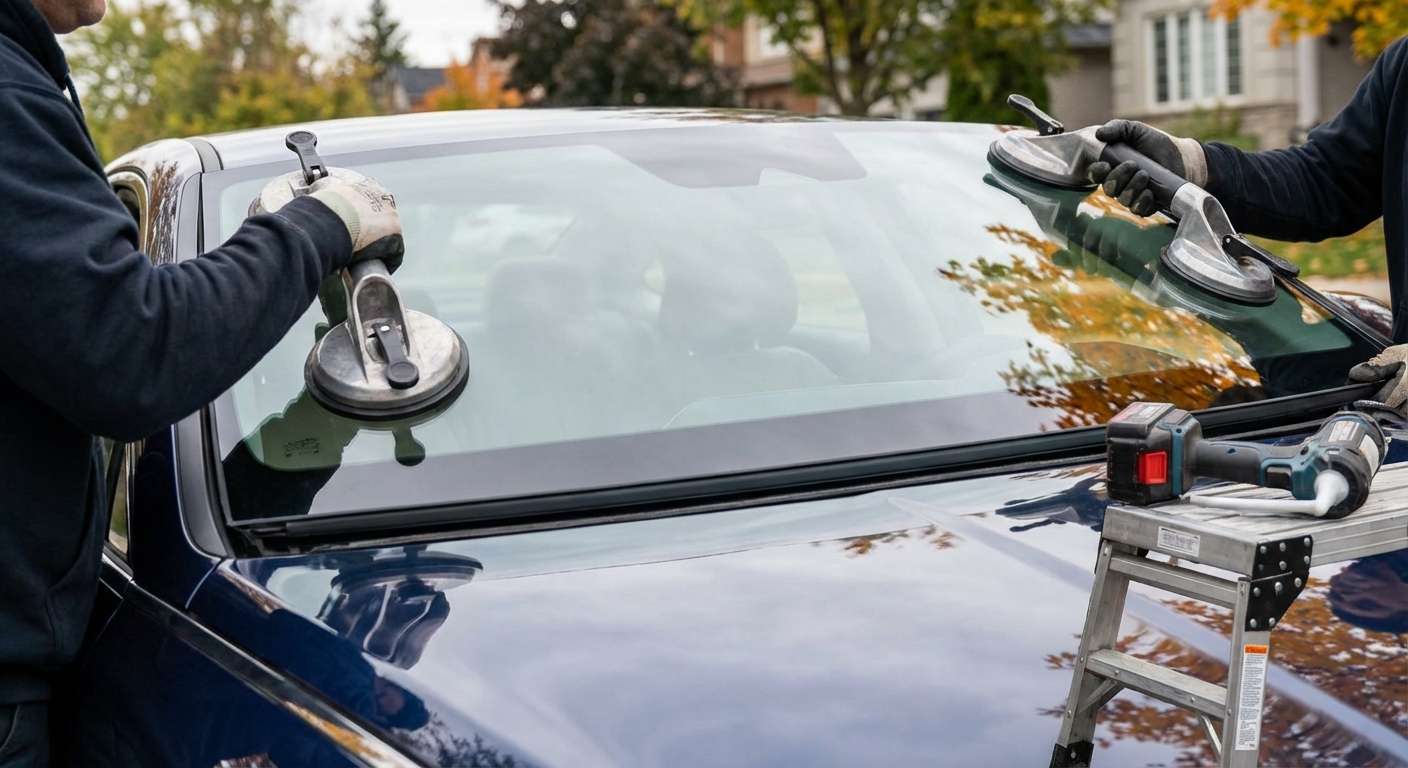
Early runs of this body style faced issues with factory glass adhesion, resulting in a safety recall on select 2021 models where incomplete urethane bonding allowed water leaks at the top pillars or distinct whistling noises at highway speeds. When replacing the glass, I verify that the full perimeter seal seats cleanly against the roof header, whether the vehicle has the conventional painted steel roof or the dual-pane panoramic glass assembly. My installations include a lifetime warranty on all workmanship alongside a one-year warranty on the replacement glass itself, ensuring your cabin stays dry and quiet.
Exterior trim parts around this windshield require specific attention during service:
- Two-piece cowl panel: Spans the bottom perimeter and seals against the lower glass edge with push-pin fasteners to stop engine heat and runoff from bypassing the wiper mechanism.
- A-pillar side mouldings: Fastened with hidden interior clips that must release cleanly so the side garnish re-engages flush against the steel, avoiding wind turbulence against the front door run channels.
- Top reveal perimeter: Sits tightly against the leading roof edge, maintaining a uniform gap to prevent high-velocity air drafts from lifting the edge at speed.
- Camera bracket housing: Factory-bonded to the upper center interior to stabilize the SmartSense hardware against vibration.