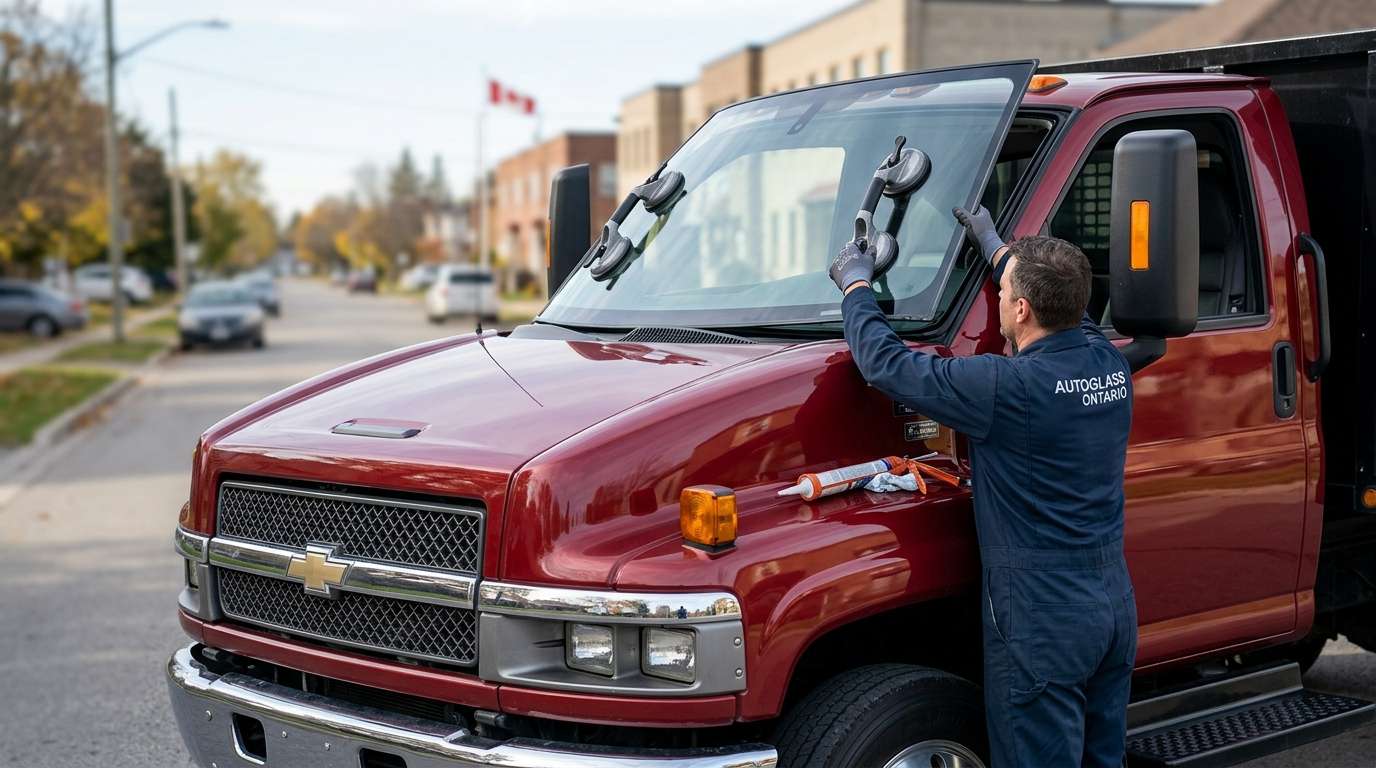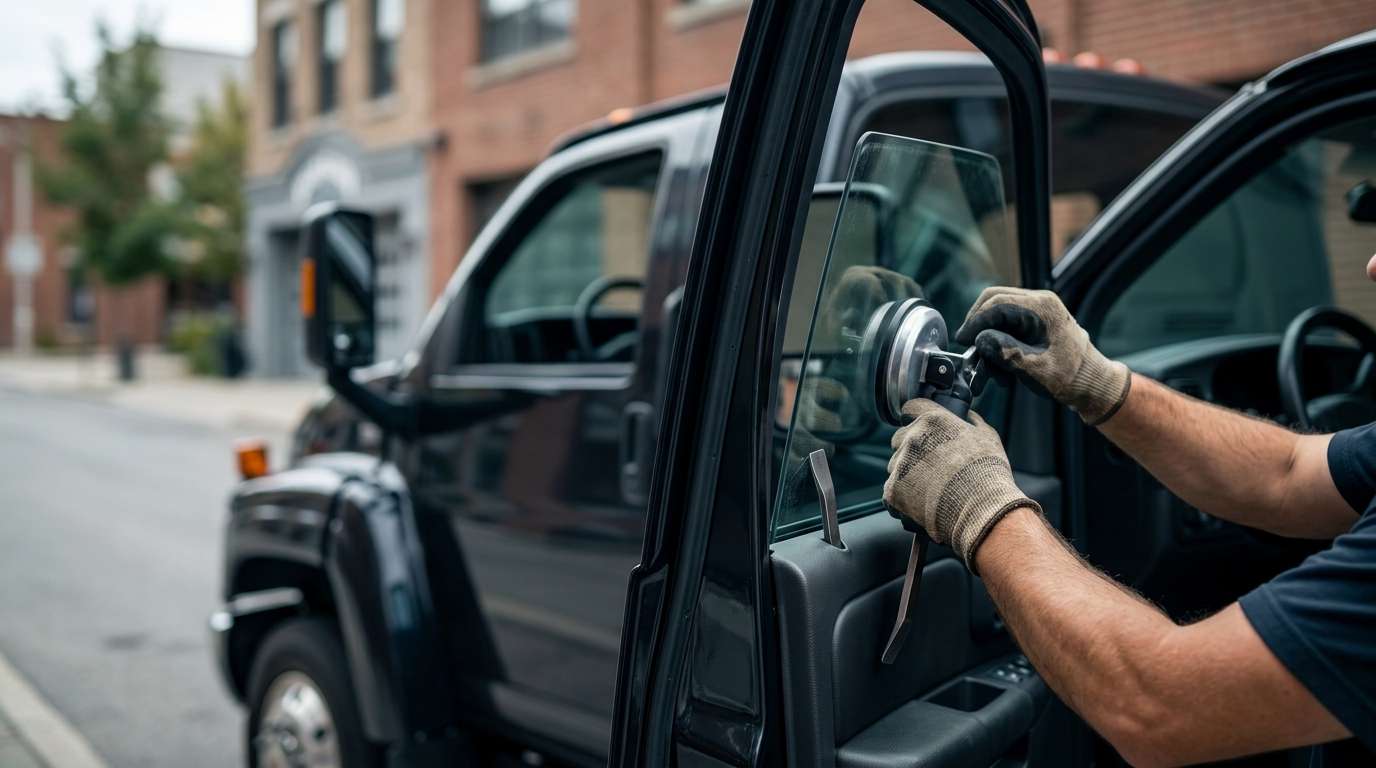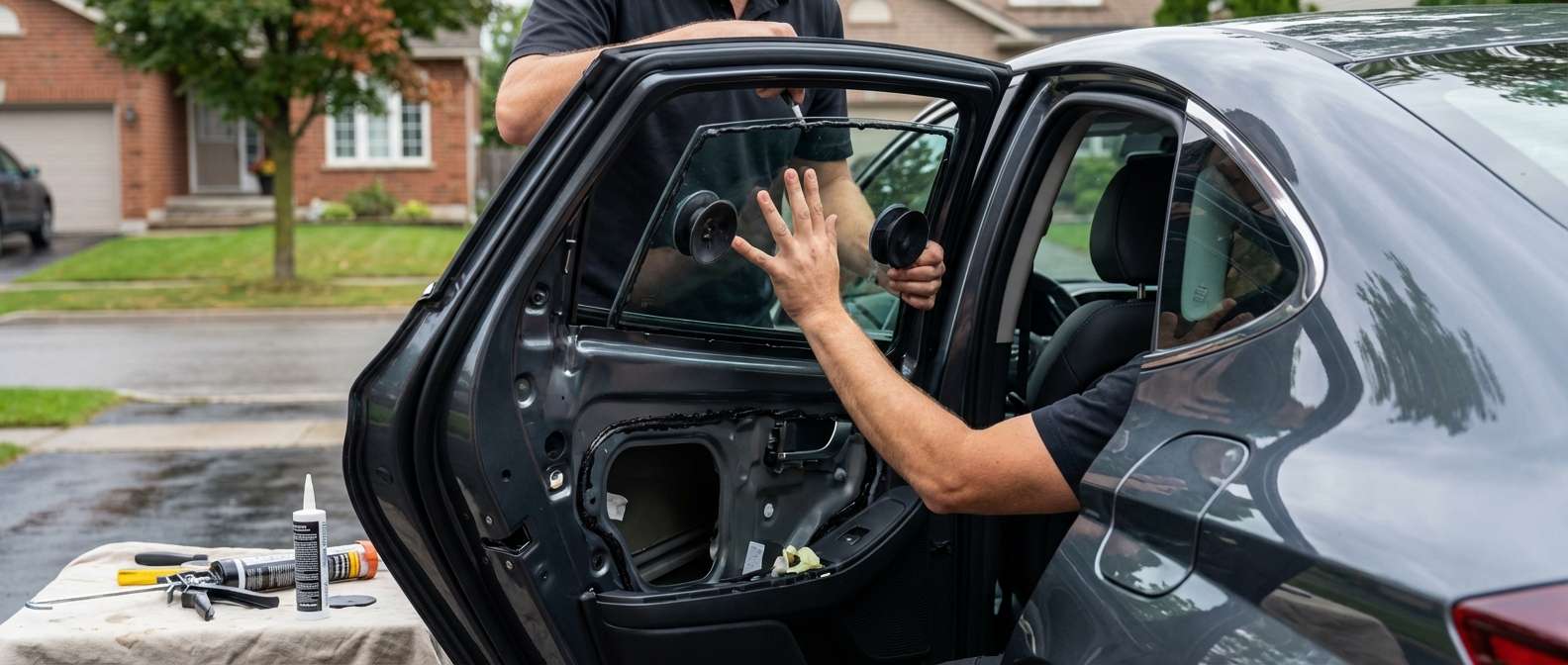
Front Corner Vent vs. Rear Quarter Glass on the DN8 Sonata
Replacing the side glass on this vehicle requires distinguishing between the two triangular panes on each side, as they mount entirely differently. The front vent glass sits directly forward of the main roll-down window in the front door frame, separated by a vertical division bar. In contrast, the triangular glass aft of the rear passenger doors is technically a body-mounted C-pillar quarter window (cataloged under NAGS benchmark FQ28539, with passenger-side references such as FQ28539GTY). While the rear quarter panel window bonds directly to the vehicle body, the front corner vent uses a mechanical seal seated inside the front door sash run-channel rubber molding.
Because break-ins on these models frequently target the small front vent to bypass interior locks, matching the physical setup of the door frame is critical. The front door fixed vent pieces (comparable to dealer references like 82430-L0000, 82430-L1011 for the left, and 82440-L0000 or 82440-L1000 for the right) rely on a rigid sash design. When a break-in leaves your car exposed, I can generally be on-site within about an hour of your call to clean out the broken tempered shards and get the door stripped down. The front corner glass contains no integrated electronics, defrosters, or antenna traces, but it requires careful physical alignment to avoid introducing wind leaks.
Pre-Fit Checks and Daylight Opening Trims
Before installing replacement glass on this car, the surrounding daylight opening (DLO) trim must be inspected closely. The eighth-generation styling uses two distinct exterior finishes that run right past the window frames:
- Bright Chrome: Standard on SE, SEL, and Limited trims, featuring bright moulding along the beltline that transitions seamlessly into the Sonata's signature hood-accent chrome strips.
- Matte or Gloss Black: Found on sport-oriented trims like the N Line and select Hybrid variants, where all brightwork around the window sash and division channel is blacked out.
I verify that the replacement glass matches the factory green solar-control tint level. Even though upper trims like the Limited utilize acoustic-laminated glass for the front roll-down windows, the front triangular corner vent remains solid tempered glass. I also examine the glass edge profile to confirm it will slide cleanly into the rubber sash without twisting the run channel, which is a known trigger for cabin noise issues.
Post-Installation Fitment and Seal Verification
Once the glass is seated inside the door frame, the vertical division bar, interior door panel, and exterior mirror sail assembly must seat without distorting the rubber seals. Misalignment during reassembly is the leading cause of the high-speed whistling and wind buffeting that owners often report near the base of the A-pillar.
| Inspection Point | Correct Condition | Defect Indicator |
|---|---|---|
| Vertical Division Bar | Parallel to roll-down drop glass; uniform gap from top to bottom | Window binds during travel; visible gap in felt channel |
| Mirror Sail Base Cover | Flush with outer door skin; compression lip seated under glass edge | Air whistle at highway speeds; water pooling inside interior panel |
| Upper Run Channel Rubber | Even seating along the window sash with no pinched corners | Puckered rubber lip; excessive cabin draft near the A-pillar seam |
I always test the roll-down glass immediately after securing the division channel to confirm that moving parts do not pull against the fixed vent glass seal or dislodge the run channel track.
Why does replacing the tiny front vent glass require removing the side mirror?
The front fixed vent sits in the lowest forward pocket of the door frame, right behind the mirror mounting base. The mirror sail trim and the physical mirror mounting studs overlap the forward edge of the window sash. To seat the rubber run channel and the glass correctly without warping the division bar, the mirror assembly must be loosened and pulled back from the door frame.
Is the front vent glass laminated like the main door windows on the Limited trim?
No. Even though Hyundai uses dual-pane acoustic-laminated glass for the front drop windows on higher trims like the Limited, the front corner vent glass is always single-layer tempered safety glass across every trim level, including SE, SEL, SEL Plus, and N Line.
Are there wires or antennas attached to the front vent glass?
No. The front corner vent glass is purely stationary glazing with standard solar tint. There are no defroster grids, humidity sensors, or radio antennas attached to or embedded within this glass panel.