Understanding Side and Cab Window Architecture on the Redesigned Tacoma
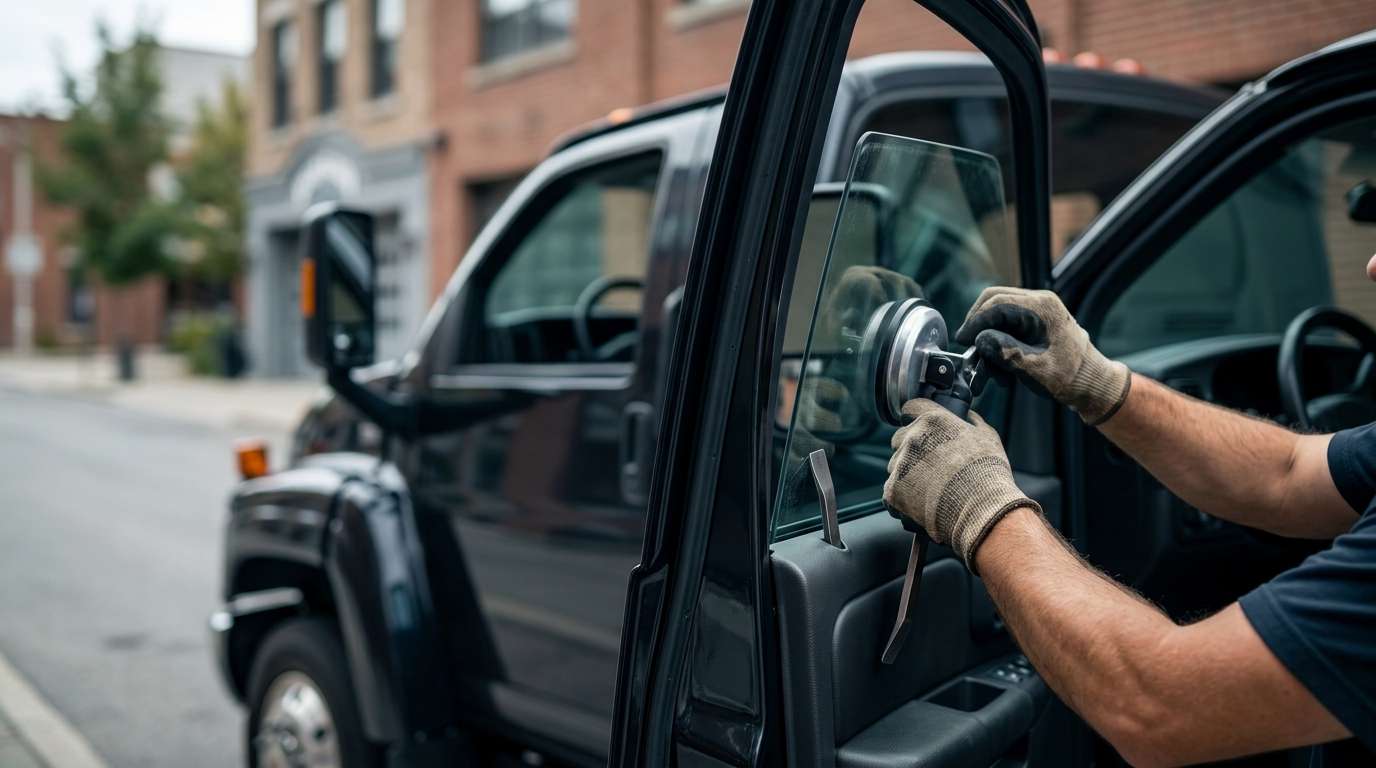
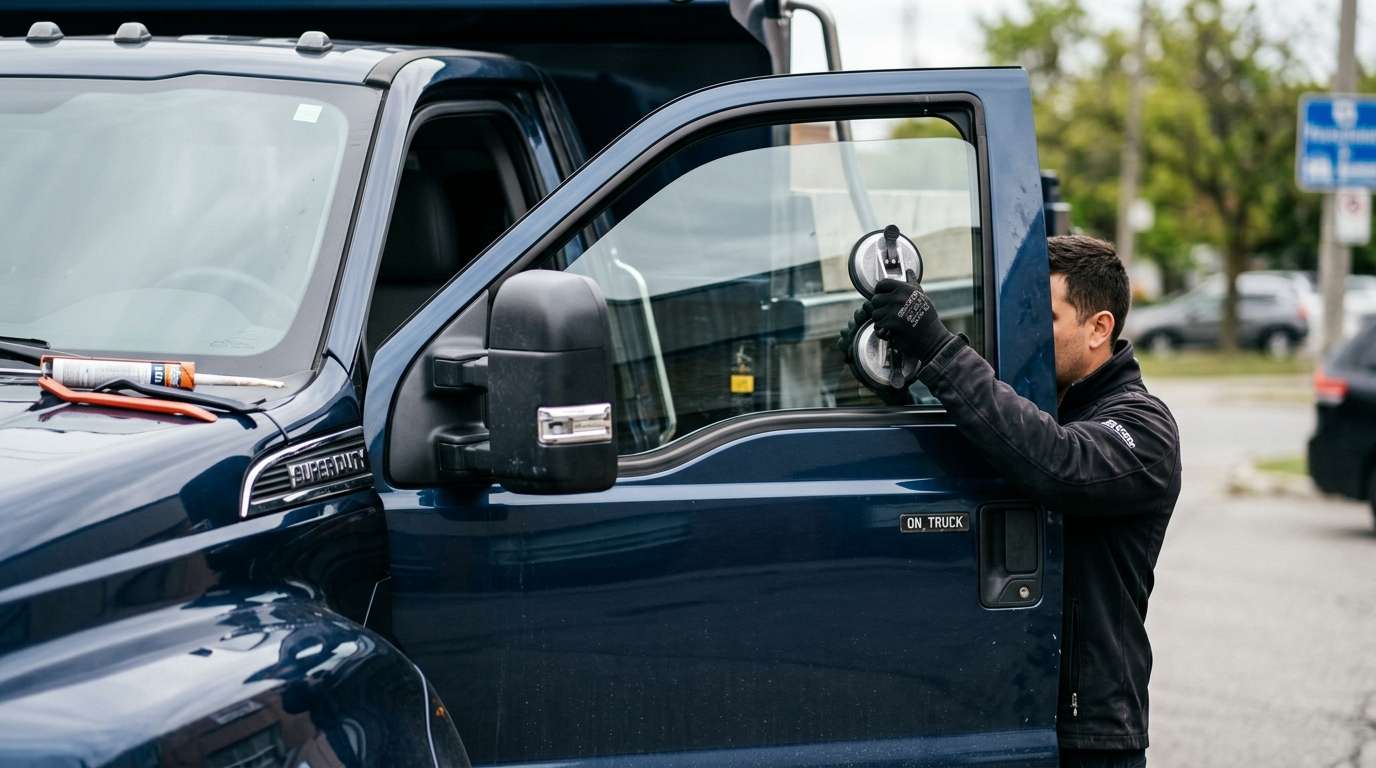
When someone reaches out regarding quarter glass on this truck, the first task is identifying which pane actually broke. Toyota eliminated traditional cab-side quarter windows entirely for this redesign. If you drive a 2-door XtraCab, the cab wall behind the front doors is unbroken sheet metal with interior utility storage rather than stationary side glass. On Double Cab builds, the side glass consists strictly of full-drop front door windows and rear door roll-down windows—tracked under factory numbers 68103-AK010 for the right hand and 68104-AK010 for the left hand—leaving no small triangular or fixed side quarter lites in the body pillars.
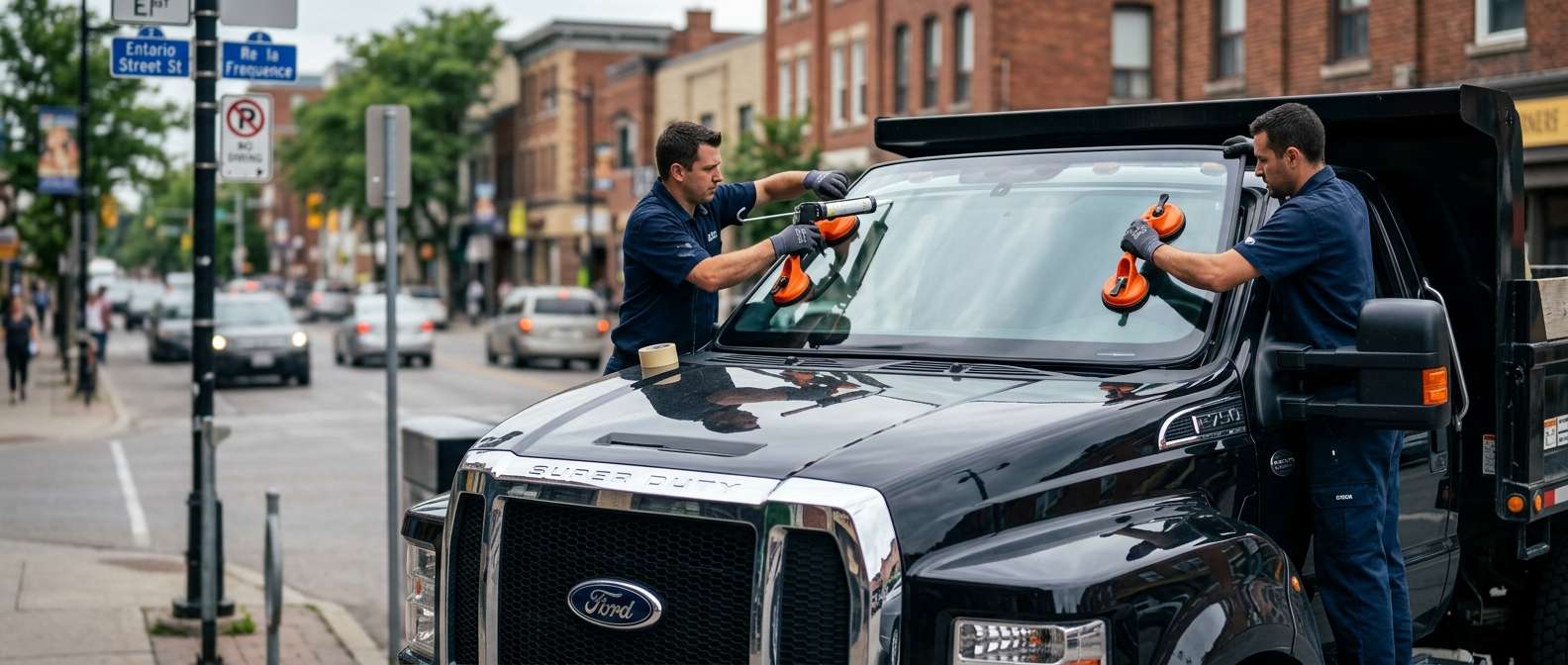
Most requests for "quarter glass" on this vehicle actually stem from damage to the three-piece back glass assembly. On trims like the TRD Sport, TRD Off-Road, Limited, Trailhunter, and TRD Pro, the rear cab features a central power horizontal-sliding pane framed by fixed outer glass sections. Because these outer panes flank the sliding portal much like side quarters do, parts catalogs and owners frequently conflate them. If one of those outer glass segments fractures, the replacement involves the complete rear window frame assembly rather than an isolated side lite.
What I Inspect on Replacement Glass Before It Mounts
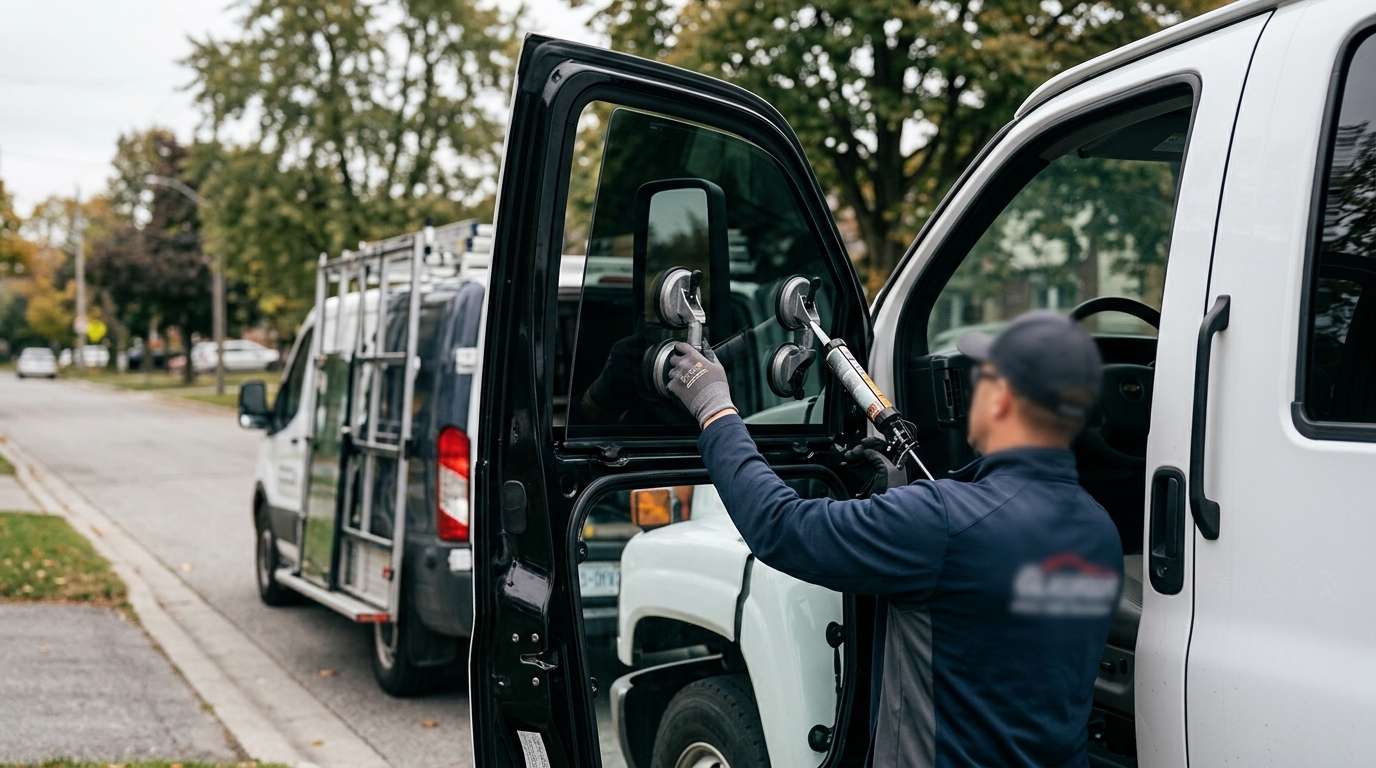
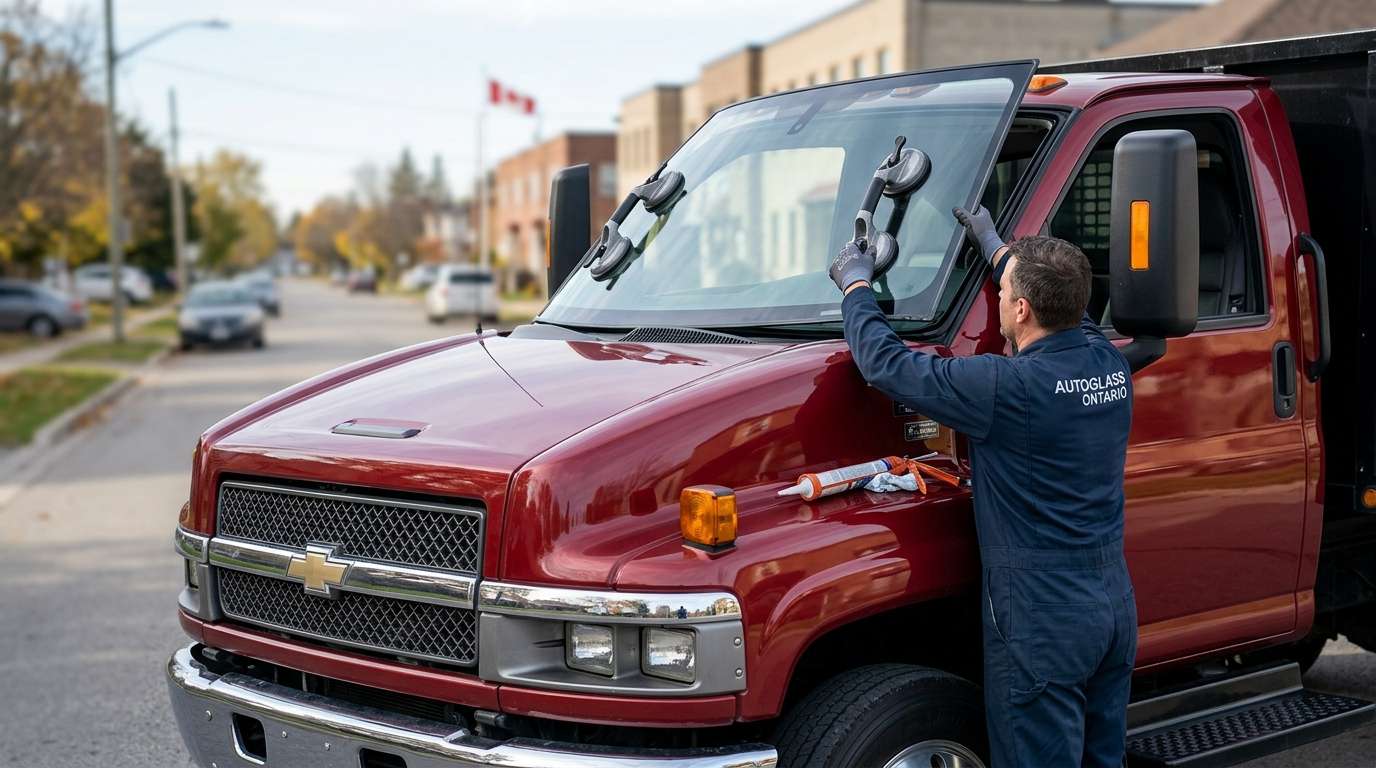
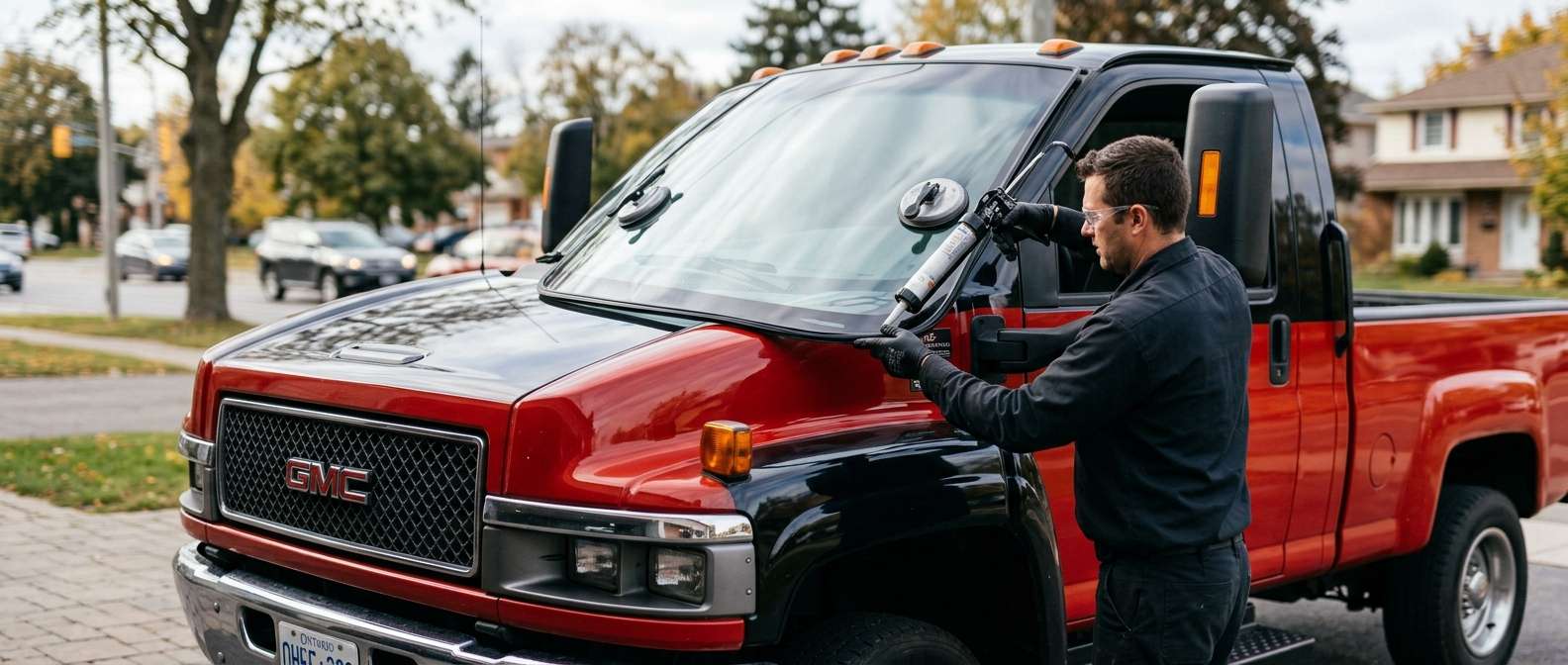
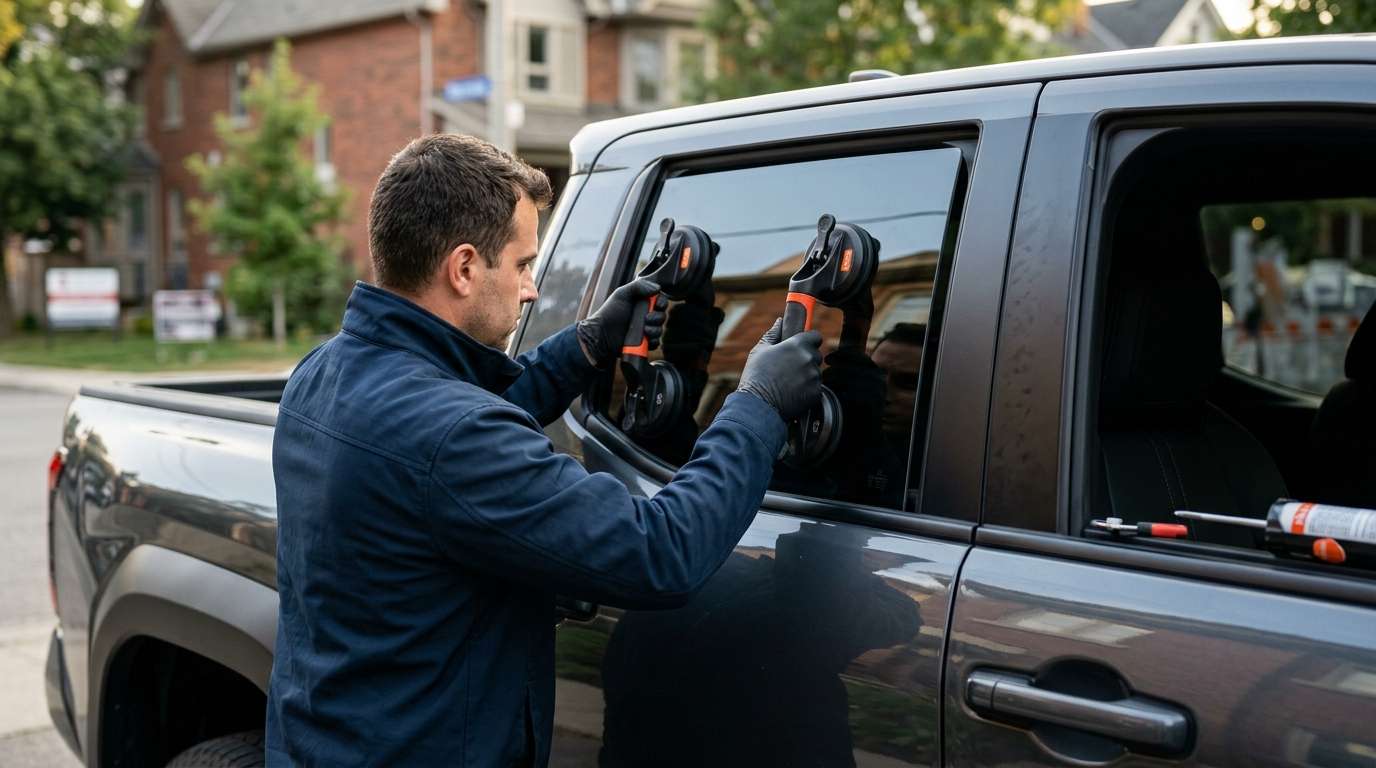
Because the factory rear window design relies on specific cab tolerances below the high-mount center stop lamp and roof drip moldings, aftermarket replacements demand precise physical checks before work proceeds. I typically get to your driveway roughly sixty minutes after you confirm your appointment, bringing the crated glass directly to the truck to cross-examine every structural detail against the cab frame.
Before any glass is set, I verify three critical physical elements on the replacement unit:
- Defroster Grid Continuity: The fixed outer side panes incorporate integrated heating traces. I test the electrical grid pins for continuity so the cab defroster switch warms both side wings evenly without hot spots.
- Center Slider Channel Alignment: On power-sliding assemblies, the center channel tracks must be completely parallel with zero pinch along the plastic guides, preventing the electric cable drive motor from binding.
- Factory Solar Tint Matching: Replacement glass must carry the correct deep factory privacy tint percentage across all three panes so it matches the Double Cab rear roll-down windows seamlessly.
For standard base trims equipped with the one-piece solid stationary back window (referenced under Toyota part 64810-AK040), I check the perimeter edge radius for uniform curvature. The rear cab wall on this truck features high-strength steel stamping around the pressure relief vents, meaning any slight warp in an aftermarket glass perimeter will induce localized edge stress once the cab flexes off-road.
Owner Inspection Checklist After Window Service
Once the replacement window is fitted and the C-pillar plastic trim panels and push-in retainer clips are buttoned back down, take a few minutes to inspect these specific areas before driving:
- Rear Door Run Channels: If a rear door window was replaced, verify the glass moves straight up into the upper weatherstrip pocket without catching or causing rubber bunching, which is a known source of highway wind noise on this body style.
- Defroster Wire Terminals: Confirm the spade connectors on the lower edges of the outer back glass panes are fully seated into the factory wiring harness and clear of the rear seatback folding path.
- Third Brake Light Clearance: Look along the top exterior glass line to ensure uniform clearance below the high-mount third brake light housing, preventing plastic-on-glass contact when driving over washboard terrain.
- Center Slider Operation: Cycle the dashboard power slider switch through several full open-and-close sequences; the center pane should glide smoothly into its weather seal without shuddering or hesitation.
- Cab Pressure Vents: Close the last vehicle door with the windows rolled fully up. Listen for the normal muffled thud of the cab air-exhaust flappers operating behind the rear seats, ensuring the cabin releases air pressure without straining the newly mounted glass panels.