Tacoma Rear Cab Glass Configurations and Leak Diagnosis
Sorting out broken back glass on this truck starts with identifying which of the three factory rear window styles is in your cab. Base SR models often came with a stationary one-piece glass (frequently with clear or light green tint and no rear defroster), while mid and upper trims like the SR5, TRD Sport, TRD Off-Road, Limited, and TRD Pro received solar privacy tint. From 2016 onward, access cabs and select double cabs carried a three-panel manual sliding rear window, which uses a center plastic latch that owners routinely report snapping off over time. For the 2017 model year, Toyota introduced the horizontal power-sliding center pane on Double Cab trucks, operated by the toggle switch in your overhead console and powered by an electric cable-driven regulator secured low against the rear cab sheet metal.
When owners find water pooling behind the rear seats or soaking the back carpet, the rear window seal is usually blamed first, but that diagnosis is frequently wrong. Toyota issued Limited Service Campaign 21TD03 and bulletin T-SB-0055-18 to address water leaking straight through the high-mounted center stop lamp (the third brake light) mounted above the rear window frame on 2016–2019 models. The cab pressure vents behind the rear seats are another frequent culprit. When I replace a leaking or shattered back assembly, I protect your investment by standing behind my workmanship for the lifetime of your truck, alongside a one-year warranty on the aftermarket glass panel itself.
Replacing Full Assemblies Versus Individual Slider Panes
A rock through the rear window does not always require pulling the entire bonded frame off the truck pinch weld. If your truck has the manual three-piece slider, replacing individual broken sections is often an option. Side panels can be serviced under parts like NAGS FY95049, while center glass replacements prevent having to pull the factory frame assembly (which corresponds to Toyota numbers like 64810-04111 or 64810-04121). On 2017–2023 Double Cabs equipped with the power slider (OEM assembly 64810-04131), the center sliding pane corresponds to NAGS FB28060 / FB28060 YPY (or Toyota center panel 64807-04040). If the stationary side glass on a power assembly shatters, the entire encapsulated frame assembly must come out of the cab opening.
| Window Style | Standard Tint Level | Defroster Grid | Drive Mechanism |
|---|---|---|---|
| Solid Stationary | Clear (SR) or Privacy (SR5+) | Optional / Trim Dependent | None (Fixed) |
| Manual 3-Piece Slider | Dark Solar Privacy | Included on heated trims | Manual center squeeze latch |
| Power 3-Piece Slider (2017+) | Dark Solar Privacy | Standard on equipped trims | Lower cab cable-driven motor |
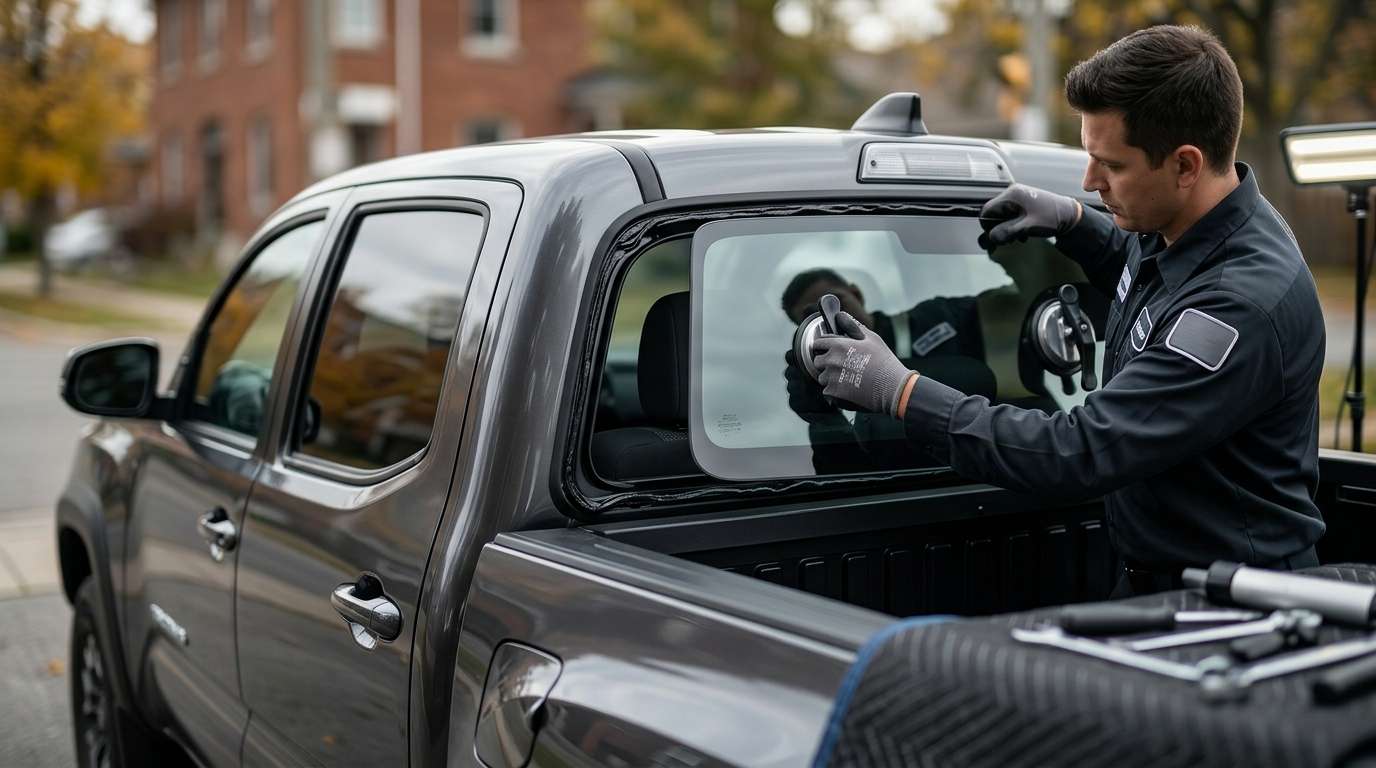
Replacing the complete frame involves stripping down the rear cab interior: unbolting the rear seat backrests, dropping the rear edge of the headliner, and removing the plastic C-pillar trim panels to reach the structural perimeter and electrical disconnects. Unlike older pickups that used pull-cord rubber gaskets, these trucks bond the encapsulated outer frame molding directly to the steel pinch weld using automotive urethane. There are no radio antennas or forward-facing camera brackets on this glass; the antenna mast and third brake light sit entirely within the roof steel above the glass line.
What to Inspect After Rear Glass Replacement
- Verify that the overhead console toggle operates the center power pane smoothly through both tracks without cable binding or abnormal motor drag.
- Ensure the plastic manual center latch securely clicks into its strike plate and holds tension against cab vibration.
- Inspect the exterior encapsulated rubber perimeter molding to confirm it lies flush against the cab pillar contours without buckling or leaving wide gaps.
- Switch on the rear defogger button to verify that power reaches both heating grid tabs and that all horizontal grid lines clear moisture evenly.
- Check that the interior rear bulkhead trim, lower seat anchors, and C-pillar plastic panels were snapped back tightly without broken push-pins or loose fabric edges.