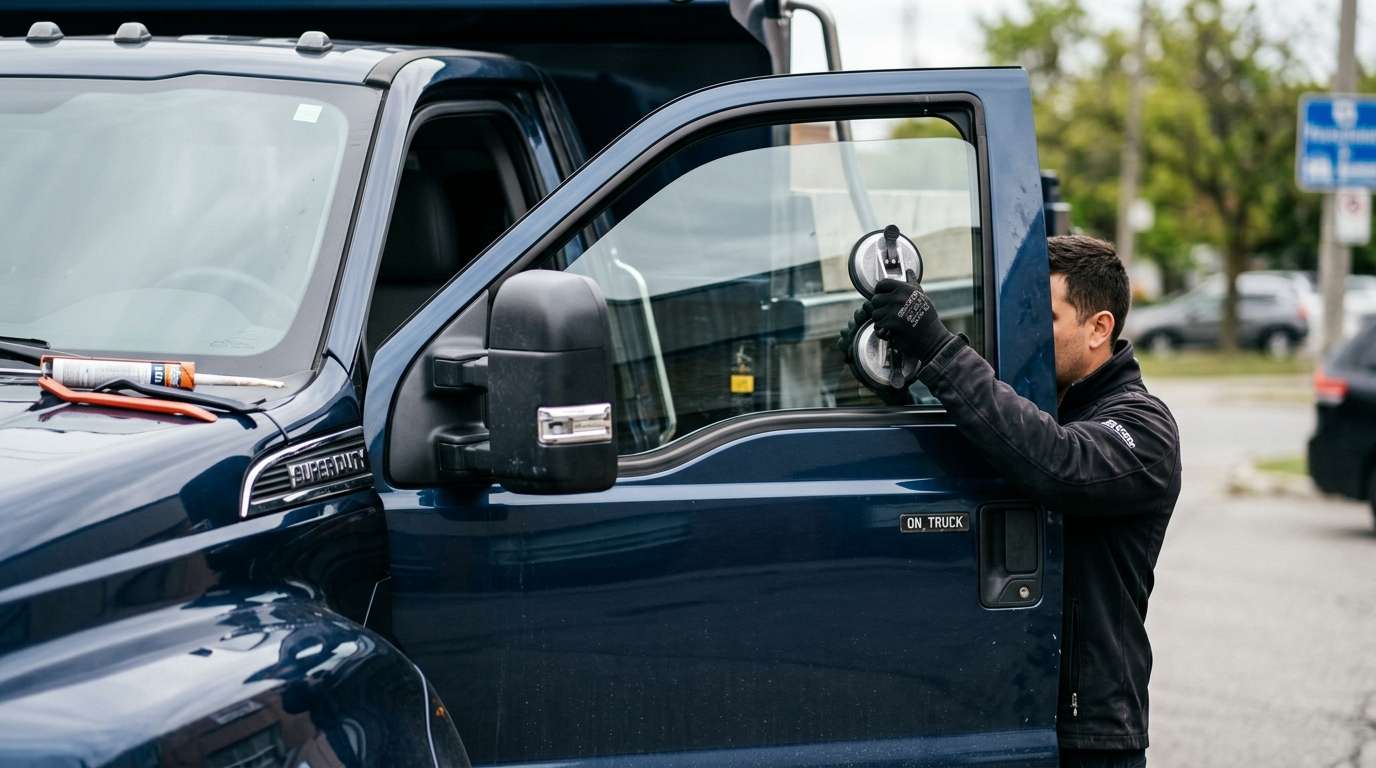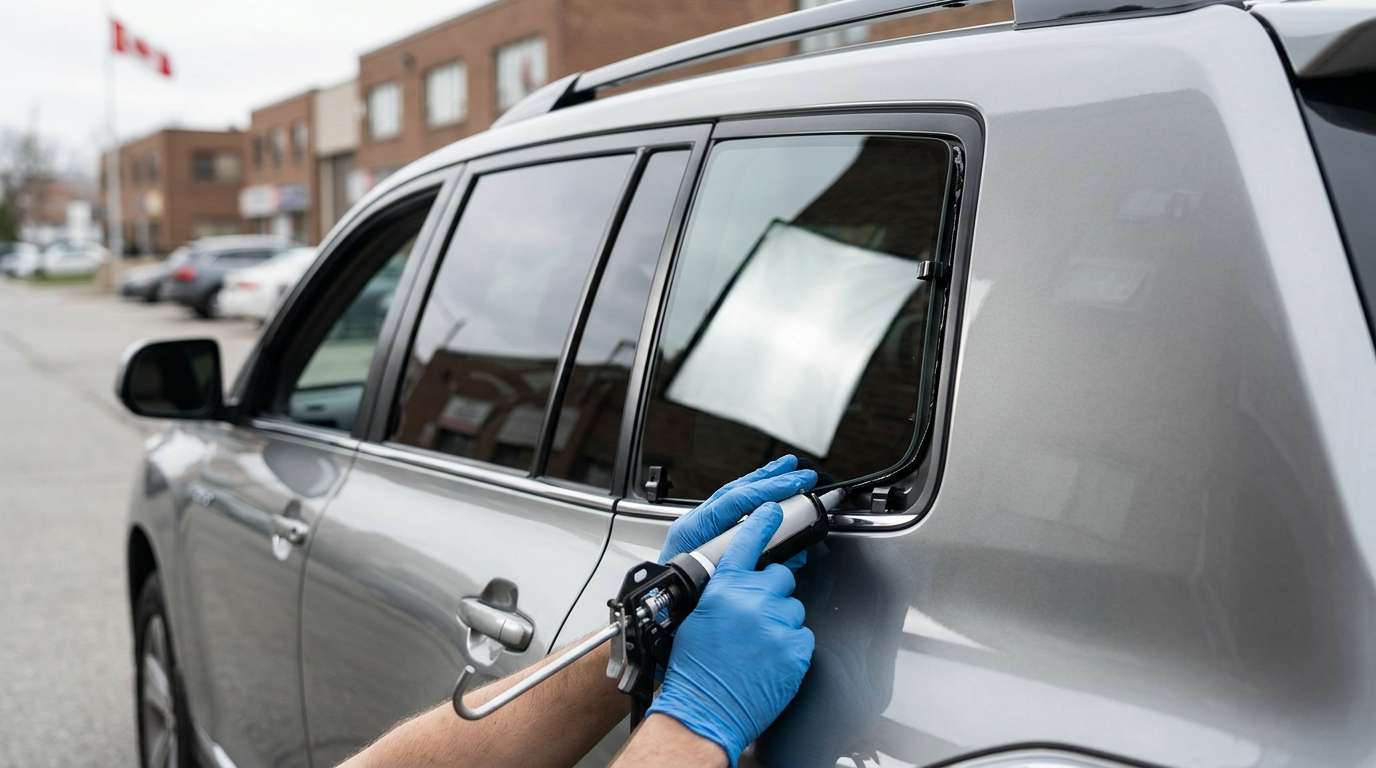
Identifying the Rear Door Vent Versus the Quarter Glass
When dealing with broken side glass on this vehicle, the biggest mix-up happens between the rear door stationary vent glass and the rear quarter body glass. The piece on the rear passenger door sits directly behind the roll-down window, separated by a vertical metal division channel bar. If your shattered pane is attached to the moving door frame rather than glued directly to the D-pillar body unibody behind the door, you need the rear door vent window. For the driver side, the aftermarket industry catalogs this part as NAGS FV23627YP, corresponding to Toyota sub-assembly 68124-0E030 and alternate number 68124-48090. If you are inspecting an intact vehicle, this panel will swing open with the door itself, rather than remaining stationary against the SUV cargo area.
Because every trim of this era—including the Base, SE, LE, Limited, and Hybrid editions—came standard with dark solar privacy tint, you do not have to guess between green or clear glass options. The tint is built directly into the single-pane tempered safety glass from the factory. Furthermore, this specific door pane is completely passive; you will not find defroster lines, radio antenna wires, or electronic sensors embedded in the glass surface, making visual identification straightforward once you isolate the door boundary.
Chassis Architecture and Mechanical Fastening
Across the ASU40, GSU40, GSU45, and GVU48 platform variants, the door engineering remains uniform for this stationary window. Unlike modern quarter panels that bond directly to the metal exterior using liquid adhesive, this vent glass relies on an integrated perimeter rubber moulding that slots directly into the upper window frame and division channel. Smash-and-grab thieves target this specific piece frequently because breaking it provides immediate access to the interior door lock lever, often without triggering factory shock sensors.
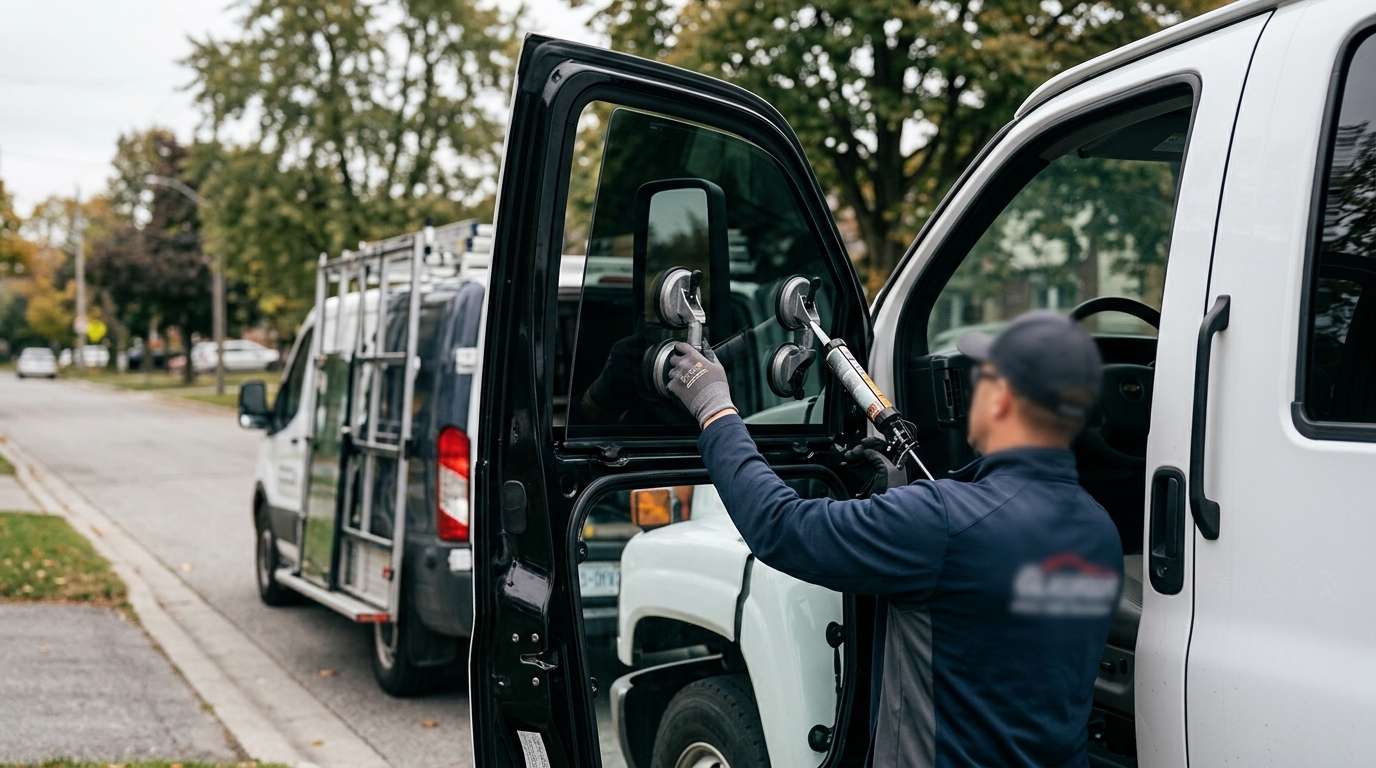
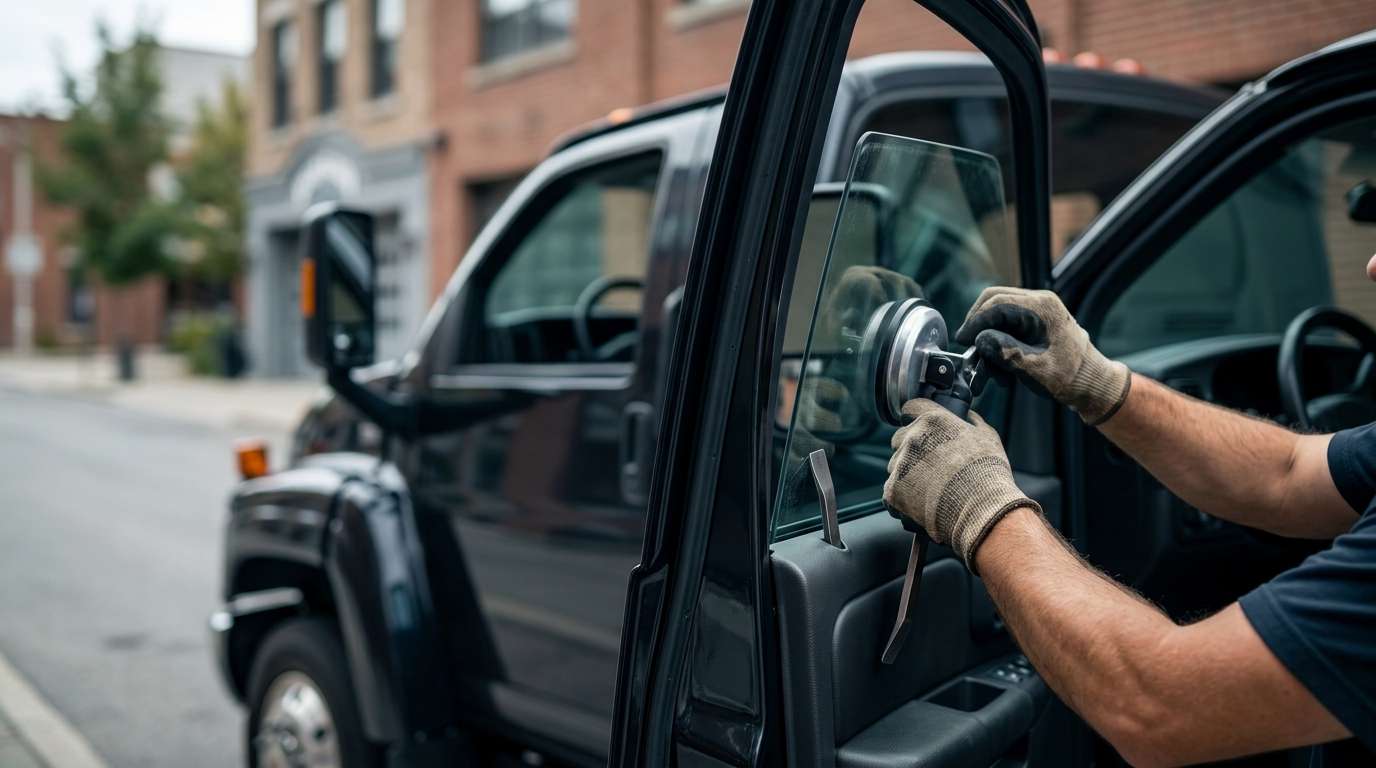
When I travel directly to your home or workplace anywhere across Toronto and the GTA to replace this shattered glass, the work centers on accessing the internal structural fasteners inside the door shell. The interior door trim panel must be detached so the bottom anchor bolts of the vertical metal division guide bar can be loosened. The division bar holds both the operable rollup glass run-channel and the vent glass seal; without dropping and shifting this bar inward, a replacement glass encapsulated in its perimeter rubber channel cannot slide into the door sash cleanly.
Confirming Left Versus Right Replacement Components
Confirming your replacement requires matching the exact side of the vehicle, as the trapezoidal geometry is strictly mirrored. The glass slopes sharply forward along the upper door contour, while its forward vertical edge sits dead parallel against the division channel. Because the rubber weatherstrip seal comes pre-bonded around the edge of the aftermarket glass assembly, proper fitment relies entirely on the division bar returning to its exact factory alignment. If the channel is reinstalled out of true, air leaks around the beltline moulding or binding along the drop-down window track can occur.