GD Sedan and Wagon Variations Across the Model Run
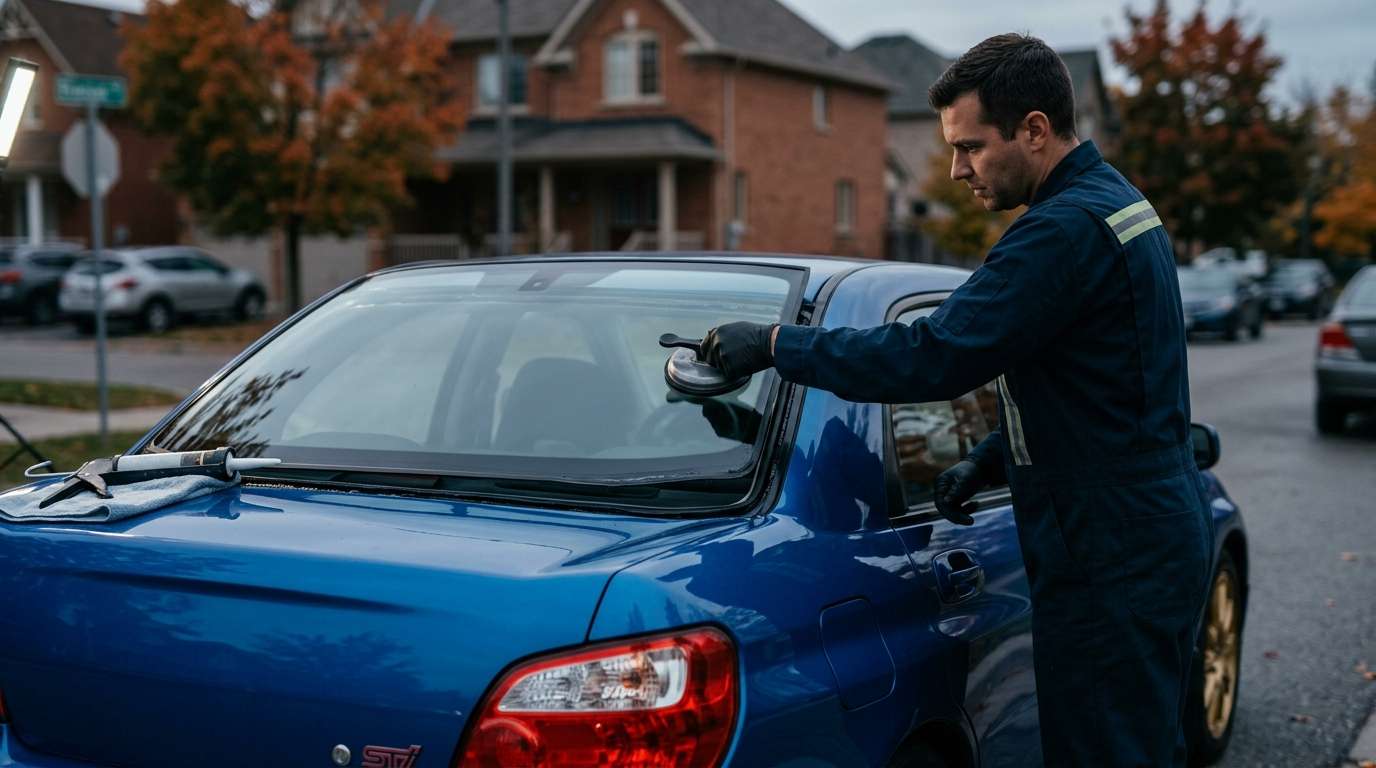
Replacing the back glass on this era of Subaru involves distinctly different panels depending on whether you drive the four-door sedan or the five-door Sport Wagon. Sedans use a fixed rear window that carries NAGS part number FB22137 for the 2004 to 2007 model years, commonly specified as FB22137 GTN for its factory green tint, embedded defroster lines, and printed antenna grid. The early 2002 to 2003 bug-eye sedans originally corresponded to OEM numbers like 65109FE020, before Subaru superseded subsequent variations with assemblies such as 65109FE090, 65109FE190, 65109FE240, and 65109FE390. Unlike the side doors, which feature Subaru's classic frameless window construction, the rear stationary window on the GD body is firmly framed by the steel quarter panels and roofline.
The wagon variant diverges completely from the sedan profile. The five-door liftgate relies on its own separate glass unit, tracked under Subaru numbers like 63011FE000, which seats into the moving rear hatch rather than a fixed structural aperture. While North American market sedans received an uninterrupted pane of solid tempered safety glass, the USDM wagon features factory pass-through drilling to accommodate the rear window wiper motor assembly. Neither body style utilizes acoustic interlayers or integrated rain sensors, keeping the glass profile strictly focused on climate and reception functions.
Defroster Grids, In-Glass Antennas, and Interior Trim Interferences
Every factory rear window on these cars integrates an electric defogger grid, but sedans also incorporate a printed AM/FM radio antenna etched directly into the glass surface above the heating elements. The electrical connections for both systems route along the inside edges of the glass behind the vehicle's interior C-pillar trim panels. The factory solder tabs are notoriously fragile on these older chassis, and aggressive interior removal often pulls the spade terminals right off the glass substrate. I operate strictly as a mobile service, travelling directly to your driveway or workplace throughout Toronto and the GTA to replace damaged rear glass without requiring you to drive a car with compromised rear visibility.
Working around the lower glass boundary on the sedan also requires addressing the rear parcel shelf. The interior high-mount third brake light sits integrated into the package tray directly underneath the bottom glass margin. If this rear shelf assembly is not carefully cleared, it prevents a clean perimeter fit against the lower pinchweld. Furthermore, the upper and side glass perimeter requires the vehicle-specific outer reveal moulding, cross-referenced under factory part 65158FE000, alongside correct alignment spacer blocks such as 65132AC000 to keep the glass centered within the roof recess.
The 2006 to 2007 WRX STI Roof Vane Spoiler Complication
The final two years of the second-generation WRX STI introduced a significant body change at the top edge of the back glass: the factory roof vane spoiler. This aerodynamic cross-foil mounts across the upper trailing edge of the C-pillars, spanning directly over the top glass reveal moulding. To achieve proper clearance at the top pinchweld and seat the new upper moulding cleanly without distortion, this structural aero piece must be unbolted from the body pillar anchors.
Standard WRX sedans and early 2004 to 2005 STI models lack this upper roof vane, leaving the top edge moulding unobstructed between the drip rails. Verifying whether an STI still retains its functional factory vane or if an earlier WRX has had an aftermarket vane retrofitted ensures the perimeter surrounds fit flush against the glass without binding or water leakage along the upper perimeter channel.