Frameless Glass Engineering on the Third-Gen Outback
Subaru eliminated the exterior metal upper sash on this wagon, hanging bare curved tempered safety glass directly against the cabin weatherstripping. Because there is no outer door frame to guide the pane as it travels up, the glass depends entirely on mechanical hardware bolted beneath the door trim. Two retaining brackets clamp the bottom edge of the glass directly to the mechanical regulator, while internal felt-lined stabilizer pads inside the door cavity keep the pane from chattering against the inner sheet metal. Up front, the leading edge slides behind a molded rubber triangular mirror gusset that dictates the inward rake of the window.
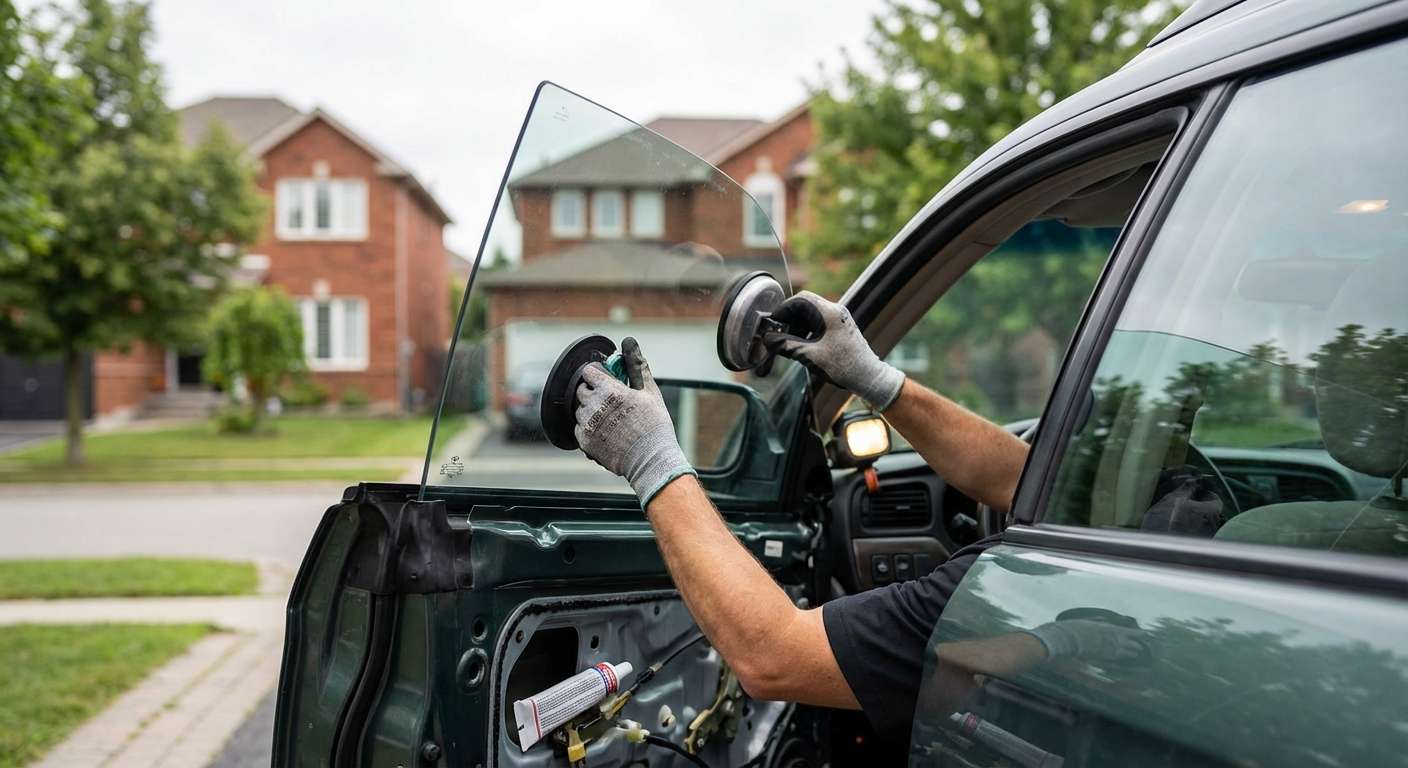
Replacing a door pane on the BH body requires setting three distinct planes of adjustment: inward tip, front-to-rear tilt, and upper stop height. Eccentric stoppers and adjustable stabilizer brackets inside the door frame control how hard the bare upper edge bites into the multi-lip roof arch seal. Without a modern automatic index-down system to drop the pane a fraction of an inch when you pull the handle, the glass must clear the roof channel while maintaining enough compression to seal out highway crosswinds.
Glass Codes and Factory Privacy Options
Rear door glass configurations split based on the trim level of the wagon. Base Outback models typically carry standard green-tinted solar glass throughout, while the Limited, H6-3.0, and L.L. Bean Edition packages received dark factory privacy glass on the rear passenger doors. When sourcing replacement glass, I rely exclusively on quality aftermarket manufacturers such as Pilkington, PGW, FYG, and XYG to match the original curvature and tint density precisely.
| Position | NAGS Number | Glass Spec / Factory Tint |
|---|---|---|
| Front Driver (Left) | FD20842 GTN | Curved tempered, solar green |
| Front Passenger (Right) | FD20841 GTN | Curved tempered, solar green |
| Rear Left (Wagon) | FD20844 GTN | Curved tempered, solar green |
| Rear Right (Wagon) | FD20843 GTN | Curved tempered, solar green |
| Rear Left Privacy (Wagon) | FD20846 GTN | Curved tempered, dark factory tint |
| Rear Right Privacy (Wagon) | FD20845 GTN | Curved tempered, dark factory tint |
The glass itself is completely passive. You will not find embedded defroster wires, antenna lines, or sensor brackets bonded to any movable door glass on this platform.
Stabilizer Pad Scratches and Gusset Whistling
Deep vertical scratches running up the center of an original window are almost universal on these cars. The inner stabilizer pads sit pressed against the glass surface to steady it. Over years of driving on gravel and salted winter roads, road grit lodges into the felt lining of these pads, turning them into abrasive blocks that gouge parallel lines into the tempered pane every time it rolls down. Replacing the glass requires pulling those pads out to clean away the embedded sand or replace their felt faces entirely, otherwise the new replacement glass will score within weeks.
The other persistent issue involves the triangular mirror gusset at the front corner. As the rubber in that forward channel hardens, splits, or pinches outward, it allows high-speed wind to slip past the glass edge, producing a loud whistling noise at cruising speeds. Squeezing the gusset channel back to its proper profile and aligning the window's forward rake restores the seal without requiring excessive motor lift pressure.
Winter Sticking and Regulator Binding
Freezing rain bonds frameless glass directly to the exterior roof weatherstripping. Because the regulator mechanism uses mechanical clamps and cable tension without a protective top frame to break the ice seal, hitting the power window switch on a frozen pane frequently shears the regulator cable or trips the circuit. When I set the replacement glass into the regulator clamps, checking the vertical travel path prevents the motor from binding against the B-pillar seals and keeps the power draw within normal limits.