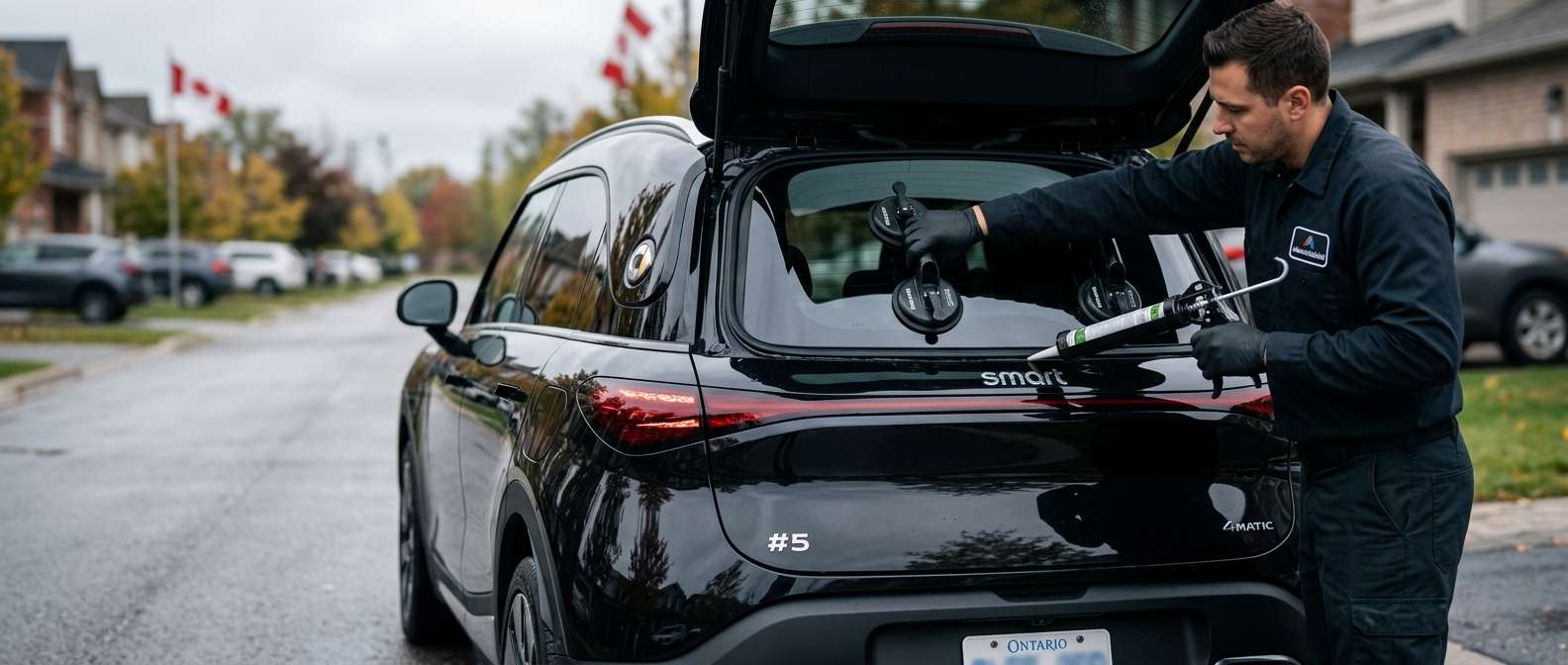
Rear Liftgate Glass and Defroster Grid Layout
Working on the one-piece rear power liftgate of this vehicle means dealing with a direct-glazed panel that has zero mechanical opening components. Owners discussing the rear glass on European and global EV forums often point out how cleanly the glass profile fits into the outer tailgate stamping, but that flush aesthetic demands precision around the perimeter. The heated defroster lines span the entire width of the glass, routing power away from the structural edges to keep winter frost and road mist clear without overheating the dark privacy tint that comes standard on the Pro+, Premium, and high-output BRABUS variants.
Because the panel is fixed permanently into the liftgate frame, there are no separate sliding panes or split tailgate hardware to navigate. When sourcing replacements for unexpected rear impacts, I rely strictly on aftermarket glass from major manufacturers like XYG, FYG, PGW, or Pilkington to match the acoustic density and heat-blocking qualities of the original hatch glazing. The factory privacy glass features high solar absorption to reduce heat soak into the rear luggage compartment, so keeping that deep charcoal pigment uniform with the side quarter windows is critical.
Rear Wiper Clearance and Roof Spoiler Fitment
One distinct feature on this rear panel is the integrated cutout engineered for the rear window wiper shaft. Unlike crossover designs that conceal the wiper assembly underneath the trailing edge of the roof, this setup drives the wiper pivot right through the lower section of the glazed area. Any replacement backlite has to provide clean clearance for this motor spindle, ensuring the water seal around the pivot sits completely flat without pressing into the tempered edge.
Directly above the top edge of the rear glass sits the extended roof spoiler, which houses the high-mount LED third brake light. The spoiler overhanging the glass means vertical clearance is tight at the top margin. The glass must slide up squarely beneath that spoiler channel without binding on the plastic housing of the third brake light. Since the reverse camera and the 360-degree ADAS parking sensors are set safely down into the lower tailgate sheet metal and bumper fascia, the backlite itself remains dedicated strictly to visibility, the defroster system, and wiper clearance.
Interior Surround Panels and Tempered Edge Protection
Inside the cabin, the rear glass perimeter is closely framed by molded plastic liftgate trims that wrap the interior sheet metal. When rear tempered glass shatters, owners often find that fragments collect inside the lower hollows of the liftgate shell. Removing the interior hatch cards is necessary to extract all trapped glass particles before seating a fresh panel against the liftgate flange, preventing persistent rattles every time the power liftgate latches shut.
Because the glass acts as a structural closure panel for the rear luggage bay, proper alignment relative to the roofline and lower liftgate contour is critical. The tempered panel must remain centered so that the surrounding plastic trim pieces clip back into place without touching the raw edges of the glass, maintaining quiet cabin acoustics at highway speeds.