Frameless Door Geometry and Flush Handle Indexing
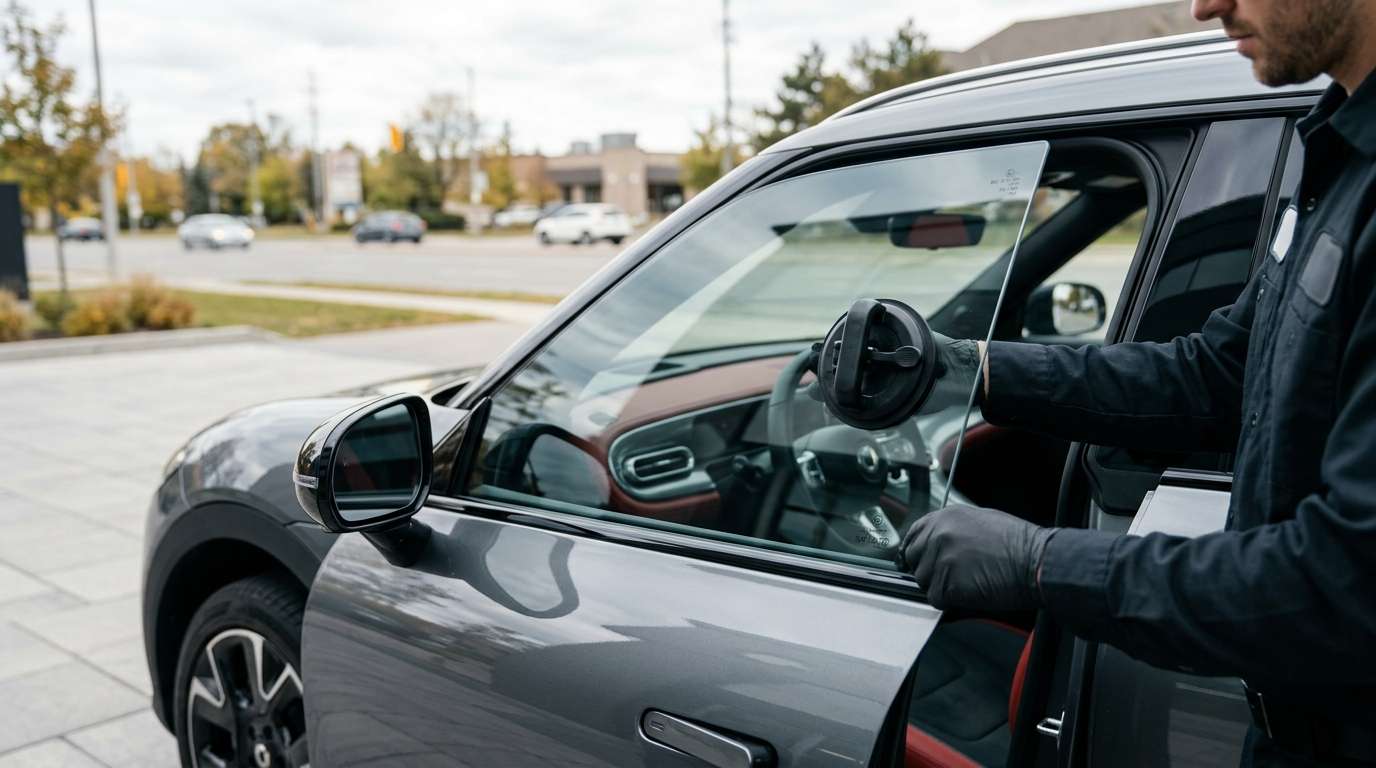
Working on the Smart #3 door glass means dealing directly with its frameless architecture, where the glass itself creates the cabin seal against the roofline channel rather than sliding into a rigid upper metal frame. When you reach for one of the concealed, flush-retracting exterior door handles, a microswitch immediately signals the window motor to drop the pane a fraction of an inch out of the upper rubber channel before the latch fully disengages. If this indexing drop fails or gets misaligned during replacement, the top edge of the pane catches hard against the roofline weatherstripping when the door swings open or shut, risking chipped edges or torn rubber moldings.
Because there is no traditional upper window frame to hide small alignment errors, the glass pitch, depth, and tilt must be set accurately inside the door shell. The pane rides along the lower rubber outer belt mouldings and presses against continuous roofline channel seals when fully raised. Unlike the front windshield or the back hatch, these side doors contain no camera brackets, defroster lines, or rain-sensing hardware, keeping the glass uncluttered, but the physical positioning demands far tighter tolerances than conventional framed doors to prevent seal hiss at highway speeds.
Trim Variants, Glass Tints, and Cabin Sound Levels
Matching the correct replacement glass requires identifying the specific equipment level of the vehicle. The entry-level versions use standard green solar-tinted glass across all four doors, whereas the Premium, 25th Anniversary Edition, and Brabus models come equipped with dark privacy glass behind the B-pillar. Putting the incorrect glass on a rear door leaves an obvious mismatch between the rear descending glass and the stationary triangular quarter glass, which sit adjacent to each other separated by a narrow vertical division bar.
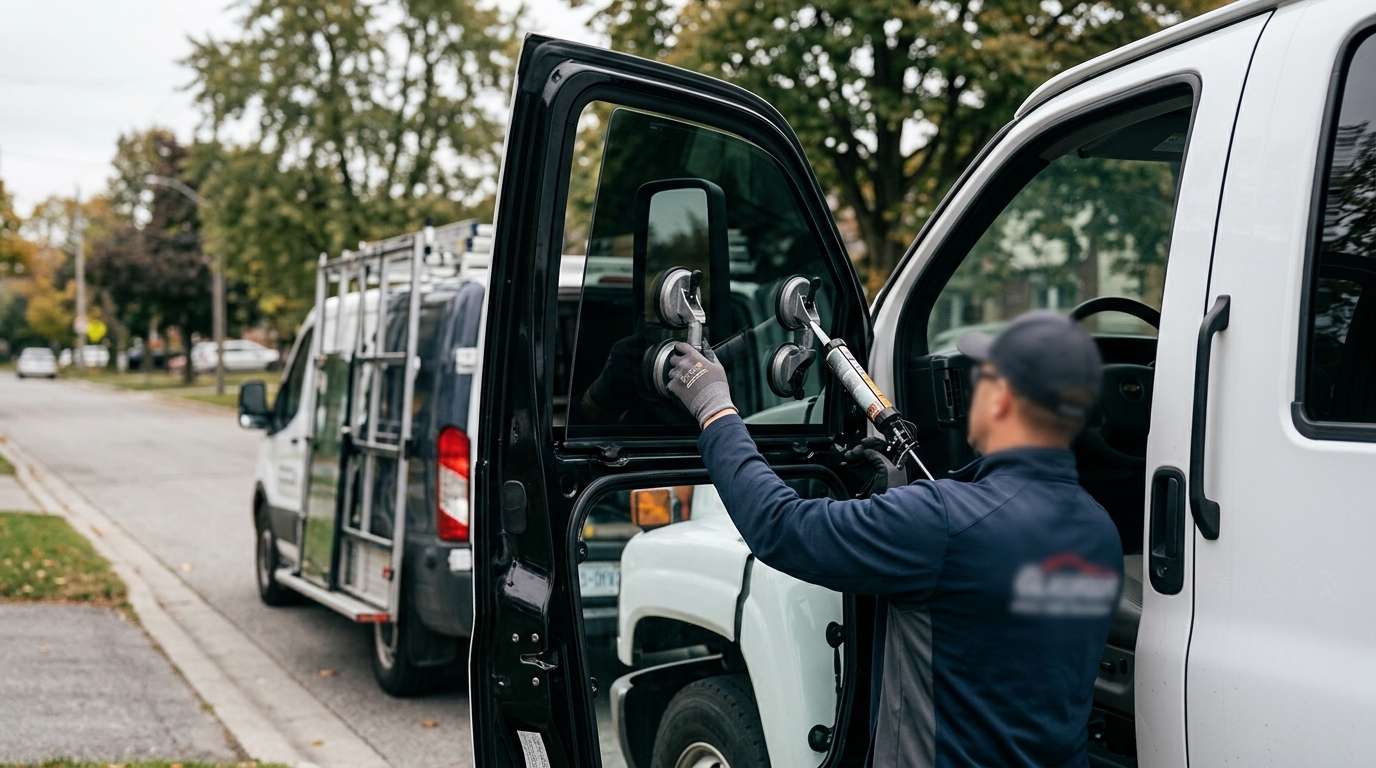
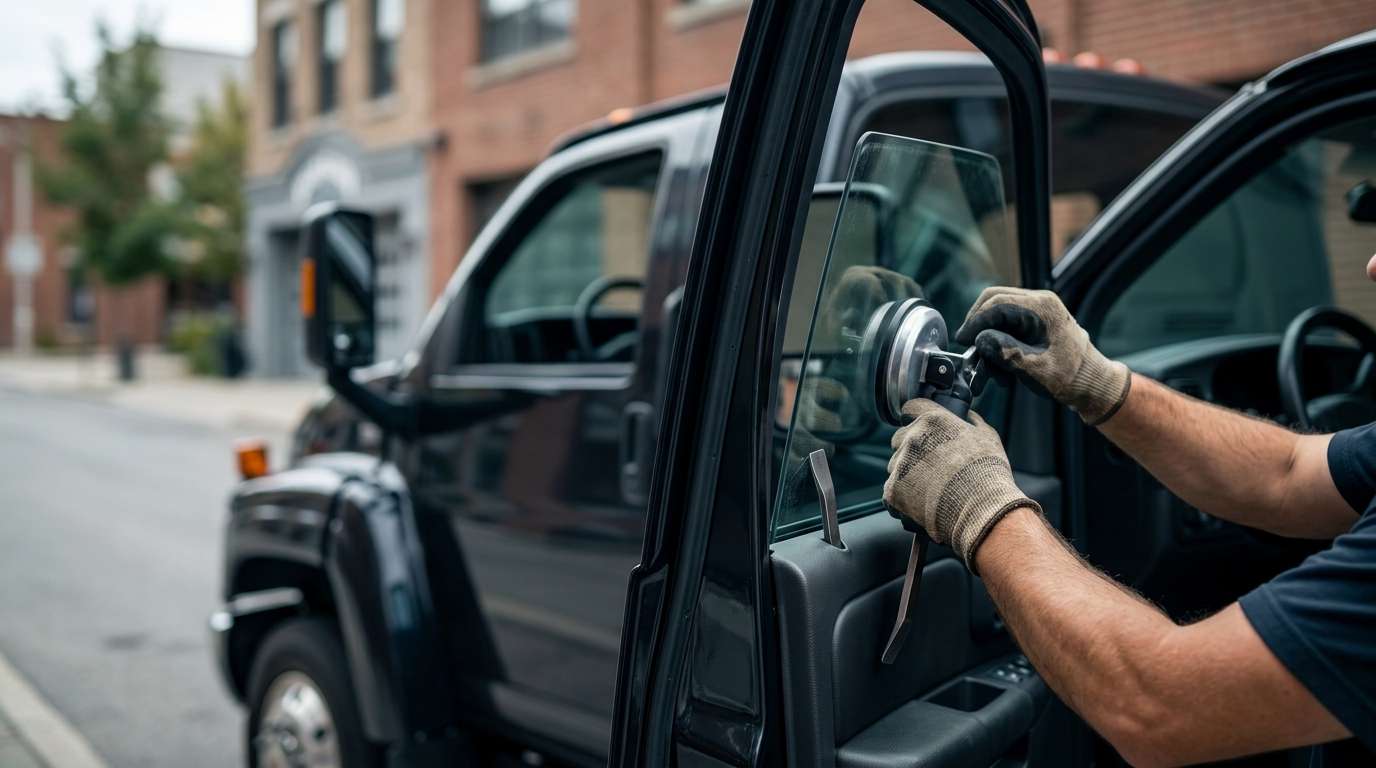
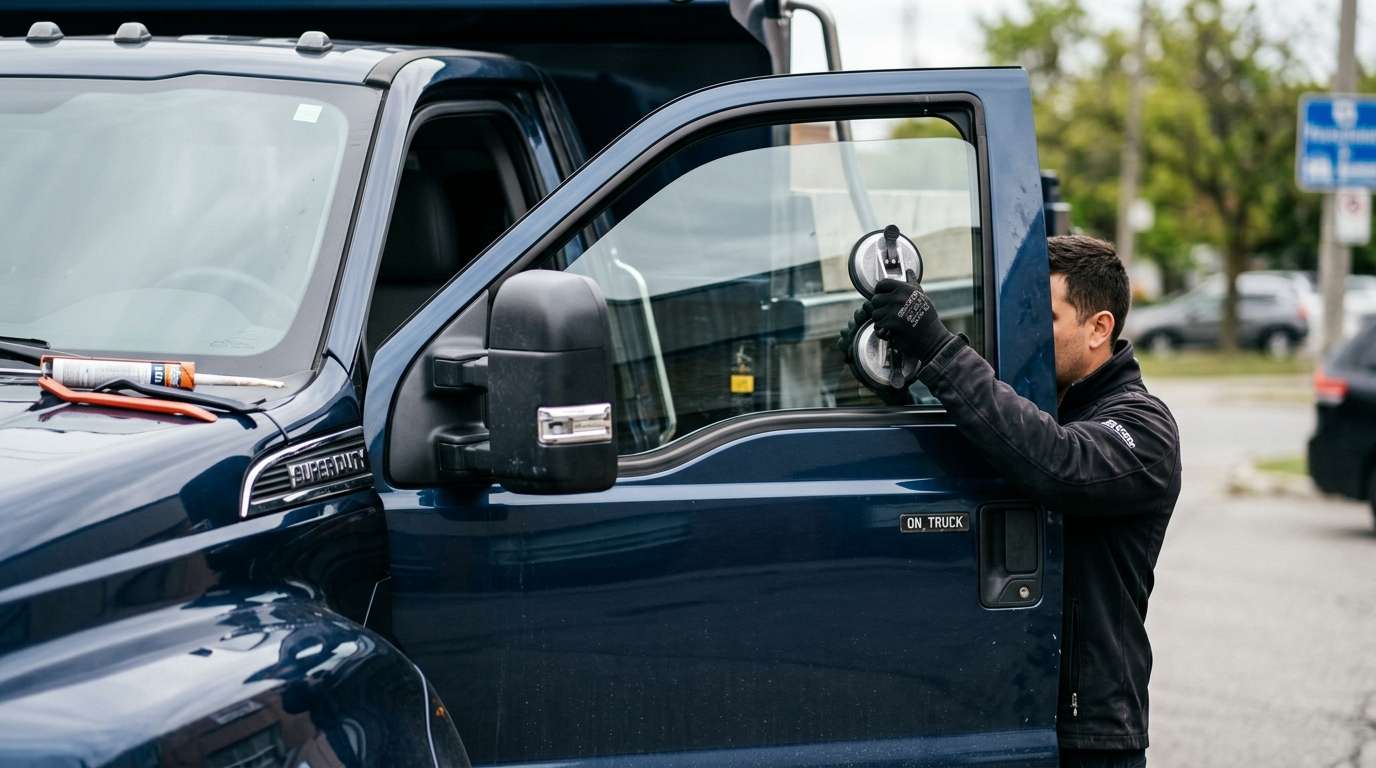
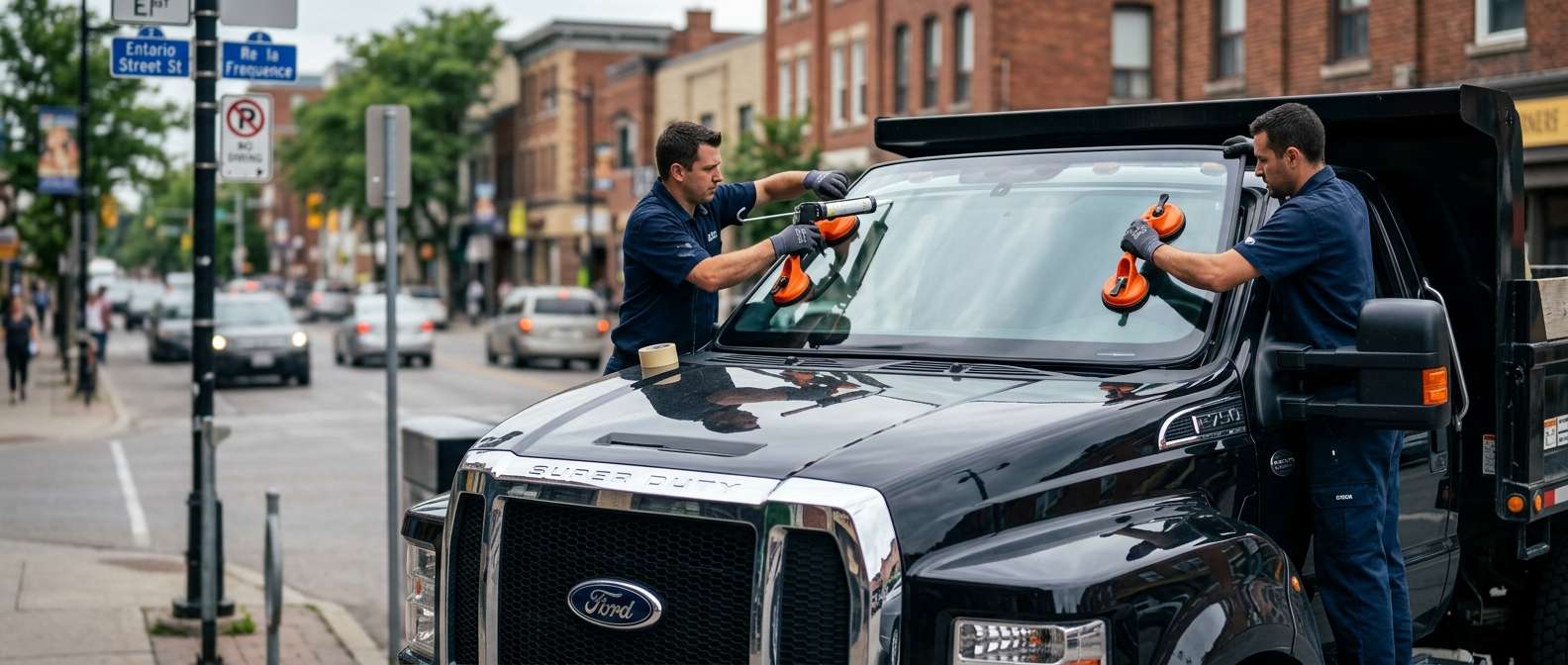
Wind rush around the A-pillar and roofline is an inherent challenge of this vehicle's frameless coupe profile. When road grit or cabin flex causes the glass to chatter against dry body weatherstrips, or when a broken side window leaves you stranded, I handle the replacement on-site at your home or workplace anywhere across Toronto and the GTA. Proper mechanical seated alignment within the bottom clamps ensures the glass exerts even, continuous pressure against the body rubbers from front to back, cutting down on highway wind leak issues that frequently trouble these frameless cabins.
Addressing Regulator Travel and Winter Seal Friction
Freezing temperatures create unique operational strains on this setup. Ice can form along the exterior horizontal beltline seal, pinning the frameless pane in place just as the flush door handle extends. If the microswitch triggers the motor while the bottom of the glass is locked by ice, the window motor strains against the internal mechanism. Once a new pane is secured to the lower regulator mounts, resetting the motor travel limits via the driver door switch cluster is necessary so the system knows the precise boundary for both the automatic drop and the weather-tight park position.
The interior layout requires releasing the decorative interior trim cards and the inner vapor barrier to gain access to the glass track guides. The rear doors present an additional clearance checkpoint: the vertical division bar must guide the descending glass smoothly downward into the door cavity without binding against the stationary rear quarter section. Setting the glass depth evenly within the run channels prevents premature motor drag, stops glass chatter across uneven road surfaces, and keeps the continuous upper seal completely seated against the roofline.