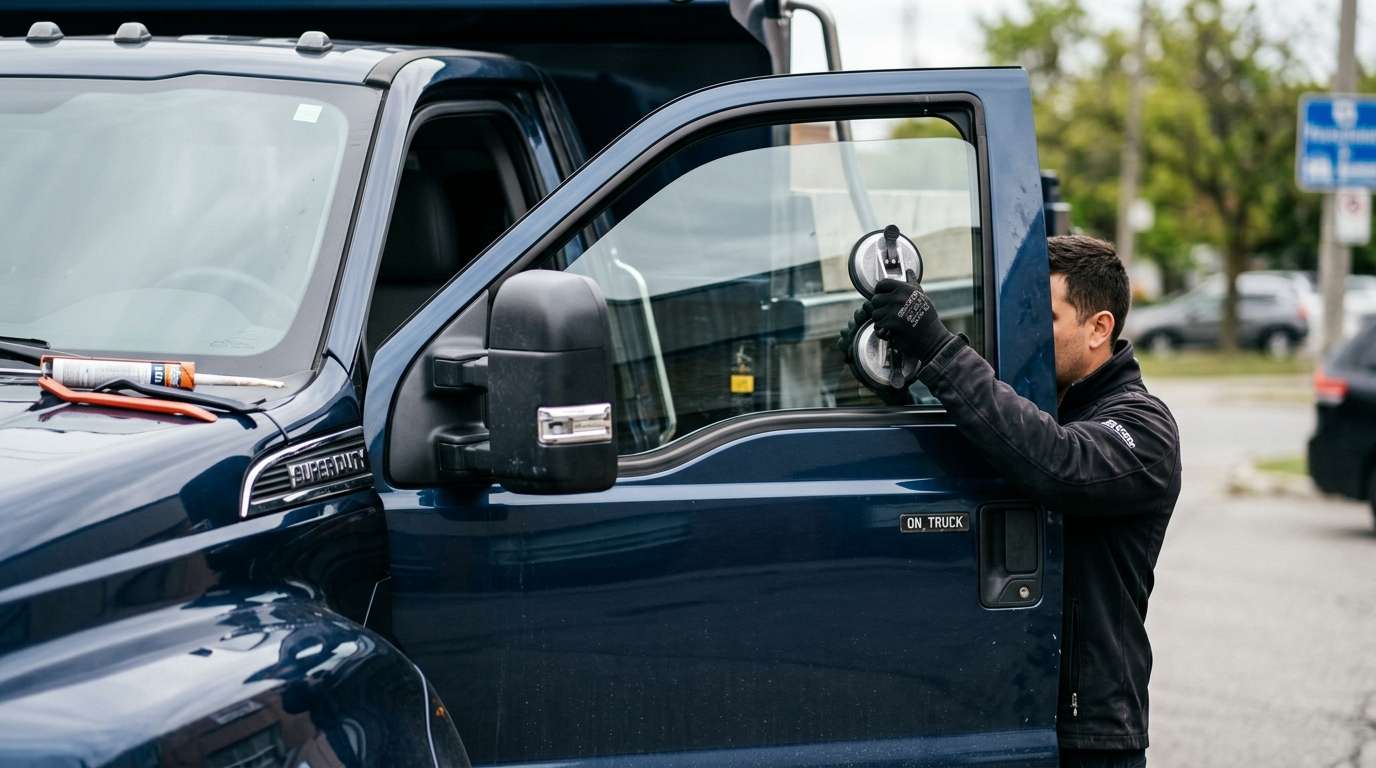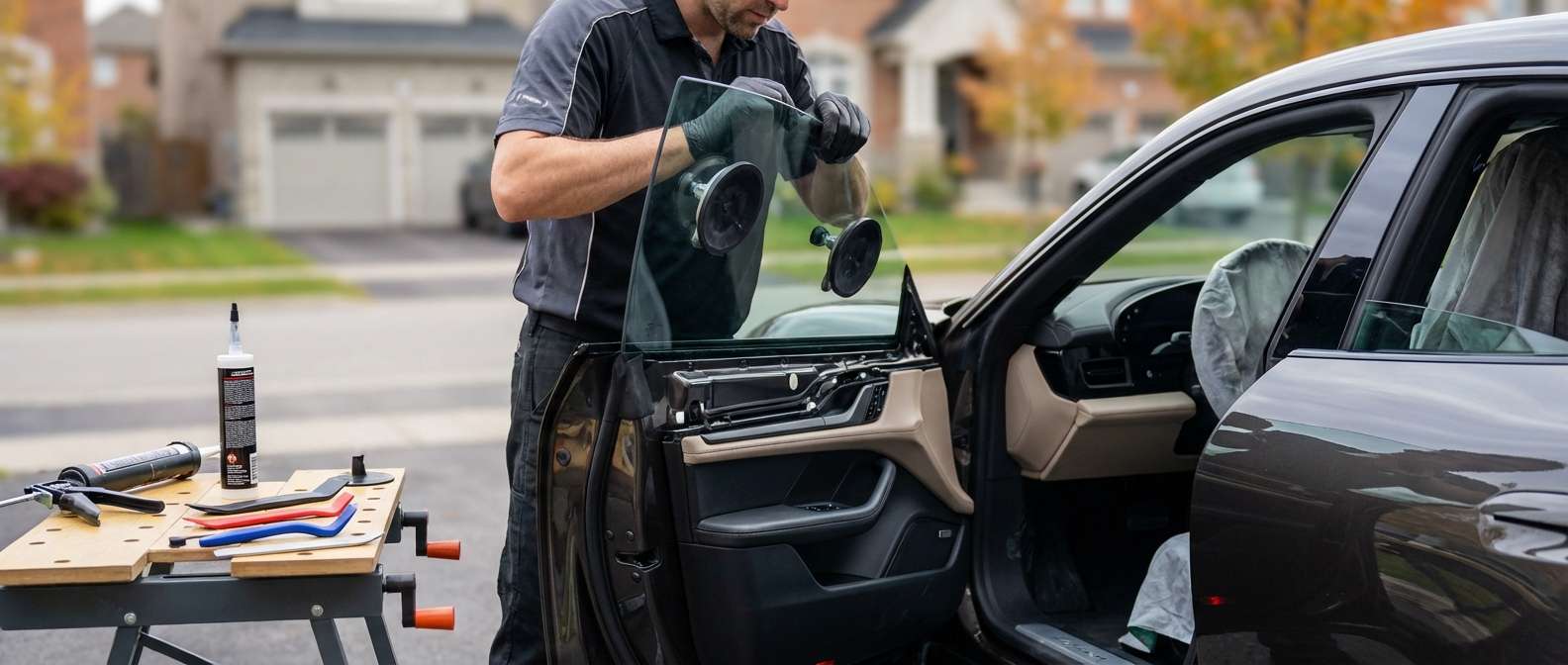
Frameless Side Glass and Laminated Acoustic Layers on the Taycan
Working on the doors of the refreshed Taycan requires paying strict attention to whether the car came equipped with standard toughened glass or the optional thermally and noise-insulating acoustic package. The baseline configuration relies on standard single-pane tempered panels, carrying dealer references like 9J1-845-019-B for the front left and 9J1-845-020-B for the front right. If your Taycan has the acoustic upgrade, Porsche completely changes the construction of the glass itself to a heavy five-layer composite sandwich made of two panes of glass bonded around three distinct PVB interlayer films. The matching front acoustic panels, identified by Porsche numbers 9J1-845-019-F and 9J1-845-020-FY, incorporate an infrared-reflecting solar membrane that reduces solar heat gain in the EV cabin and gives the glass a faint, distinctive sheen at sharp angles. In the rear doors, standard single-layer glass under 9J1-845-025-D is swapped for 9J1-845-025-H when optioned with the acoustic package, which frequently pairs with deep privacy tinting. The thicker laminated sandwich makes the side glass vastly harder to penetrate than standard tempered drop glass, creating a strong theft deterrent alongside exceptional high-speed wind silence.
Setting Window Pre-Tension and Indexing on the 9J1-II Door Architecture
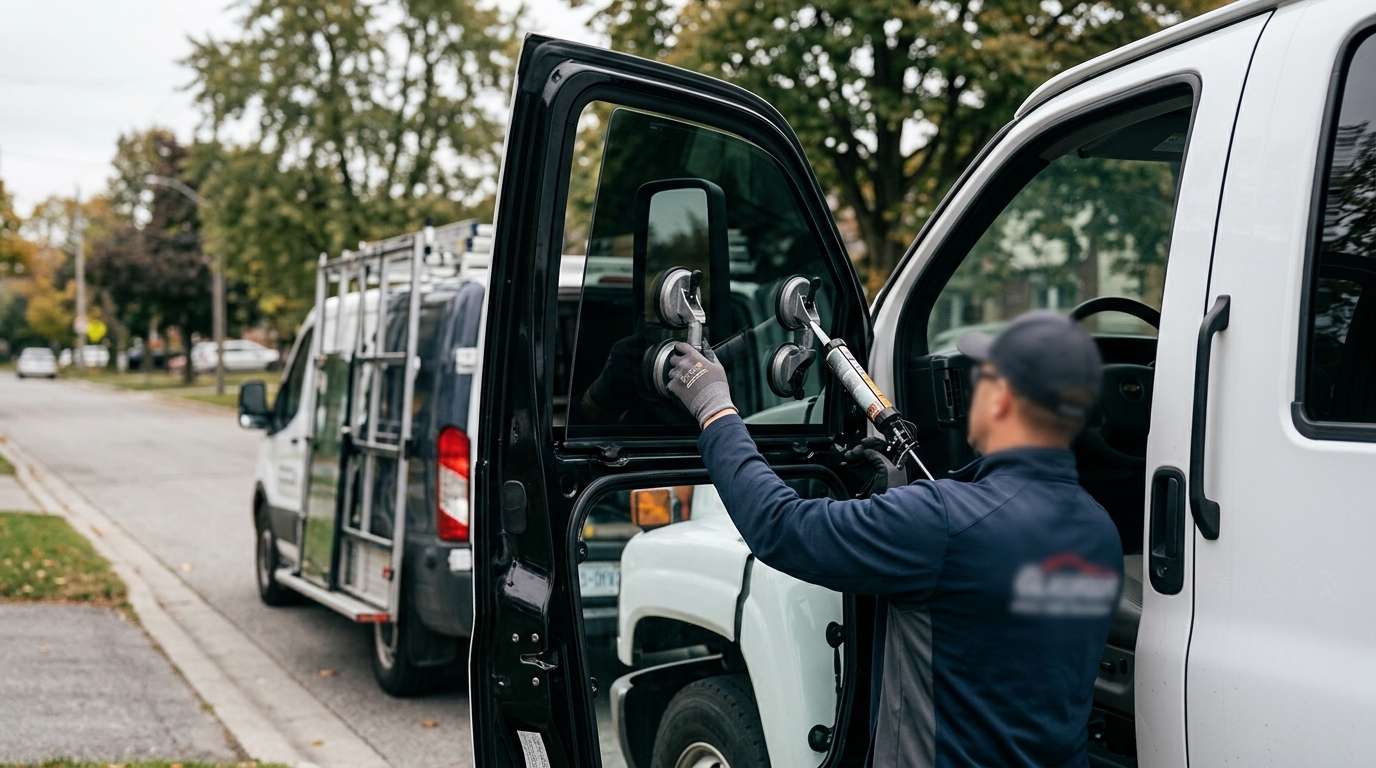
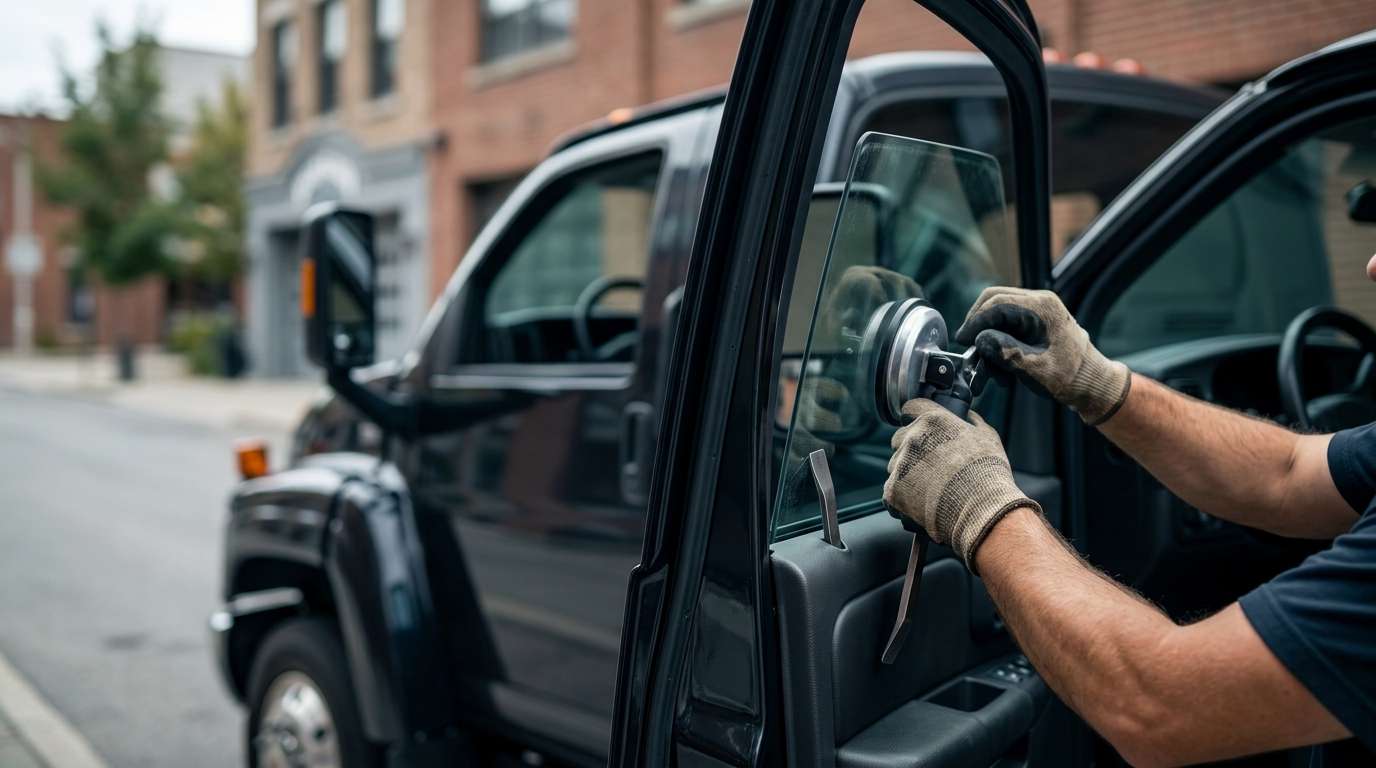
The updated 9J1-II platform uses completely frameless door glass on all four passenger apertures, leaving the pane exposed along the top and sides until it docks against the multi-lip EPDM weatherstripping fixed to the roofline and pillars. When you grasp an exterior door handle, the door control module instantly commands the reversible DC motor on the twin-rail cable regulator to drop the pane roughly 10 to 15 millimeters so it clears the body frame. Releasing or closing the door drives the pane upward into the deep roof seal pocket. Because the glass has no surrounding metal frame, the physical clamping brackets attached to the bottom edge of the glass must be set with exact inward tilt and lateral alignment. If the pitch against the upper weatherstrip is off by even a millimeter, the cabin will suffer wind rush at highway speeds or produce annoying squeaks when the body flexes over uneven pavement. Whenever I hang and align new glass in these doors, I cover my own workmanship for as long as you own the vehicle, alongside a full one-year defect warranty on the replacement pane itself.
Electronic Limit Relearn and Freezing Weather Behavior
Every time a door glass panel is replaced or detached from the window regulator carrier inside the Taycan door shell, the door control module loses its baseline positioning. Restoring the automated indexing function requires performing an electronic limit-stop relearn. The window regulator motor relies on built-in anti-pinch sensors to stop upward movement if an obstruction is encountered; without running the adaptation routine, the motor cannot distinguish between a foreign object and the natural resistance of seating into the thick upper rubber seals, often triggering false bounce-backs. In Canadian winters, this indexing system faces serious stress when freezing rain or sub-zero road slush locks the bottom edge of the frameless pane against the exterior beltline squeegee seal. If the regulator cannot complete its mechanical drop when the door handle is pulled, the upper edge of the glass will catch against the outer roof rail molding, which can tear the EPDM seal or bind the door latch entirely.