Matching Acoustic Laminated vs. Tempered Glass on the 92A
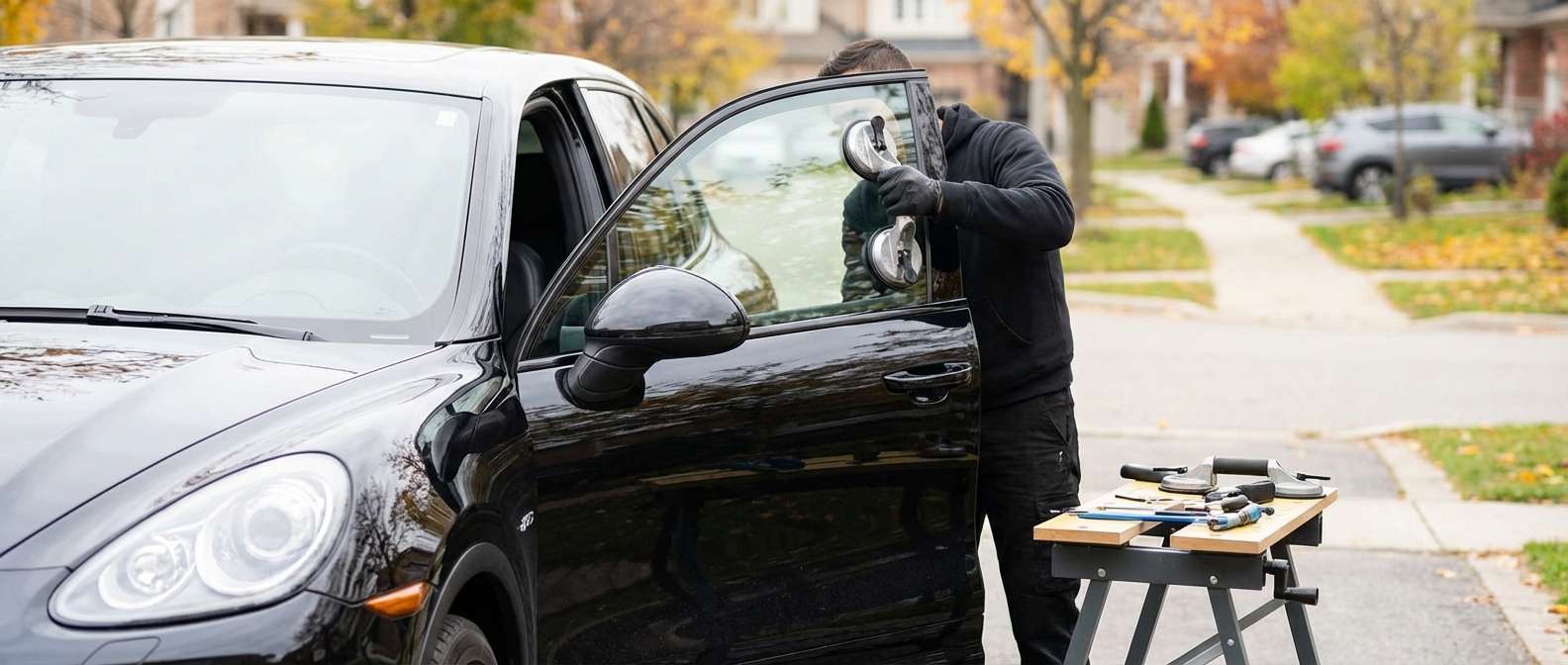
When ordering replacement door glass for the Cayenne, the first detail I verify is whether the vehicle came equipped with standard single-layer tempered glass or the optional thermally and noise-insulated dual-pane laminated glass. You can determine this immediately by rolling down an unbroken window slightly and looking at the top exposed edge. If you see a solid, single sheet of glass with smooth pencil-polished edges, it is the standard tempered unit. If you see two thin sheets of glass bonded together with a clear polyvinyl butyral (PVB) acoustic interlayer in the center, your vehicle has the insulated package.
Getting this match right matters because standard tempered front left drop glass corresponds to dealer reference 958-542-511-01 (superseding 958-542-511-00), whereas the front right corresponds to 958-542-512-01 (superseding 958-542-512-00). Installing a standard single-pane window in a door designed for the thicker laminated version can cause wind whistles at highway speeds, because the door run channels and waistline seals are set up for precise glass thicknesses. Conversely, laminated glass is thicker, and forcing it into a vehicle equipped with standard narrow-profile scraper seals puts heavy strain on the dual-rail cable regulator.
Framed Window Sashes, Regulators, and Rear Division Bars
Unlike the frameless drop glass on the contemporary Porsche Panamera, the Type 92A Cayenne uses fully framed door sash assemblies. The glass does not index downward when you pull the door handle. Instead, it travels inside rubber-flocked window channels supported by a rigid frame built into the door structure.
At the bottom of the window, the glass sits inside two rubber-padded clamp brackets that bolt to the twin vertical tracks of the cable-operated regulator. On rear doors, the glass is also constrained by a rigid vertical division bar that separates the main roll-down window from the small stationary rear quarter vent glass. I back my replacement glass with a one-year defect warranty alongside a lifetime guarantee on my installation workmanship, ensuring the sash clamps and channels seat without rattles or binding.
Because Porsche designs the inner scraper seals at the door beltline with exceptionally tight tolerances, any trapped grit inside the flocked lining can severely scour fresh glass. Whenever a panel breaks, microscopic fragments of tempered glass tend to wedge directly into the lower felt weatherstripping. I thoroughly clean these channels and inspect the regulator cables for kinks before any new aftermarket pane drops into position.
Post-Installation Checklist for Cayenne Owners
Once the door trim panel, inner carrier plate, and outer beltline trim are completely reassembled, run through these checks to ensure the door glass operates correctly:
- Pinch-Protection and Window Travel: Pull the window switch to the second detent for automatic one-touch roll-up; verify the glass travels smoothly into the upper sash channel without slowing down or bouncing back down from false anti-pinch trigger activation.
- Vertical Division Bar Seating: On rear doors, check that the leading edge of the drop glass tracks perfectly parallel inside the vertical division bar without pushing the rubber seal sideways.
- Beltline Scraper Tension: Inspect both the interior and exterior horizontal waistline wipe seals to confirm they sit flat against the glass surface without curling under as the window lowers.
- Highway Wind Noise: At speed, listen near the B-pillar and upper sash frame for any rushing air, which indicates the glass clamp brackets require fine-tuning along the dual-rail regulator mounts.
- Acoustic Thickness and Tint Match: If your vehicle features rear privacy glass, confirm the replacement pane matches the factory green or deep-tint hue of the adjacent rear quarter vent pane.