Two Distinct Rear Glass Systems: Cayman Hatch vs. Boxster Soft Top
Addressing rear glass damage on this mid-engine Porsche lineup depends entirely on whether your car is a coupe or a roadster. The two body styles share underpinnings, but their rear windows could not be more different from an auto glass perspective.
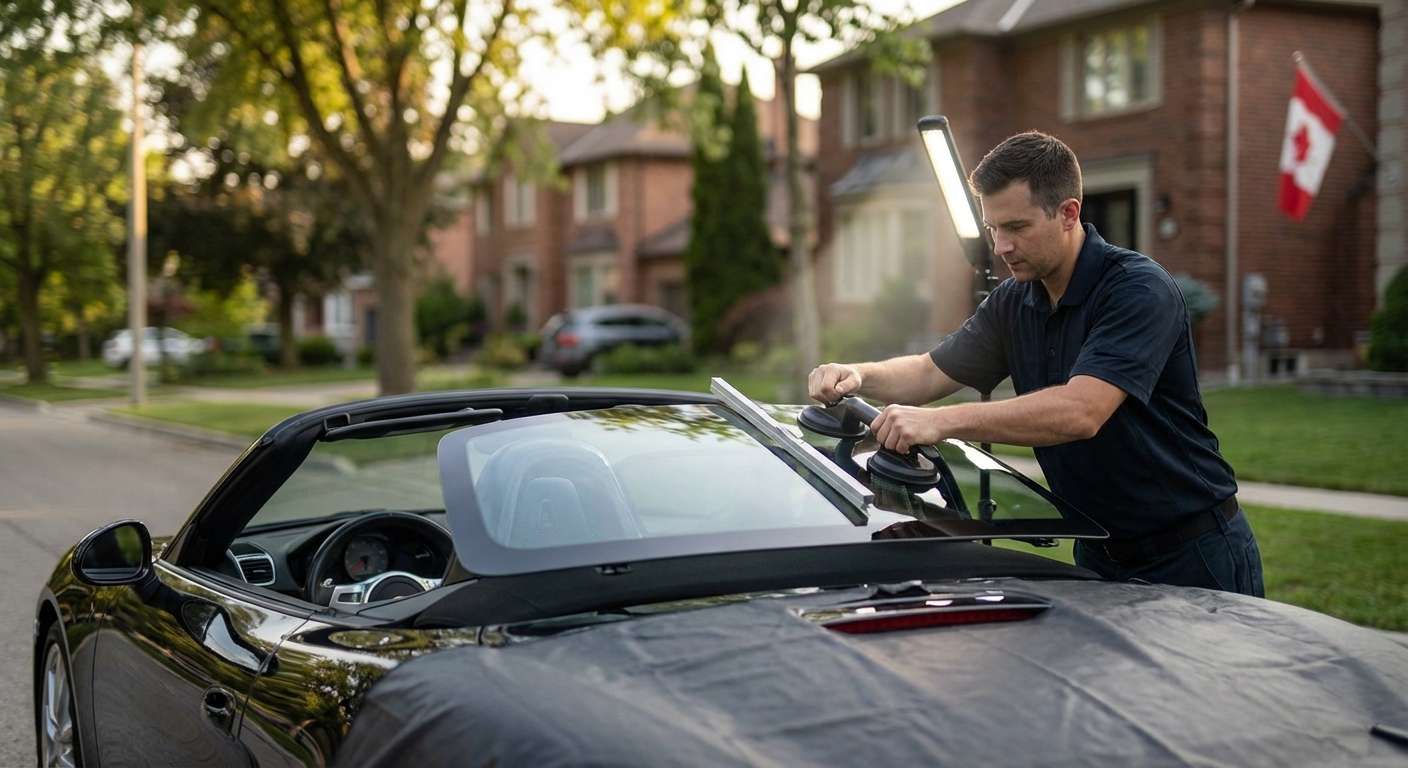
On the Cayman coupe, the rear window is a large, direct-glazed hatch glass (referenced under Porsche dealer numbers 981-545-911-02 and superseding revision 981-545-911-03). It is glued into a lightweight aluminum rear liftgate frame and features pre-applied edge encapsulation moulding that aligns flush with the outer bodywork. By contrast, the Boxster roadster embeds a heated safety glass pane directly into the canvas convertible top. Because Porsche does not supply that glass as an independent service part, a shattered rear pane on a roadster typically means re-bonding an aftermarket glass pane directly into the fabric or replacing the soft-top skin entirely.
| Feature | Cayman Coupe | Boxster Roadster |
|---|---|---|
| Glass Mounting | Bonded to aluminum hatch lid | Bonded into fabric convertible top |
| Standard Antennas | Embedded diversity grid | Remote/body mounted |
| Security Circuit | Glass-breakage loop in trace | Interior cabin radar/tilt sensors |
| Hatch/Lid Material | Aluminum liftgate frame | Folding magnesium/fabric frame |
Electronics Embedded in the Cayman Back Glass
The rear window of the coupe does far more than keep the weather off the mid-engine service bay carpet. The horizontal lines across the glass are divided into two distinct circuits: the standard heated defroster grid and an integrated glass-breakage alarm loop tied to the factory anti-theft system.
If you experience sudden, phantom alarm sirens or vehicle warning chirps when locking your car, a scratched or broken defroster trace is often the culprit. A hairline break in the conductive grid breaks the continuity of the alarm loop, signaling to the vehicle that the rear window has been breached. When I replace this glass, I take extra care protecting the sensitive electrical terminals that connect to the interior tailgate harness, and I cover my work with a lifetime guarantee against leaks and installation defects alongside a one-year warranty on the replacement glass itself.
Interior Surroundings and Exterior Drainage Channels
Surrounding the coupe's rear window is a combination of molded plastic hatch interior trim and dense acoustic carpet panels that isolate engine noise from the passenger compartment. Beneath the bottom glass edge on the exterior, there is a tight drainage channel between the lower ceramic frit border and the rear hatch lid sheet metal.
Over time, this crevice collects road grit, pine needles, and standing water. If debris sits undisturbed against the lower glass edge, it can accelerate cosmetic edge delamination or cause a cloudy, milky appearance along the perimeter ceramic frit dots. On the roadster side, the defroster relies on flexible, insulated pigtail wiring harnesses designed to pivot cleanly with the mechanical soft-top linkages every time the roof folds behind the roll hoops, requiring unobstructed clearance to avoid pinching during operation.