Frameless Window Engineering and the 996 Cabriolet Connection
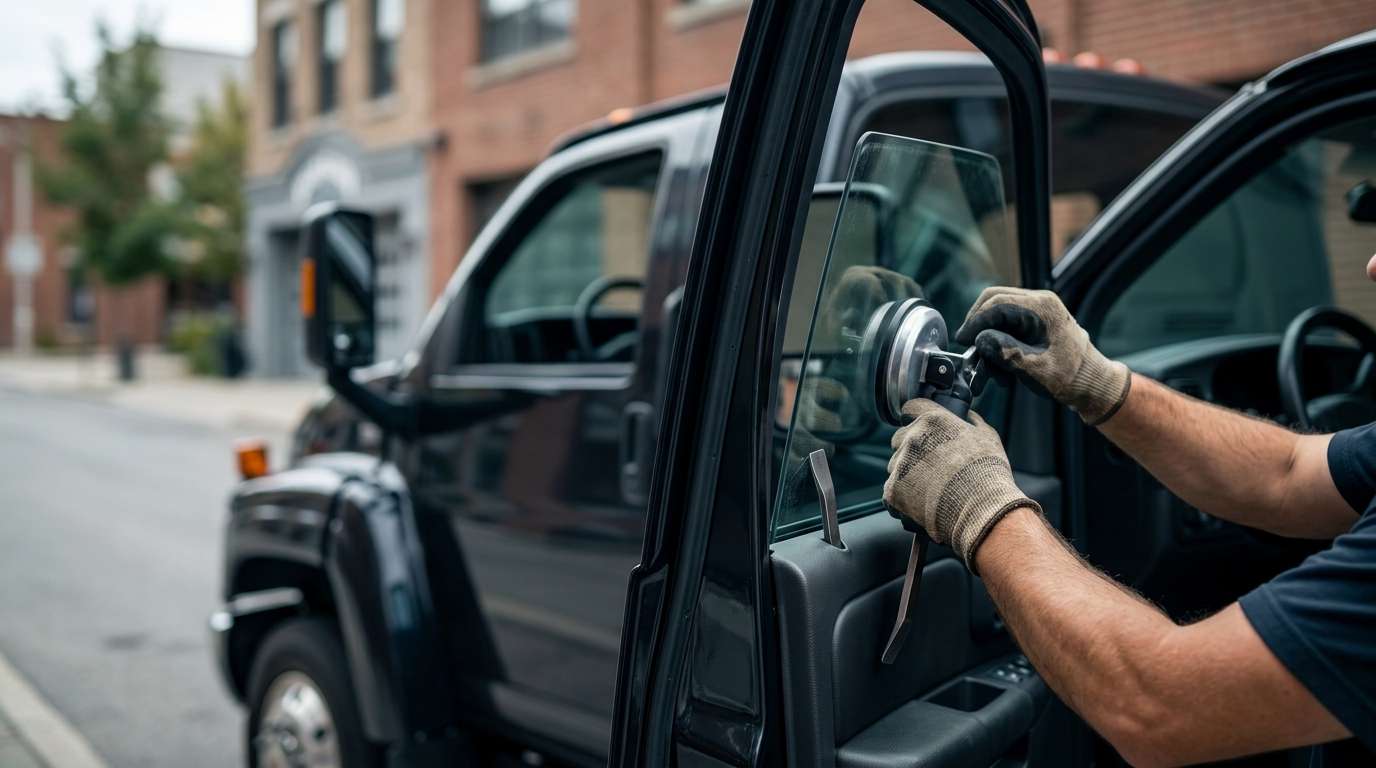
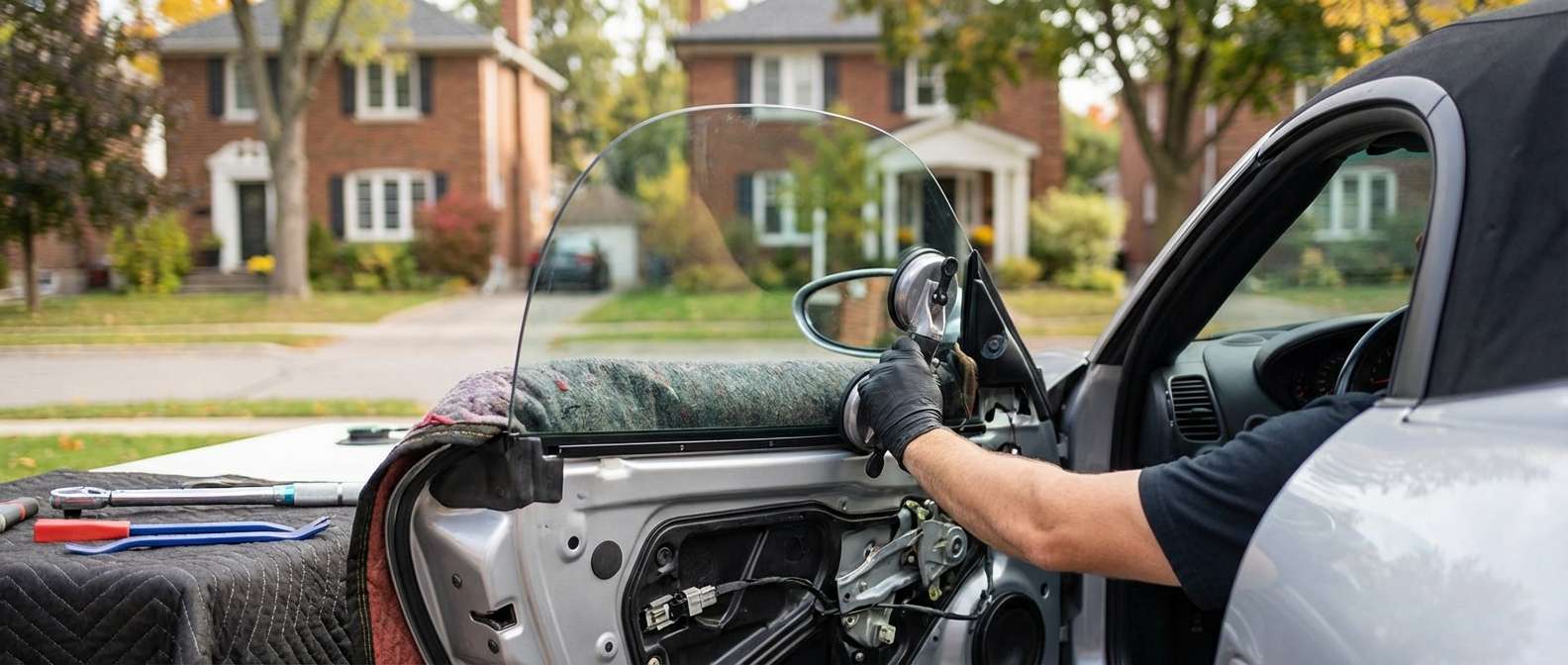
Replacing the door glass on this roadster requires understanding how Porsche engineered its frameless side windows. The tempered, green-tinted door window does not sit inside a metal frame; instead, it presses straight into the rubber weatherstripping along the A-pillar windshield surround and the edge of the convertible soft top or optional factory hardtop. There are no embedded antennas, defroster filaments, acoustic laminates, or glued brackets on the glass itself. Everything relies on two bottom clamp mounts that grip the bare glass and link it to the dual-rail, cable-driven power window regulator inside the door shell.
A critical detail involves part compatibility across the Porsche lineup from this era. The door glass on this roadster shares its exact shape and curvature with the contemporary 996-series 911 Cabriolet, but it is completely incompatible with the 996 Coupe or Targa models. The fixed-roof cars use a distinctly different upper profile (dealer references 996 542 511 02 and 996 542 512 02) that will not seal against the convertible canopy. When sourcing replacement glass, the curvature must match the roadster profile exactly to avoid massive air leaks and crushed weatherstripping.
| Door Position | OEM Reference | Compatible Body Styles |
|---|---|---|
| Left / Driver Side | 996 542 511 03 | 986 Boxster, 996 911 Cabriolet |
| Right / Passenger Side | 996 542 512 03 | 986 Boxster, 996 911 Cabriolet |
Short-Drop Indexing and Internal Hardware Challenges
Whenever you lift either the exterior door handle or the interior release lever, a dedicated microswitch signals the window regulator to instantly lower the glass roughly 10 to 12 mm. This short-drop action pulls the top edge of the glass out of the deep rubber channel of the soft-top rail just before the door swings open. When the door latches shut, the glass powers back up into the seal. Similarly, releasing the central manual roof latch drops both side windows slightly so the folding roof framework never snags the top glass edge during retraction.
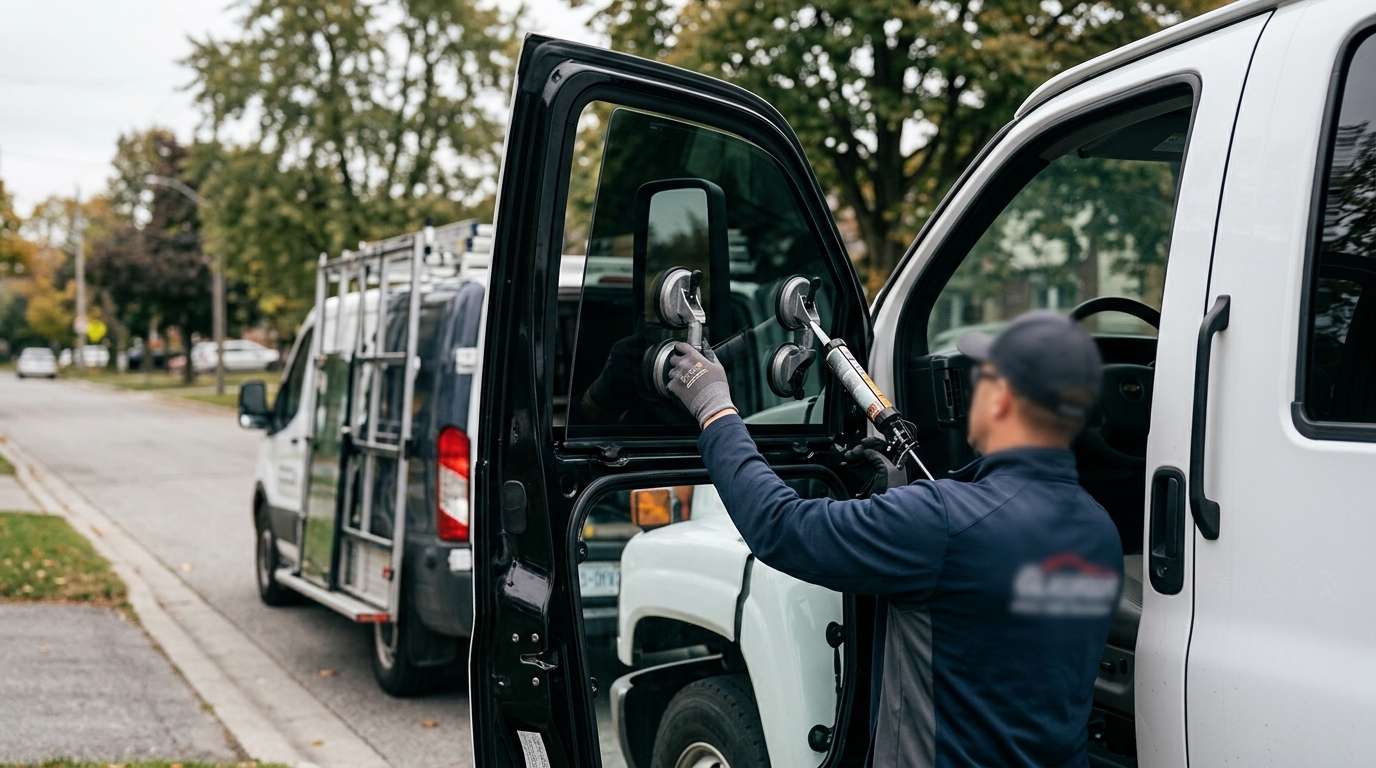
Because these microswitches and the regulator cables take a beating over years of use, a window that refuses to drop usually stems from a failed door latch microswitch or frayed cables wrapping around the regulator's internal plastic pulleys (OEM 996 542 075 04 left, 996 542 076 04 right). When a window shatters or jams, I can usually be at your location about an hour after booking to inspect the door cavity and replace the pane. Stripping the door involves removing the interior door card secured with hidden Torx hardware and plastic retaining clips (part 999 507 505 40), then carefully peeling back the delicate foam moisture barrier without tearing it to access the glass clamps.
Setting Window Rake, Depth, and Limit Stops
Simply bolting the new glass into the bottom regulator clamps is not enough to finish the job. Because the car lacks an upper window frame, all wind and water resistance depends on manual glass alignment performed at the base of the door. The regulator mounting points feature mechanical adjustment torx bolts accessible from underneath the door shell and behind the vapor barrier:
- Height Adjustment: Governs how deeply the glass seats into the upper A-pillar and roof weatherstripping when fully raised.
- Tilt (Rake) Adjustment: Tilts the window fore and aft so the front edge runs completely parallel to the windshield A-pillar channel.
- Inward/Outward Camber: Adjusts the inward pitch of the glass against the roof seal to stop high-speed cabin buffeting and water intrusion.
Once the glass is aligned and the door card reassembled, the control module needs a limit reset. Disconnecting the battery or swapping glass causes the one-touch control to lose its upper and lower boundaries. By holding the console window switch down until the glass bottoms out, then pulling it up and holding it for several seconds after the glass seats into the soft top, the system relearns the pinch boundaries and restores the automatic short-drop indexing.