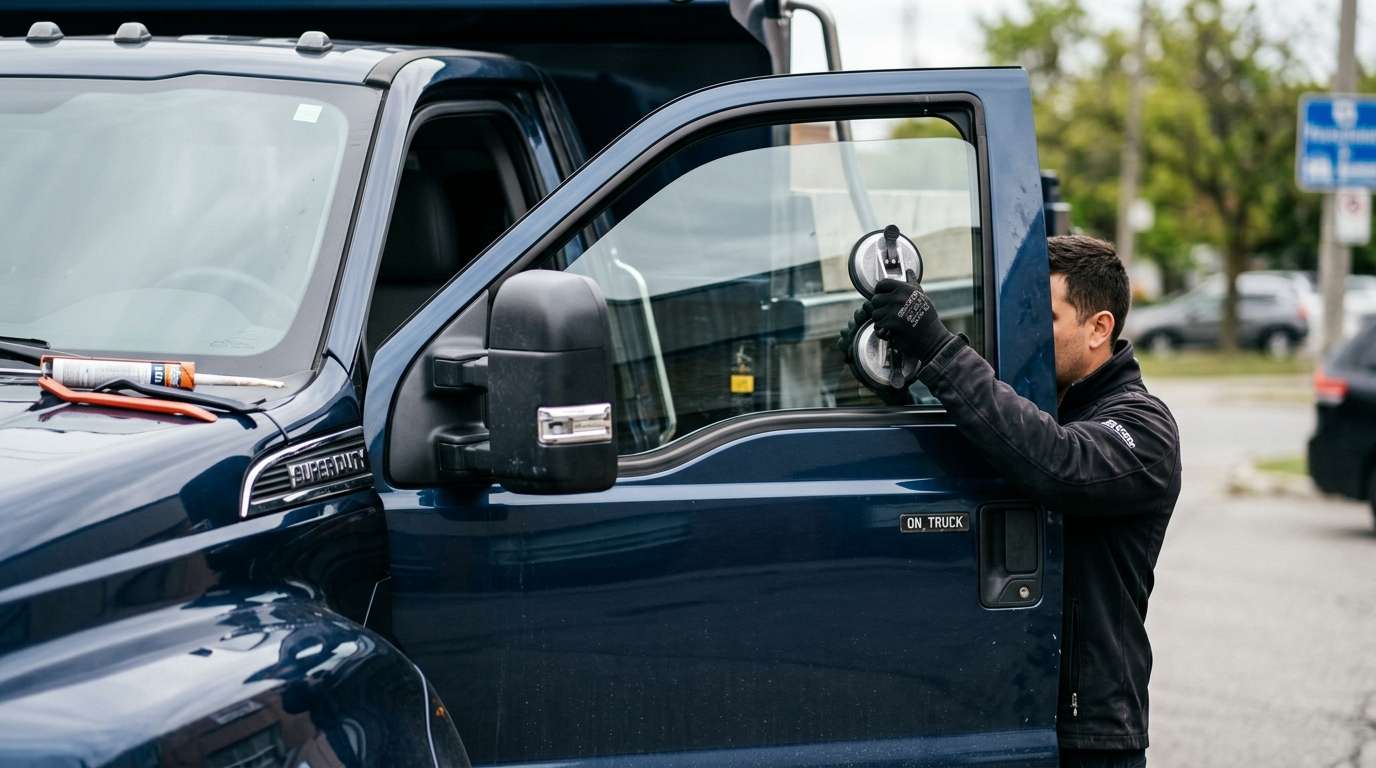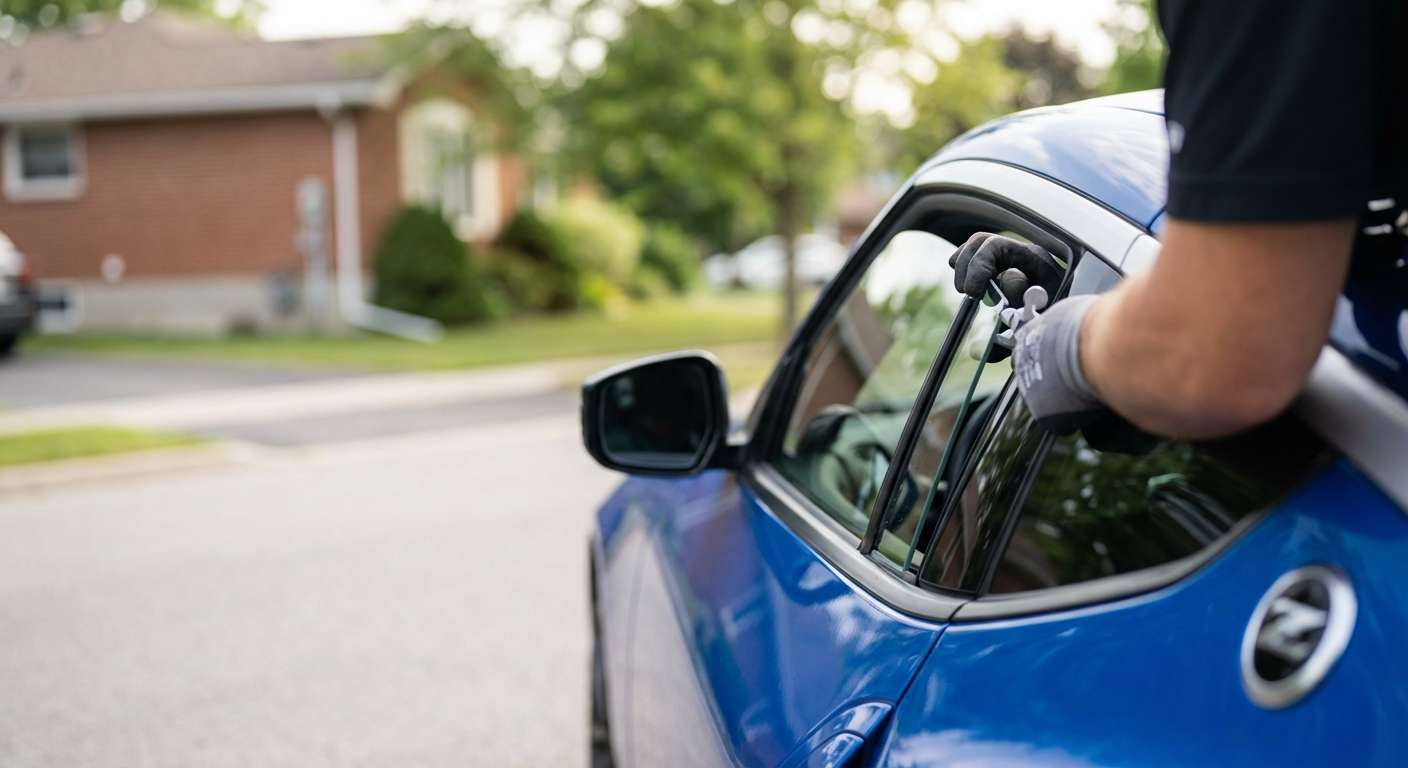
Stationary Quarter Glass on Nissan Z Coupes
Breakage on the triangular side glass behind the door of a Z coupe leaves an exposed opening straight into the hatchback cabin. Even though parts catalogs sometimes label this piece as a rear vent window, it is an entirely stationary pane bonded directly to the steel body. It does not pivot, drop, or open mechanically. The glass features a factory green solar-control tint and a wide black ceramic frit band around the perimeter that shields the bonding line from ultraviolet breakdown and hides the pinchweld.
Because the hatchback shares air space with the front cabin, any damage to this glass immediately fills the interior with exterior road noise, rain, and debris. Because there are no internal defroster lines, antennas, or optical sensors embedded in these side panes, replacement is focused entirely on achieving correct perimeter alignment and clean trim integration.
Chassis Variations, Fasteners, and Part Numbers
Each iteration of the coupe redesigns the exterior profile, meaning glass dimensions do not carry over between the Z33, Z34, and RZ34 bodies. Roadsters from the 2004–2009 and 2010–2019 model years do not have side quarter glass at all; they rely strictly on their soft tops and clear wind deflectors between the headrests.
| Coupe Iteration | Years | Left Hand (LH) | Right Hand (RH) |
|---|---|---|---|
| 350Z (Z33) | 2003–2008 | NAGS FQ21802 / OEM 83307-CD000 | NAGS FQ21801 / OEM 83306-CD000 |
| 370Z (Z34) | 2009–2020 | OEM 83307-1EA0A | OEM 83306-1EA0A |
| Nissan Z (RZ34) | 2023–2027 | OEM 83307-6GP0A | OEM 83306-6GP0A |
On the 350Z, the upper front edge of the glass is tucked beneath the long exterior A-pillar-to-roof finisher moulding. That moulding uses screws alongside three specific push-in plastic clips that degrade from engine heat and sun exposure; these clips regularly snap during service and must be replaced to keep the trim seated flush against the replacement window. On the 370Z and newer RZ34, the glass units feature integrated perimeter moulding running along the glass edge, simplifying outer alignment while maintaining the smooth roofline sweep down to the rear hatch.
When an unexpected break leaves your sports car exposed to the elements, I can usually be at your location roughly an hour after you book to get the vehicle sealed up properly.
Interior Access and Acoustic Seal Integrity
Accessing the inner boundary of the quarter window requires stripping out interior components: the B-pillar upper plastic, the lower rear quarter inner panels, and the trunk-side luggage trim. This step is necessary to clear away the cabin panels without scoring or cracking the textured interior plastics.
Factory service documentation makes clear that once this stationary glass is pulled from the pinchweld, it cannot be safely reinstalled. Proper seating of the aftermarket replacement is critical for preventing the high-pitched whistling and water intrusion that often plagues these cars when non-factory repairs are done carelessly. Furthermore, the sealed coupe cabin experiences sharp air pressure spikes whenever the frameless door windows snap shut against the weatherstripping, making an unbroken, continuous seal mandatory to prevent buffeting or perimeter separation.
Can I install a functional opening vent window instead?
No functional opening glass assembly was ever manufactured for these vehicles. The only opening alternatives are aftermarket polycarbonate track scoops, which race car builders install in place of the glass to route airflow directly to the cockpit or rear brake ducting.
Does the quarter glass contain the car's radio antenna?
No. The audio antenna is not integrated into the side glass. Depending on the model year, the AM/FM and satellite antennas are located on the rear roof, the rear hatch deck, or embedded directly within the main rear hatch glass defroster pattern.
Why is my interior trim being disassembled for an exterior window?
The interior B-pillar trim and luggage side covers overlap the inner pinchweld lip. Without unclipping and pulling those panels out of the work zone, it is impossible to set the new glass into its exact factory position without gouging the cabin plastics or smearing the perimeter boundary.