Factory Moonroof Availability and Cab Differences
When dealing with a damaged roof panel on this truck, the exact model year determines whether you have glass overhead at all. Nissan did not offer any factory sunroof options from 2016 through 2019. The dual-panel panoramic moonroof only arrived with the 2020 mid-cycle refresh, running through the 2024 model year. Furthermore, the assembly was restricted entirely to Crew Cab builds—both the standard Titan and the heavier-duty Titan XD—as an option or standard inclusion on PRO-4X, SL, and Platinum Reserve trims. Single Cab and King Cab configurations never received the panoramic option.
Because the panoramic setup spans a massive portion of the passenger compartment, the underlying sheet metal differs fundamentally from solid-roof trucks. Nissan stamped the panoramic cab with a dedicated outer roof skin (73112-9GK1G) paired with a specialized front windshield header (G3210-9FVMA) and unique structural roof reinforcement (73120-9FV0A). Solid-roof cabs utilize an entirely different outer skin (73112-9GK0G) and header (G3210-EZ0MA) supported by traditional cross bows. Despite the enormous opening required to seat the panoramic track, the interior roof stamping retains full structural anchor points so overhead passenger assist grab handles remain functional at all four outboard seating positions.
Two-Piece Glass Design and Cassette Architecture
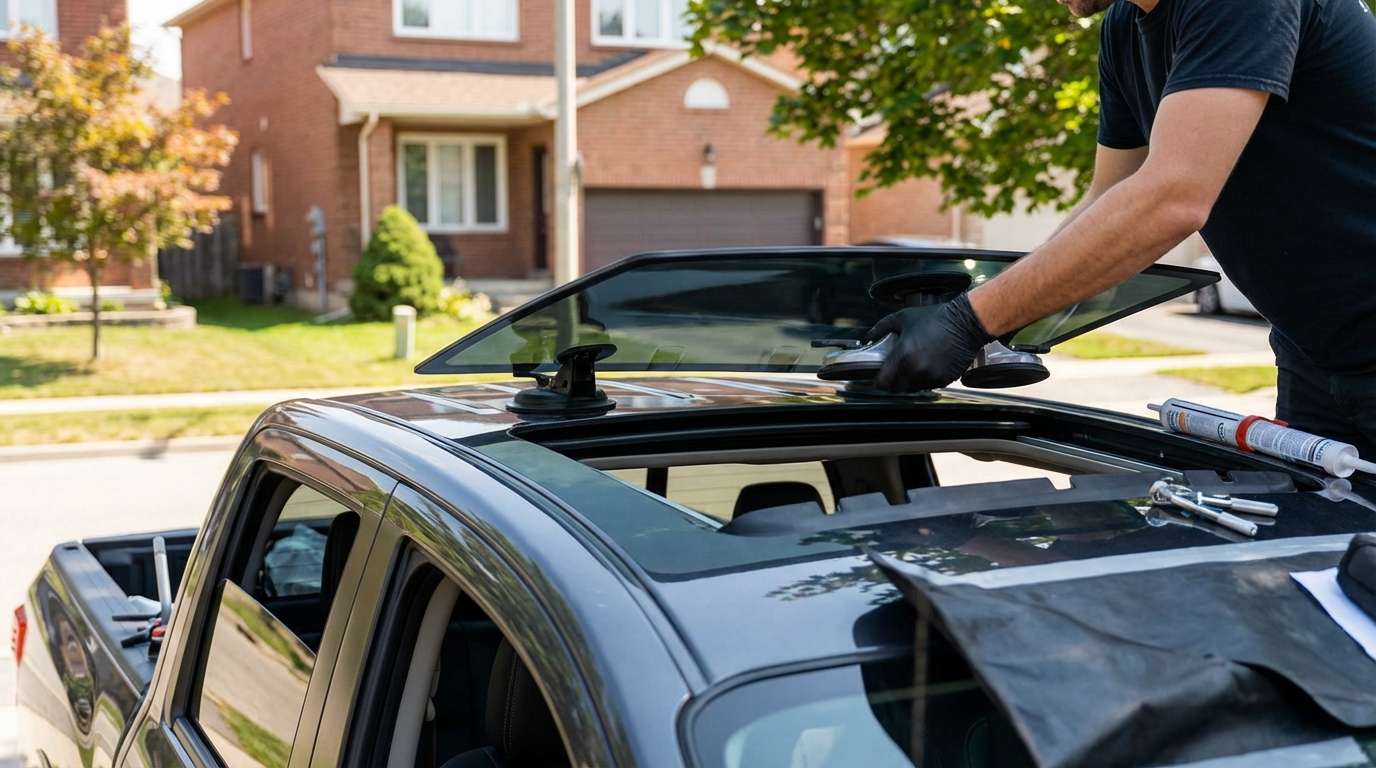
The overhead assembly operates as a dual-pane system housed within a unified structural cassette frame. The front section is a movable panel that tilts up and slides backward (part 91210-9FV0A), while the rear section is a broad, fixed glass pane (part 91604-9FV0A) seated against a dedicated perimeter seal (91215-9FV0A). Both panels are manufactured with heavy, factory-embedded solar privacy tinting to reject infrared and UV radiation. Neither piece incorporates embedded defrost elements, antennas, or rain sensors, which keeps external connections minimal.
Movement is controlled by an integrated dual-cable mechanism driven by two separate electric actuators positioned behind the front overhead console. Motor 91295-9FV1A operates the front glass sliding cables (left 91273-9FV0A, right 91272-9FV0A), while motor 91232-9FV1A independently runs the interior motorized fabric sunshade, which rolls into the rear headliner cavity in either Grey (91250-9FV1A) or Tan (91250-9FV0A). Because cab torsion on a fully boxed truck frame can cause minor shifting over rough terrain, I ensure every pane is aligned to prevent highway wind whistling; I back the replacement glass against defects for one year, while my installation workmanship is covered for the lifetime of your truck.
Water Drainage Pathways and Cab Torsion
Because panoramic assemblies on pickup trucks endure significant body twist, managing water runoff and mechanical clearance is essential. The glass perimeter does not create an entirely hermetic seal against standing water; instead, water seeping past the outer weatherstripping collects in an internal aluminum catch tray. This perimeter channel feeds directly into four dedicated drain tubes. The front left (91390-9FV1A) and front right (91390-9FV0A) lines route down through the A-pillars, dumping through rubber grommets in the lower cab floor, while matching rear tubes direct runoff down the C-pillars.
A frequent issue on these trucks involves water overflowing into the headliner when pine needles or trail silt settle in the catch channel and choke the narrow A-pillar hose fittings. If the drain path backs up or the lower grommet pulls loose, water can soak into the front footwell carpets. Whenever replacement glass is seated into the cassette, clearing these drain ports is vital to ensure cab dry-out.
Post-Replacement Inspection Checklist for Titan Owners
- Glass Height and Flushness: Check that the front movable pane sits perfectly level with the fixed rear pane and the truck's outer roof skin to prevent highway wind buffeting.
- Motorized Sunshade Motion: Verify the power roller blind glides forward and backward smoothly without binding, sagging, or snagging on the interior headliner opening.
- Tilt and Full-Slide Sequences: Run the front glass through its partial vent tilt and full rearward slide travel to confirm the cable tracks pull evenly on both sides without clicking.
- Perimeter Seal Contact: Inspect the outer rubber gasket between the front glass, rear glass, and sheet metal to ensure it is not pinched, twisted, or folded under.
- Drain Channel Evacuation: Confirm water poured into the open frame channel drains immediately down the A-pillar hoses and exits beneath the front cab floor without pooling inside.