Confirming Features Built Into Your Sentra Glass
Every Sentra across the S, SV, and SR trims comes from the factory with a forward-facing optical camera bracket mounted flush against the top-center edge of the glass. Drivers often wonder whether upgrading to the SR with ProPILOT Assist changes the windshield itself, but Nissan kept the physical camera bracket identical whether your car runs base Safety Shield 360 or the semi-autonomous cruising package. What you see from the cabin is an integrated plastic bracket assembly that locks the camera and interior rearview mirror (using base mount 96327-2Y900) directly to the acoustic safety glass.
Identifying the correct setup on your car is straightforward because Nissan eliminated the typical factory glass options that complicate ordering on other sedans:
- No heated wiper grid: The lower resting zone of the front wipers does not contain an embedded orange wire de-icer element.
- No windshield-integrated radio antenna: The audio receiver pulls signals from the roof-mounted fin, leaving the front glass clear of embedded micro-wires.
- Acoustic green interlayer: Every trim uses a solar-control green tint laminated around a sound-dampening acoustic membrane.
- No separate rain sensor pad: Standard North American models bypass an independent optical gel pad on the glass, using the primary safety camera for automatic lighting and wiper controls.
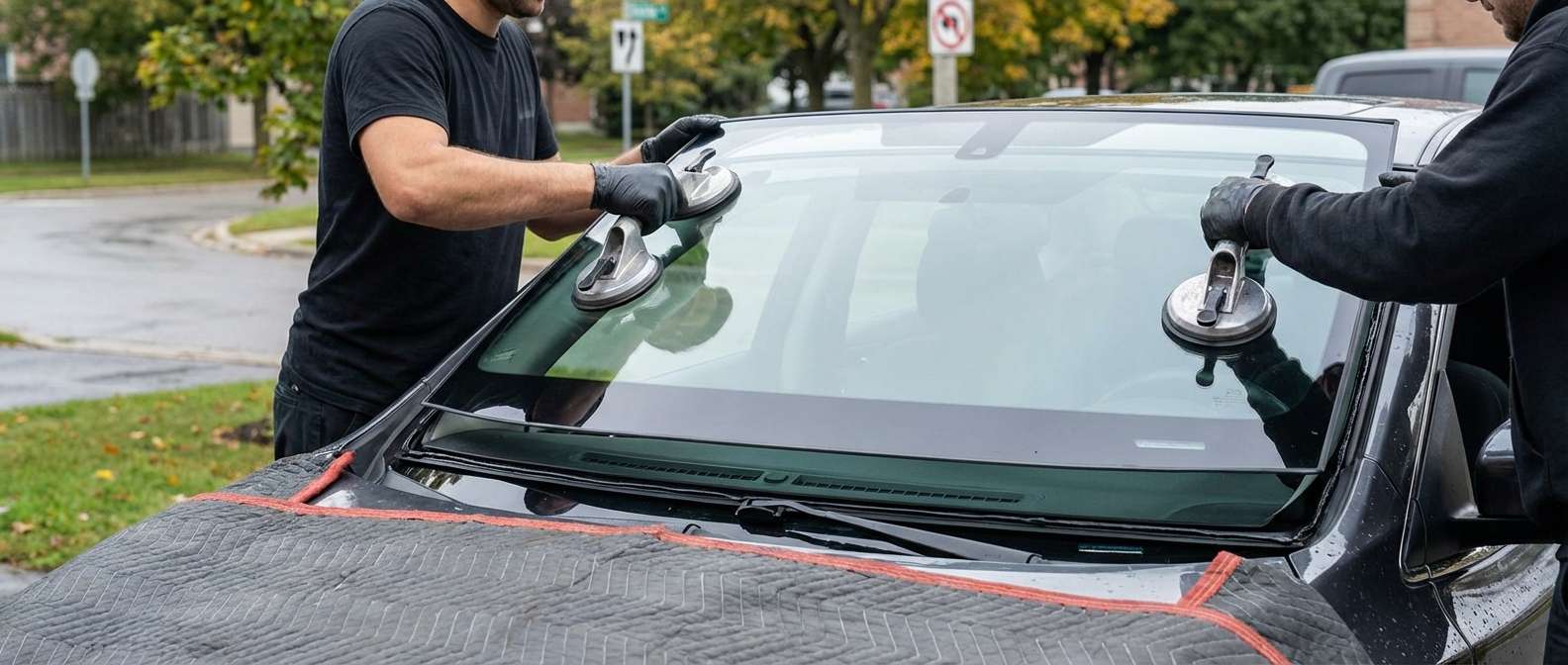
When you contact me for service, I generally pull up to your location roughly an hour after booking is confirmed, bringing the exact direct-fit glass so your car does not sit exposed with damaged glazing.
Factory Delamination Issues and Superseded Part Numbers
If you own an eighth-generation model built on the B18 platform—particularly between the 2024 and 2025 model runs—you might notice a cloudy spot or creeping air gap along the lower driver-side corner. Nissan issued Technical Service Bulletin NTB24-033 and Transport Canada Recall 2025645 specifically addressing defective factory lamination that allows visible air bubbles to form directly over the VIN plate viewing window. When this separation spreads, the glass loses structural integrity and obscures the VIN etching stamp.
Because of this bonding failure, Nissan revised the factory specifications. The initial assembly line part number 72700-6LB0B was phased out and replaced by superseded part number 72700-6MW0B. In the aftermarket glass industry, both versions map directly to the industry-standard NAGS base part number FW05359.
| Reference Standard | Part / Bulletin Number | Application Details |
|---|---|---|
| Original Nissan OEM | 72700-6LB0B | Original factory production glass (prone to lower VIN pocket bubbling). |
| Superseded Nissan OEM | 72700-6MW0B | Updated specification with corrected laminate bonding. |
| NAGS Number | FW05359 | Aftermarket acoustic green solar glass with camera bracket. |
| Nissan Service Bulletin | NTB24-033 | Corrective bulletin for edge lamination defects near the dash. |
Exterior Cowl and Perimeter Moulding Hardware
The glass perimeter interfaces with specialized body hardware that must remain intact. Across the lower edge, the windshield rests against a two-piece plastic cowl grille (OEM 66862-6LB0A) anchored by two distinct fastener sets: plastic pin clips (OEM 66820-AX020) and locking retainers (OEM 66916-50C00). If these lower fasteners are cracked or brittle, airflow beneath the glass causes cabin buffeting.
Along the roofline, the upper edge meets the roof drip mouldings held firmly by drip strip retainers (OEM 73856-9AN0A). Down the sides of the cabin, the interior A-pillar garnish covers require strict care during glass service because Nissan uses single-use tether clips (OEM 76988-6LB5A). These specific clips are engineered to break partially away to create clearance during side-curtain airbag deployment, meaning damaged clips cannot be re-seated safely once detached.