Why You Cannot Order Factory Sunroof Glass for This Hatchback
Every single one of these electric hatchbacks rolled off the Oppama assembly line with a solid, stamped sheet-metal roof. Whether you drive an entry-level S, an SV, an SL, or any of the extended-range Plus iterations like the S Plus, SV Plus, or SL Plus, Nissan never engineered, cataloged, or manufactured a factory moonroof or sunroof option for this vehicle run. Because of that, there are no National Auto Glass Specifications (NAGS) benchmark codes, and your local Nissan dealer network cannot pull up an OEM glass assembly part number for overhead roof glass.
Nissan eliminated overhead glass entirely on the ZE1 body to protect the electric vehicle's range. Punching an aperture through the steel roof panel would add heavy structural frame reinforcements and motor cassettes, disrupting the vehicle's targeted 0.28 drag coefficient while robbing crucial battery-preserving aerodynamics. The solid roof skin relies on internal energy-absorbing bracket supports, such as roof bracket OEM 73980-3NA0A, paired with fixed side ditch garnish moldings that guide airflow smoothly past the rear liftgate. Some drivers confuse the black glass panel on top of the rear spoiler on SL and SL Plus grades for a mini sunroof, but that unit is strictly a photovoltaic solar cell engineered to maintain the 12-volt auxiliary accessory battery, completely separate from the roof stamping.
Addressing Shattered or Leaking Aftermarket Roof Glass
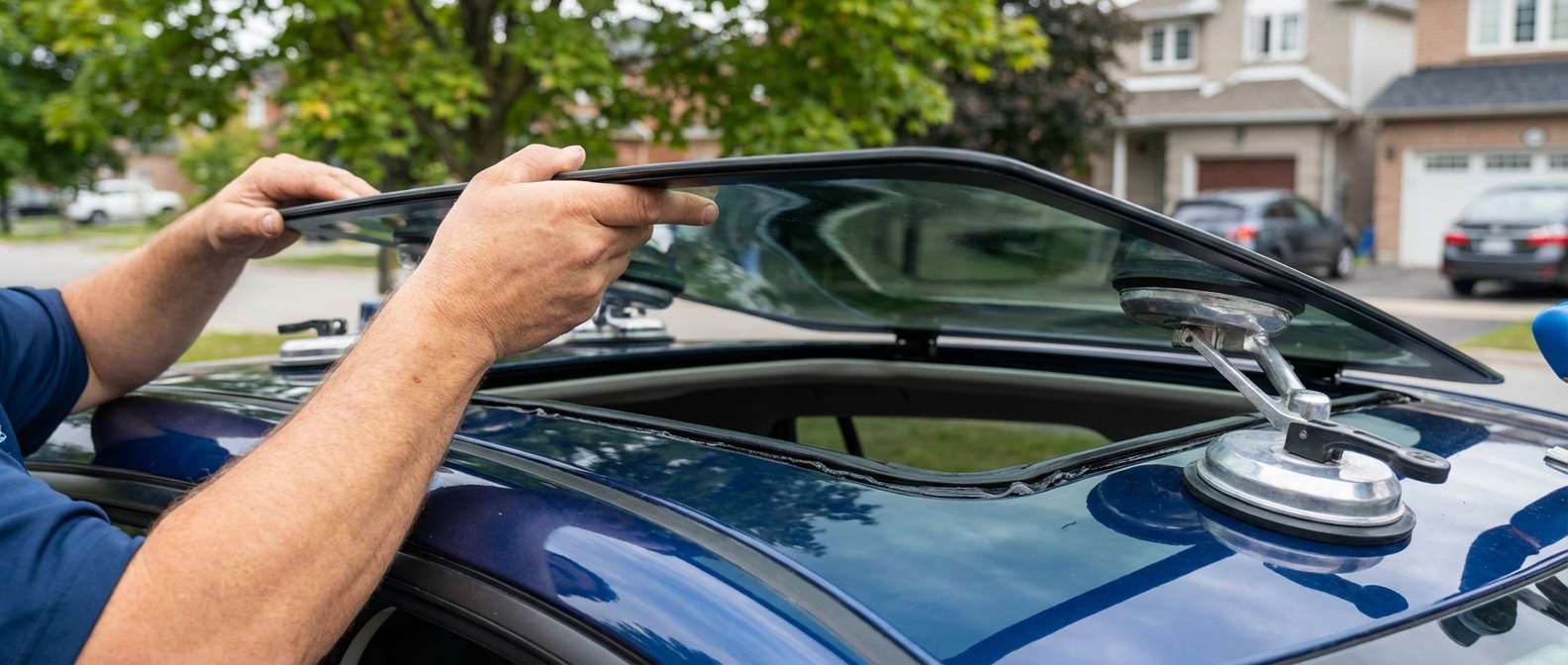
If your vehicle currently has an opening glass panel above the front seats, it is guaranteed to be a third-party retrofit. Dealerships and specialty restylers frequently cut into the factory sheet metal after transit to install universal top-sliding spoiler sunroofs or manual pop-ups, most commonly manufactured by Webasto (such as the Hollandia series).
When one of these panels shatters from highway gravel or tree debris, standard auto glass catalogs will not recognize your car. I can typically pull up to your driveway roughly an hour after you schedule an appointment to assess an aftermarket leak or measure the fractured overhead glass. To get the correct replacement panel, I bypass standard automotive vehicle lookup charts and source directly through aftermarket moonroof component channels using the dimensions and hardware stamped into the retrofit frame assembly.
| Roof Configuration | Factory Status | Replacement Approach |
|---|---|---|
| Solid Stamped Steel | OEM standard across all trims (S, SV, SL, Plus) | Factory ditch moldings and bracket 73980-3NA0A intact |
| Spoiler / Pop-Up Glass | 100% aftermarket retrofit (e.g., Webasto) | Identified via aftermarket frame frame-stamp codes |
| Aerodynamic Solar Panel | OEM feature on select upper trims | Integrated into rear spoiler, not cabin glass |
Common Failures on Retrofit Installations
Retrofitting glass into a vehicle that was designed exclusively with a solid roof brings specific structural quirks. Because the roof skin was not stamped with a recessed, reinforced perimeter flange at the factory, aftermarket installers had to cut directly through the metal skin and modify the custom-molded interior headliner.
- Drawn-edge seal failure: The perimeter rubber weatherstripping on universal glass modules sits directly against the cut paint edge. Exposure to road salt and winter freezing cycles shrinks these aftermarket extrusions, allowing water to bypass the seal and seep into the headliner substrate.
- Drainage hose displacement: Factory sunroof assemblies route fixed plastic drain tubes through structural pillars. Retrofit units rely on flexible vinyl hoses fed down the A-pillars or C-pillars; if these kink or disconnect, cabin carpets soak quickly during rainfall.
- Mechanical track binding: The arched contour of the ZE1 roof differs slightly from standard internal-track cassette specifications. Over time, external slider mechanisms can bind in their guide rails, putting twisting stress on the tempered glass panel and causing it to shatter unexpectedly during operation.
If your glass is broken, cracked, or dislodged from its mounting tracks, the existing aftermarket frame must remain undamaged to seat a new panel correctly. I match the exact curvature, hinge geometry, and track latching points from aftermarket component suppliers to restore a weather-tight barrier above your head.