The Truth About Nissan Leaf Sunroof Glass
If you have glass in the roof of your electric hatchback, it did not roll out of the Oppama or Smyrna assembly plants that way. Nissan never built a single factory moonroof or panoramic glass option for the ZE0 or updated AZE0 platforms across the entire 2011 to 2017 production run. Search any Nissan parts microfiche or the auto glass industry NAGS catalog, and you will find zero part numbers for roof glass, overhead tracks, or sunroof weatherstripping on an S, SV, or SL trim. Every original roof on these cars is a single, uninterrupted sheet of stamped steel.
Drivers sometimes confuse the photovoltaic glass panel on the SL trim for an overhead window. That small solar cell sits out back, built directly into the rear liftgate spoiler under Nissan part base 96030, and its only task is trickle-charging the lead-acid 12-volt accessory battery beneath the hood. Engineers deliberately skipped roof glass altogether to shave curb weight, preserve aerodynamic efficiency, and protect battery range. Furthermore, because the 24 kWh and later 30 kWh high-voltage lithium-ion traction battery packs sit underneath the cabin floorpan, the raised floor eats into interior clearance; adding an internal moonroof cassette would have eliminated vital headroom for taller drivers.
Servicing Aftermarket Moonroof Retrofits
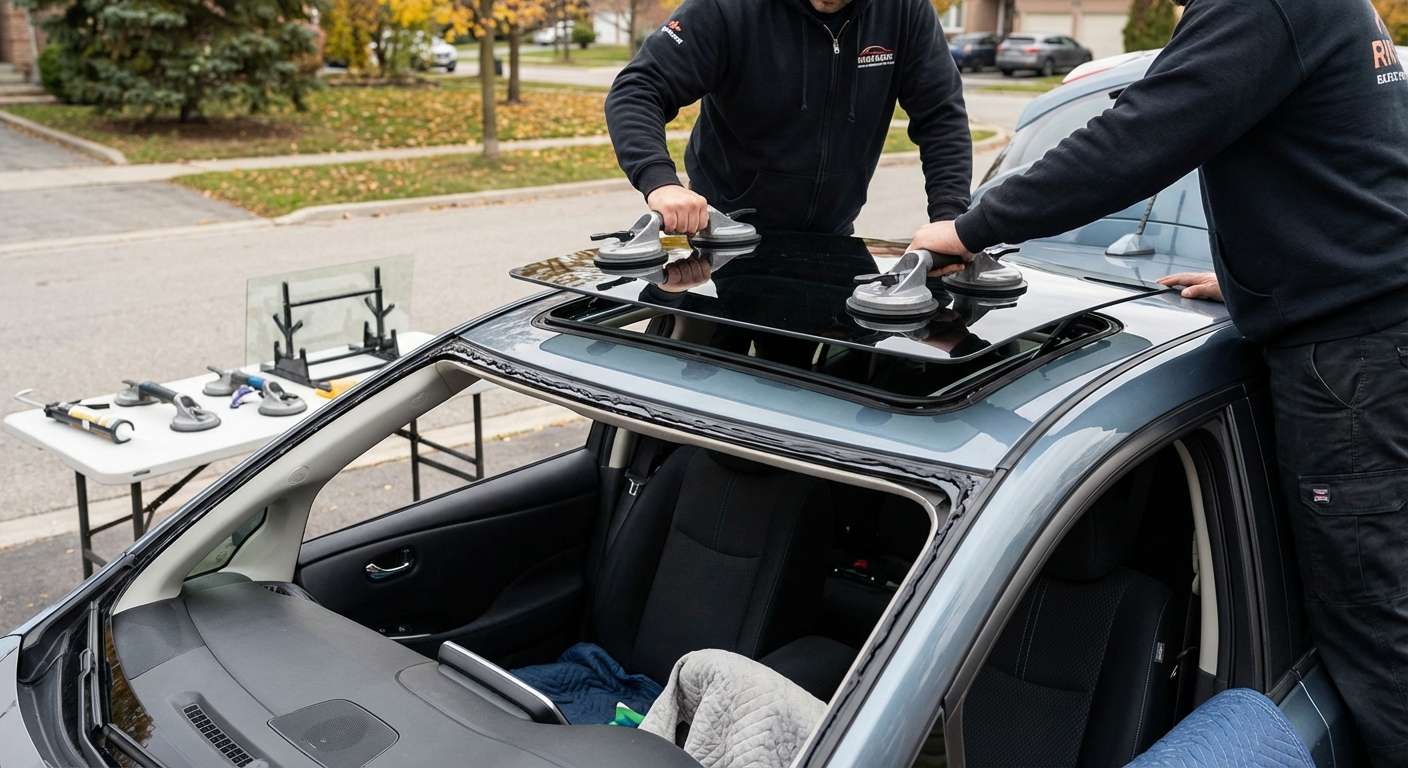
Because no factory option existed, any glass roof panel on this electric car is an aftermarket retrofit—most commonly universal systems from manufacturers like Webasto or Inalfa. When one of these custom units cracks, shatters, or develops a stubborn leak, you cannot order a standard replacement panel through dealer distribution networks. I have to trace the specific aftermarket assembly manufacturer and model stamp on the remaining frame hardware to track down the correct replacement tempered glass pane.
Retrofitting overhead glass required third-party shops to slice out the factory sheet metal and cut through the structural roof bows welded inside the ceiling. On a whisper-quiet electric car with zero engine hum to mask ambient noises, these custom installations are notorious on owner forums for producing wind whistling at highway speeds. Whenever I install replacement aftermarket glass panels or rebuild seals on these retrofitted roofs, my workmanship is covered for life, while the glass panel itself carries a one-year warranty. Ensuring the replacement panel compresses evenly against the perimeter extrusion is crucial to keep road buffeting from intruding into the silent cabin.
Post-Replacement Inspection Checklist
Once new overhead glass is mounted into your retrofit housing, inspect the following vehicle-specific details before heading out:
- Inspect the flushness of the glass panel against the curved roofline; an uneven lip catches oncoming air and drastically increases cabin draft noise.
- Verify that the exterior rubber perimeter bulb seal seats flat against the cut steel edge without binding, pinching, or waviness.
- Ensure the internal drainage tubes route cleanly past the A-pillars without kinking, keeping water away from the floor carpet where sensitive wiring harnesses run.
- Check that the overhead interior switch operates the motor smoothly without binding against the custom headliner trimming.
- Confirm that the rear hatch spoiler solar panel remains uninhibited and that your auxiliary 12-volt charging circuit shows no disruption.





