Distinguishing Acoustic Front Laminate from Tempered Rear Privacy Glass
Identifying the exact side window configuration on your Ariya comes down to checking whether you are replacing a front or rear pane, as Nissan splits the glass build between acoustic noise-reduction tech up front and darkened solar privacy glass in the back. Because cabin silence is critical in an electric vehicle without engine noise to mask wind rush, the front doors use a dual-pane acoustic laminate. If your front driver or passenger pane is damaged, you will typically see a spiderweb crack pattern or an edge stress fracture that remains intact inside the frame, rather than pebbles of broken glass on your seat.
You can verify this yourself by lowering the front window slightly and looking directly down at the top exposed edge. You will see a visible sandwich seam where two sheets of glass bond over an acoustic, UV-filtering polyvinyl butyral interlayer. The rear doors, by contrast, use standard single-layer tempered safety glass finished in a deep factory solar privacy tint. When rear panes break, they shatter instantly into thousands of dull cubes. When I source replacements for these electric crossovers, I install only high-grade aftermarket glass manufactured by major fabricators like Pilkington, PGW, FYG, or XYG, ensuring the acoustic interlayers and solar tint densities match factory performance without dealing with dealership parts counter markups.
| Door Location | Glass Construction | Solar & Visual Finish | Key Factory Reference |
|---|---|---|---|
| Front Right (Passenger) | Dual-Pane Acoustic Laminated | Clear with UV / IR Interlayer | 80300-5MP5A / 80300-5MP5B |
| Front Left (Driver) | Dual-Pane Acoustic Laminated | Clear with UV / IR Interlayer | 80301-5MP5A / 80301-5MP5B |
| Rear Right & Left | Single-Pane Tempered | Dark Factory Solar Privacy | 82300-5MP8C (Right Rear) |
Framed Glass Alignment and Door Shell Hardware
Unlike many modern electric crossovers that run frameless side glass, this vehicle relies on a full, traditional framed door architecture. The glass rides inside a dedicated rubber run channel (part 80331-5MP0B on the front doors, 82330-5MP1B on the rear) bordered by exterior satin or bright chrome mouldings. Because there is a rigid frame, the glass does not drop a quarter-inch every time you pull the exterior handle, simplifying the long-term mechanical wear on the power window regulators.
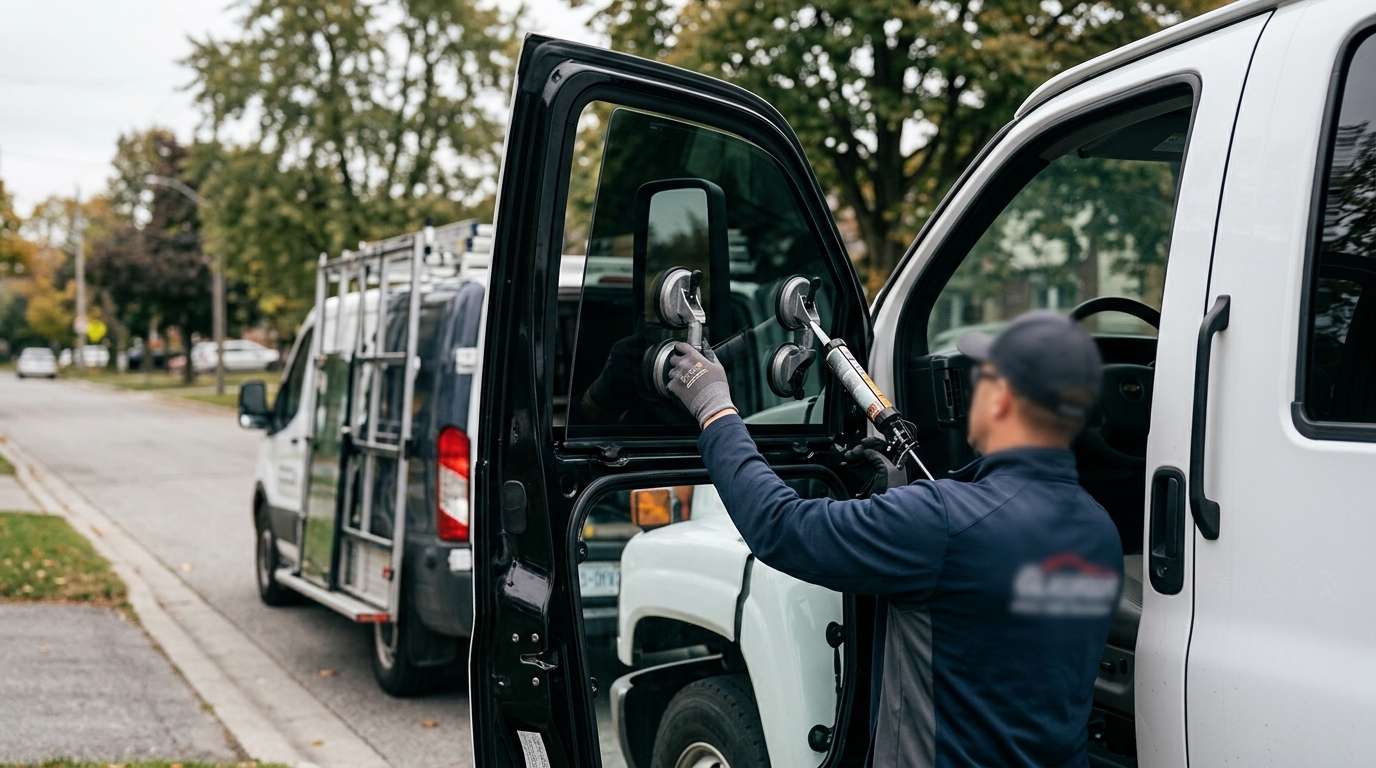
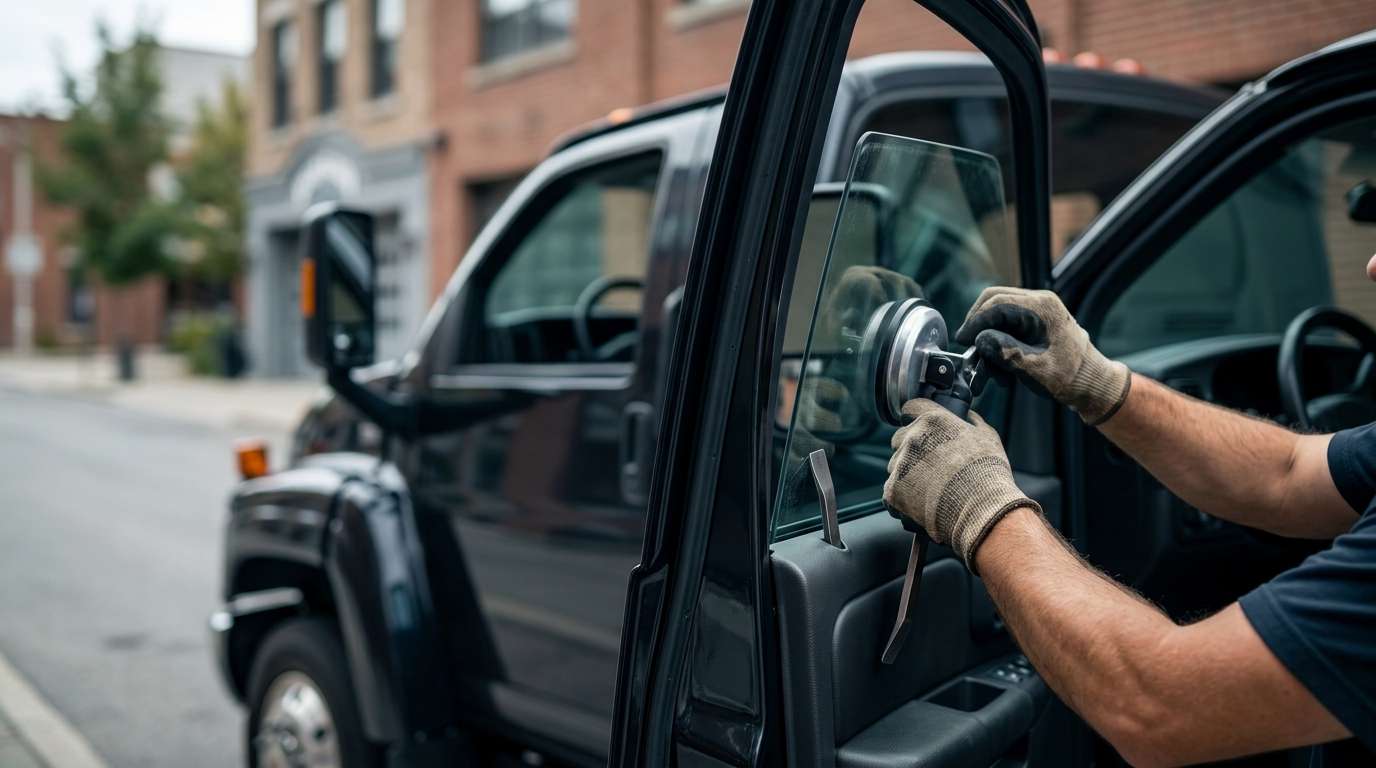
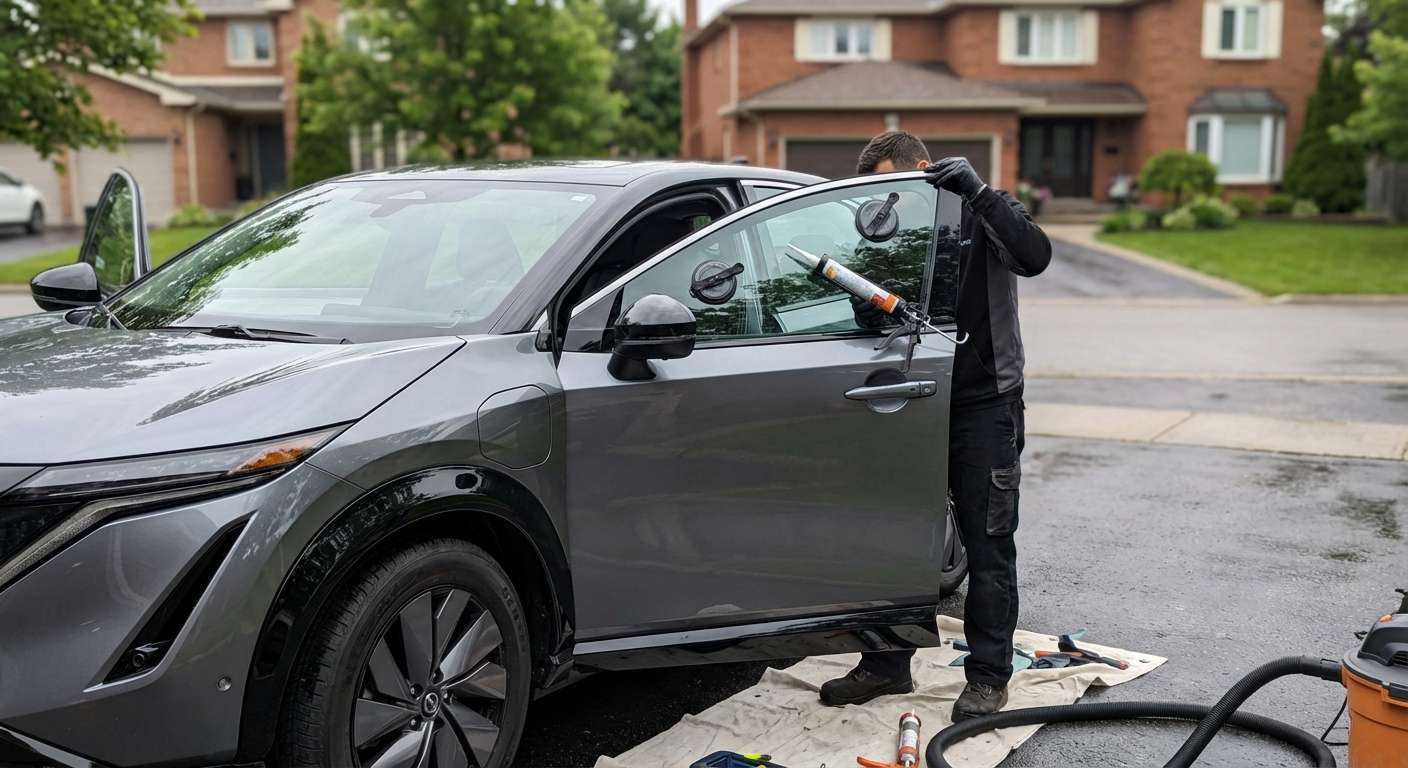
Inside the door shell, the glass is stabilized by a vertical division bar assembly (OEM 82217-5MT0A) that prevents lateral chatter while the vehicle is in motion. The bottom edge of the glass features bonded mounting tabs that attach directly to the cable-and-drum window regulator lift plate using factory retaining bolts (OEM 80729-6LA0A). When replacing a pane, accessing these mechanical lift points requires carefully clearing the interior door trim card, avoiding the fragile wiring harnesses that power the interior ambient cabin lighting, and working around the vapor barrier without tearing the perimeter adhesive bead.
Run Channel Friction and Motor Resistance Symptoms
If you have recently noticed a front window reversing direction unexpectedly when attempting to roll it up, the cause is often mechanical drag rather than an electrical motor failure. The acoustic laminated front glass is slightly thicker than ordinary tempered glass, creating a snug fit against the internal flocking of the vertical sash guides. The power window motor (series 82750-5MR front) incorporates an internal anti-pinch safety mechanism. If road grime, debris, or a misaligned rubber run channel creates excessive friction against the pane, the motor interprets the physical resistance as an arm or hand trapped in the window and immediately cycles back down.
- Check channel seating: Ensure the rubber run channel has not folded inward or pinched along the upper B-pillar sash guide.
- Verify pane squareness: The bottom regulator retaining bolts must be torqued evenly so the glass travels parallel to the division bar without canting forward.
- Motor reset: If the window fails to complete its automatic one-touch upward travel after the pane is seated, the motor limit switch must be reset through an initialization hold cycle to re-learn the glass travel stops.