Frameless Rake and the Hardtop Mismatch
The low-slung, "helmet roof" profile of the two-seater Coupe creates an immediate trap when sourcing side glass: the door glass does not interchange with the contemporary R56 Hardtop. Because the A-pillar tilts back at an extra 13 degrees, the Coupe's frameless tempered glass carries a sharply reduced upper height and a much more aggressive top angle. Whether a car rolled out as a base Cooper, a turbocharged Cooper S, or a track-focused John Cooper Works, every R58 variant uses the exact same side glass geometry across its entire run.
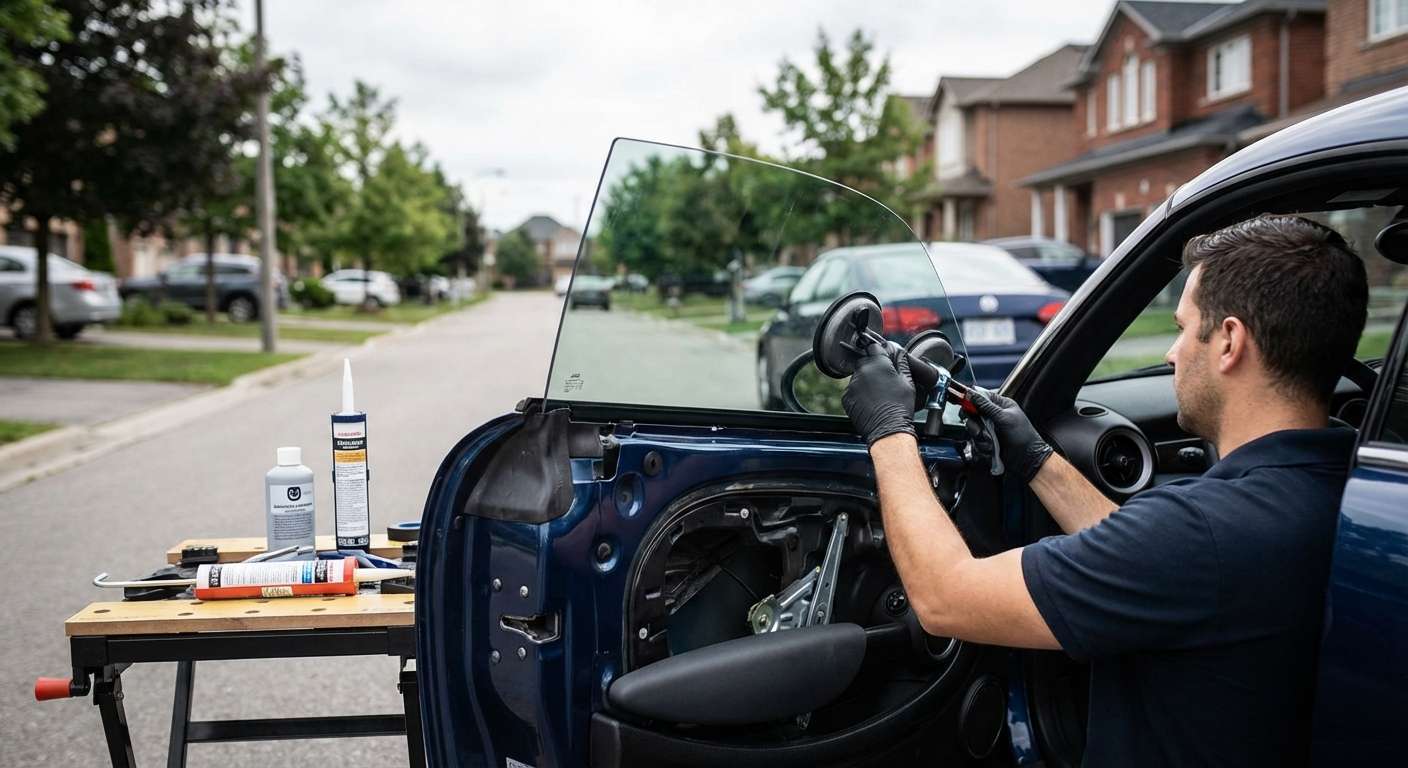
Original factory windows carry dealer part numbers 51332758957 for the driver side and 51332758958 for the passenger side, corresponding to European identification marks 2466LGSC2FD and 2466RGSC2FD. The glass itself is green-tinted AS2 solar safety glass without laminated interlayers, defroster traces, or embedded radio antennas. When replacing these units, I supply aftermarket glass manufactured by major producers like PGW, FYG, Pilkington, and XYG, which mirror the exact curve and factory pre-bonded bottom mounting brackets needed to anchor into the lift mechanism.
Mechanical Clamping and the Indexing Drop
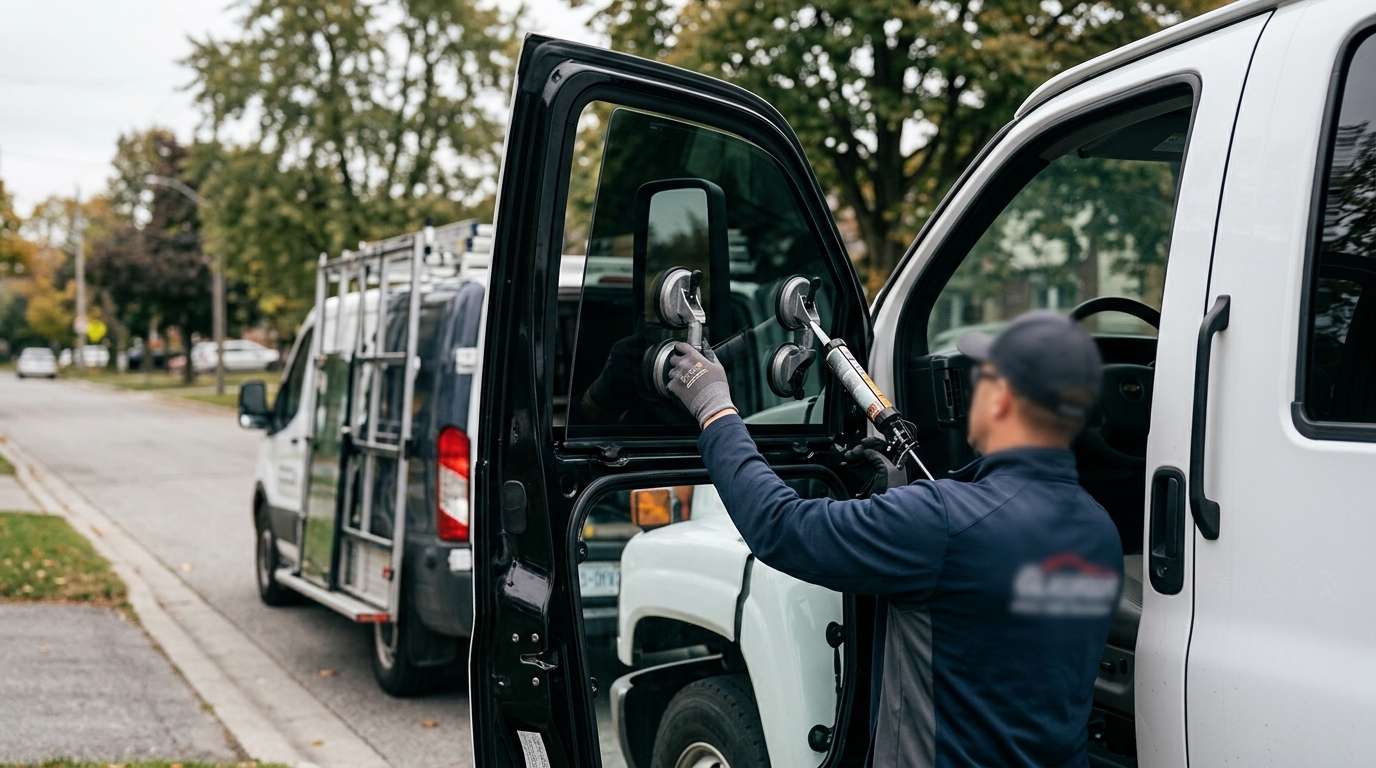
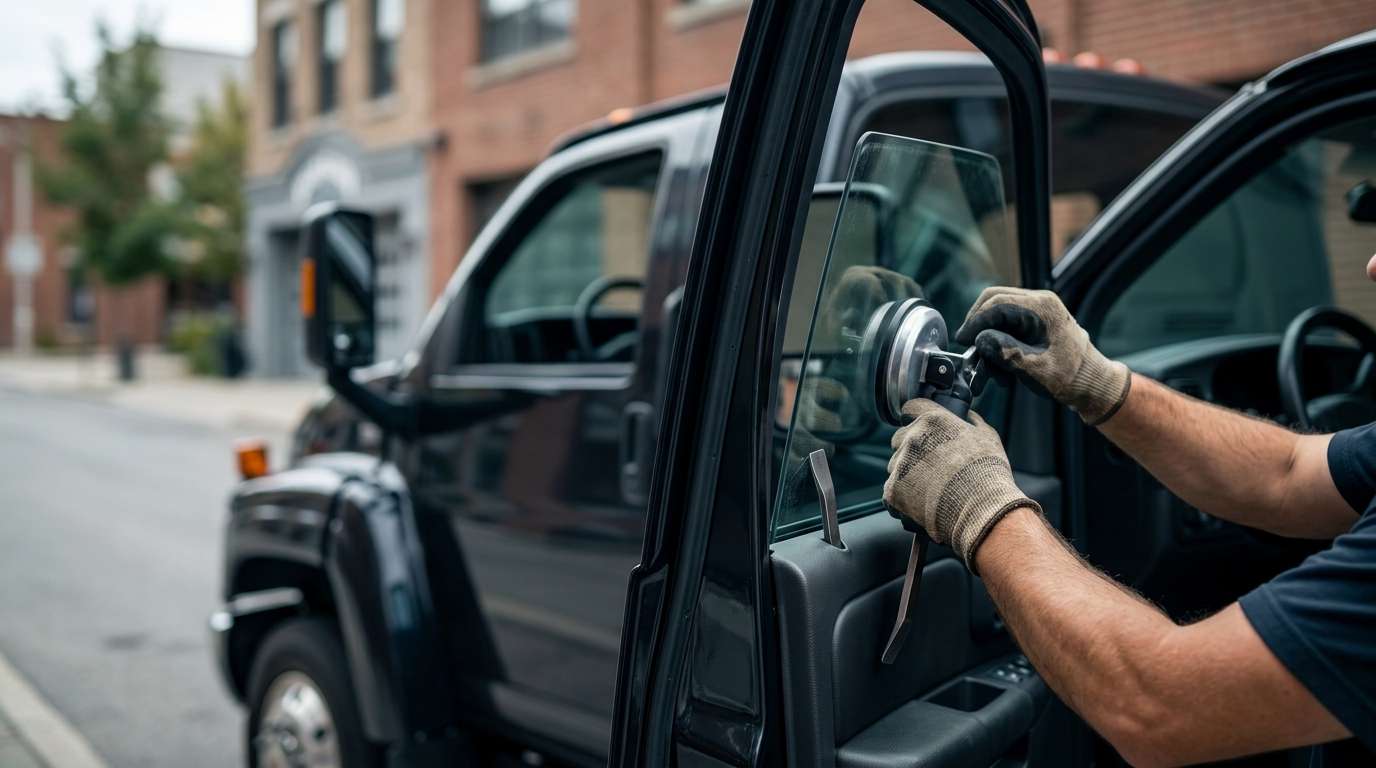
Because there is no upper metal window frame, the glass relies on a precise short-drop indexing function. The moment the outer door handle or interior latch triggers, the Footwell Module commands the regulator motor to snap the glass downward roughly a quarter-inch. This downward movement pulls the top edge out of the heavy rubber roof-rail weatherstrip channel before the door swings outward. If this feature drops offline, the pane snags against the roof seal, which risks chipping the upper glass corner or warping the weatherstrip.
Securing the panel inside the door cavity requires balancing the dual-rail cable regulator against specialized reverse-threaded toothed gear nuts. These mechanical adjusters dictate three critical parameters:
- Inboard tilt: Tilting the top edge inward ensures firm, even pressure against the roof-rail weatherstrip when closed.
- Fore-and-aft rake: Aligning the front angle prevents friction against the A-pillar seal and ensures parallel tracking.
- Height stops: Setting the upper mechanical limits protects the glass from over-driving into the roof channel during final closure.
Inside the door shell, the glass slides between the lower exterior beltline moulding—finished in either bright chrome or factory black trim—and the inner door card scraper seal. Plastic pulleys and cable winding spools on aging regulators tend to fatigue; if these components bind, the glass can misalign on the dual tracks, leading to severe wind buffeting at highway speeds.
Why is my window catching on the rubber roof seal when opening the door?
This points to a failure of the short-drop indexing feature. If the battery was disconnected or the window path experienced binding, the motor loses its position memory. You can often restore the parameter by holding the center console toggle switch down until the glass bottoms out plus five seconds, then pulling and holding the toggle up until it seals plus another five seconds. If the glass remains static when lifting the door handle, the door latch microswitch or the Footwell Module is failing to send the drop signal.
Can I swap the glass from a standard three-door hatchback onto my Coupe?
No. While the R56 hatchback and R58 Coupe share front-end components and dashboards, the windshield and side glass geometry are completely different. The Coupe’s roofline sits significantly lower and slopes aggressively toward the rear, meaning R56 hatchback glass is too tall and cut at the wrong angle to physically fit inside the Coupe’s roof-rail channel.
What causes wind noise along the top glass edge after a window swap?
Wind rush or water intrusion along the frameless glass almost always traces back to improper pre-tensioning of the reverse-threaded toothed adjusting nuts. If the glass does not have enough inward tilt toward the cabin, the upper edge will not exert sufficient pre-load against the roof weatherstrip, leaving a micro-gap that allows airflow to breach the cabin at higher speeds.