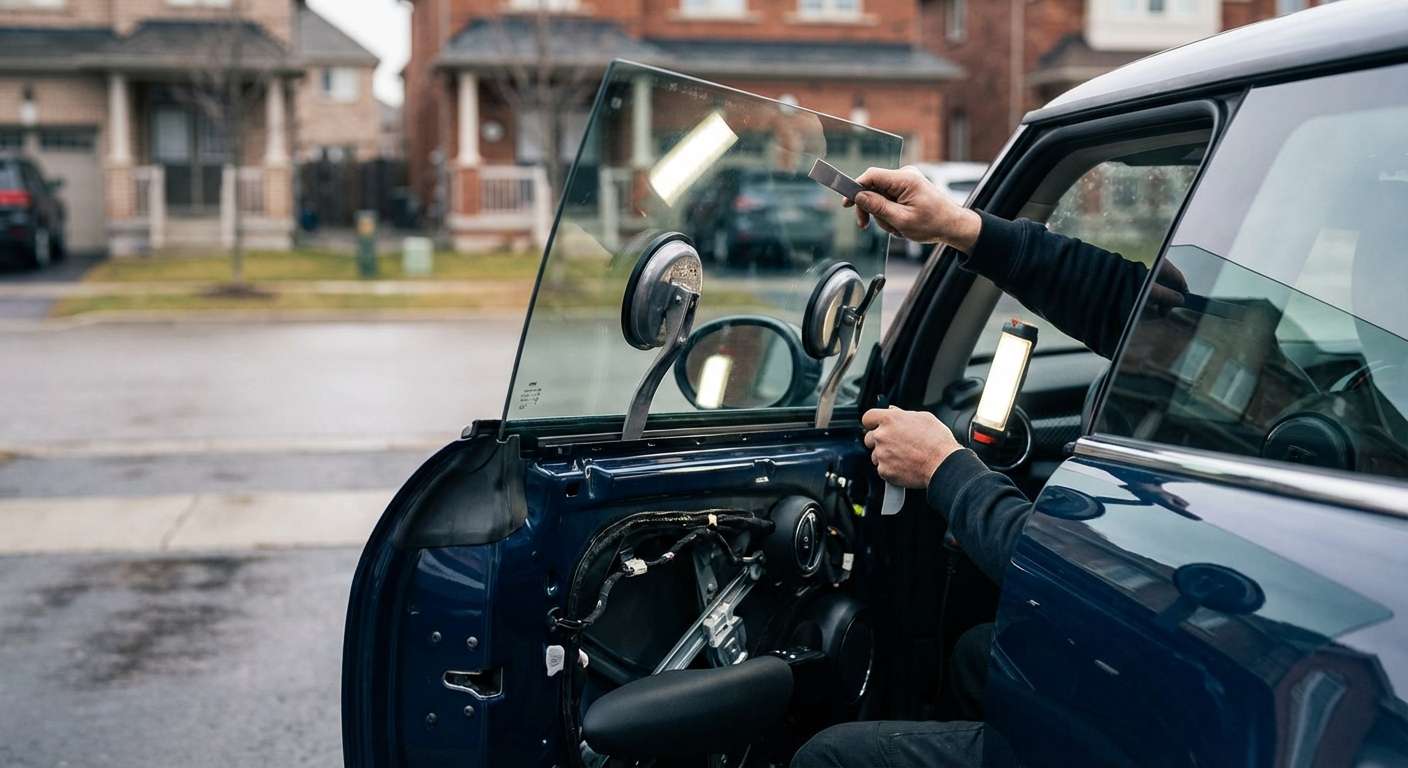
Identifying Frameless Door Glass and Rear Glazing Options
Determining the correct side window for your car depends primarily on your body style and whether your vehicle is fitted with factory dark privacy tint. The 3-door hatchback uses longer front frameless glass (left 51337296447, right 51337296448) than the 5-door version, which requires distinct front panels such as right door 51337320286 alongside its separate rear passenger doors. Unlike windshields or back glass, these drop windows house no radio antennas, rain sensors, or integrated heating lines; they are manufactured from single-pane tempered AS2 safety glass with a light-green solar filter as standard equipment.
If you drive a 5-door model, the main distinction lies in the rear passenger doors. Standard models carry clear, light-green tempered glass (left 51357320287, right 51357320288), but vehicles built with the optional factory sun-protection package carry deep-tinted privacy glass on the rear doors (left 51357374677). You can confirm whether you have option S420A by checking your build sheet or inspecting the glass bug etched in the corner of your rear door to match transparency with the front windows.
Short-Drop Indexing and Mechanical Tension Adjustments
Because the front side windows lack an overhead metal frame, they rely on a short-drop feature tied directly to the exterior handle latch mechanism. When you lift the handle, the window motor must instantly index the glass downward roughly a quarter-inch out of the heavy rubber roofline channel before the latch disengages, then seal upward once the door clicks shut. When fitting replacement glass, I work exclusively with trusted aftermarket glass lines like XYG, Pilkington, FYG, and PGW to ensure the curvature matches the exact profile required by the cable-and-drum regulator brackets.
Achieving a quiet, watertight seal requires adjusting three specific physical parameters on the regulator clamps inside the door shell:
- Inward Tilt (Pre-Tension): The top edge of the pane must angle inward against the body weatherstripping along the A-pillar and roofline with enough force to prevent highway wind flutter without binding the motor.
- Fore-Aft Pitch: The front and rear vertical edges of the glass must align parallel to the outer beltline weatherstrip and the B-pillar seal.
- Upper Travel Limit: The glass must stop precisely at the lip of the rubber receiver to prevent mechanical strain on the regulator cables when fully raised.
Why does my window stay stuck outside the upper rubber trim when closing?
This happens when the indexing short-drop function fails to trigger upon opening the door, often due to a failing microswitch in the door latch assembly, a binding regulator cable, or a frozen upper rubber channel during freezing winter weather. If the glass does not drop that initial quarter-inch, the top edge collides with the outer lip of the roof seal instead of tucking neatly underneath it.
How do I reset the automatic window travel after a dead battery?
When the car loses 12-volt battery power, the footwell module forgets the upper and lower pinch-protection limits. You can re-initialize the travel limits by sitting in the car with the doors closed, holding the window toggle switch down until the pane bottoms out and continuing to hold it for five seconds, then pulling the toggle up until the glass closes fully and holding the switch upward for an additional five seconds.





