Identifying Your W223 Panoramic Glass and Overhead Features
Determining the exact replacement glass for your sedan comes down to isolating whether damage has occurred to the forward operable panoramic slider, the stationary rear vista pane, or the gloss black roof filler panel sitting directly ahead of the sunroof. On this vehicle, the roof architecture splits into two heavy, infrared-reflective acoustic glass sections beneath which twin motorized interior fabric roller blinds operate. You can tell if your assembly has sustained deeper structural failure beyond surface chips by observing how the MBUX system interacts with the panel. If the capacitive touch-slider on the overhead control console fails to trigger the tilt cycle, or if the roof refuses to auto-close when engaging Carwash Mode or when the windshield rain sensor detects precipitation, the internal guide mechanism or pinch-protection sensors within the frame may be compromised alongside the glass.
Another critical detail to inspect is the narrow, stationary high-gloss filler panel positioned between the top edge of the windshield and the leading seam of the front sliding glass. Mercedes-Benz issued recall 23V-115 specifically for models like the 2021 S 580 4MATIC due to adhesive bonding separation on this exact front filler strip. When you look closely at the roof line, check whether wind noise or cracking originates from this non-moving trim segment or the motorized front panoramic panel itself, as they are separate components. I often dispatch promptly once we clarify these damage locations, generally pulling up to your location about an hour after booking to assess the glass in person.
Mechanical Drive Rails, Dual Sunblinds, and Drain Routing
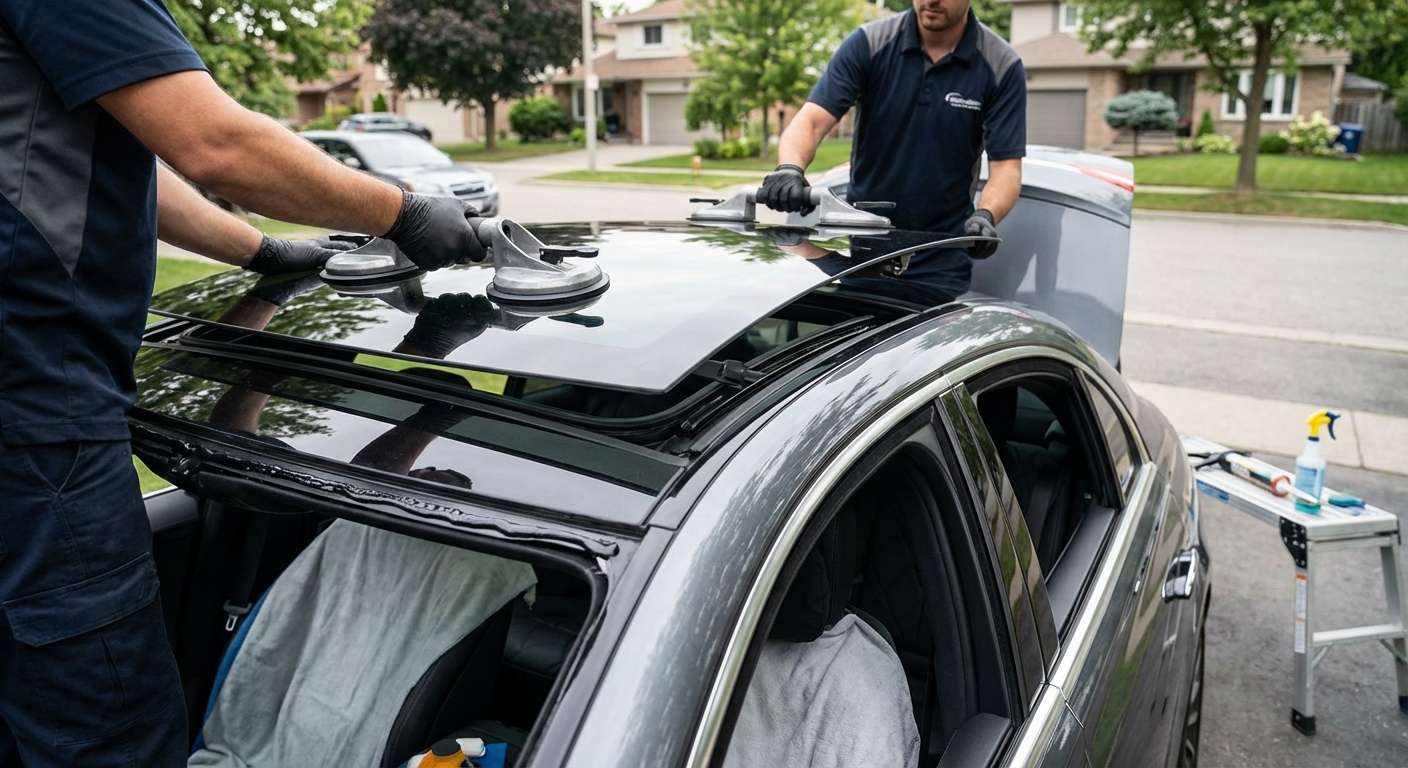
The operable forward panel on the V223 long-wheelbase and standard W223 cabins relies on a complex perimeter cassette containing motor-driven cables that lift the panel upward before sliding it rearward over the fixed aft glass. Beneath the glass, dual power roller sunblinds run on dedicated tensioned tracks to shield the heavily tinted, UV-absorbing safety glass. If road debris shatters the moving pane, glass fragments frequently drop into the exposed lateral guide channels, which disrupts the mechanical stops and binds the roller blind fabric. Replacing this glass requires evaluating the four corner water drain tubes that travel down through the interior A-pillars and C-pillars into the wheel arches, ensuring shards have not entered the drainage basins where they cause persistent cabin leaks.
Enthusiast drivers often encounter clicking or creaking over offset road surfaces, which traces back to the encapsulation seals along the glass edge shifting against the painted frame. When fitting replacement glass, setting the front leading edge microscopically flush or fractionally below the roof filler panel is critical to stop high-speed wind buffeting from lifting the seal lip. Because the glass works in tandem with the vehicle PRE-SAFE system—which pulls the moving panel tightly shut if an impending collision is detected—the alignment tolerances on the side guide brackets leave zero margin for error.
Addressing Overhead Touch Controls and Track Normalization
Once new panoramic glass is installed into the guide tracks, the vehicle overhead control unit must relearn its baseline travel boundaries. The flush-mounted capacitive slider on the ceiling replaces traditional physical rocker switches, meaning the electronic control module relies purely on resistance and motor hall-effect sensors to know when the glass has reached full seal compression. If the normalization cycle is skipped, the motor safety reverse logic will interpret the fresh perimeter rubber seal resistance as an obstacle, causing the glass to kick back open automatically when it tries to seat. Re-indexing the travel limits restores seamless one-touch gliding and guarantees that voice prompts directed to MBUX close the roof completely against weather intrusion.