Stationary Rear Door Glass on the GLA
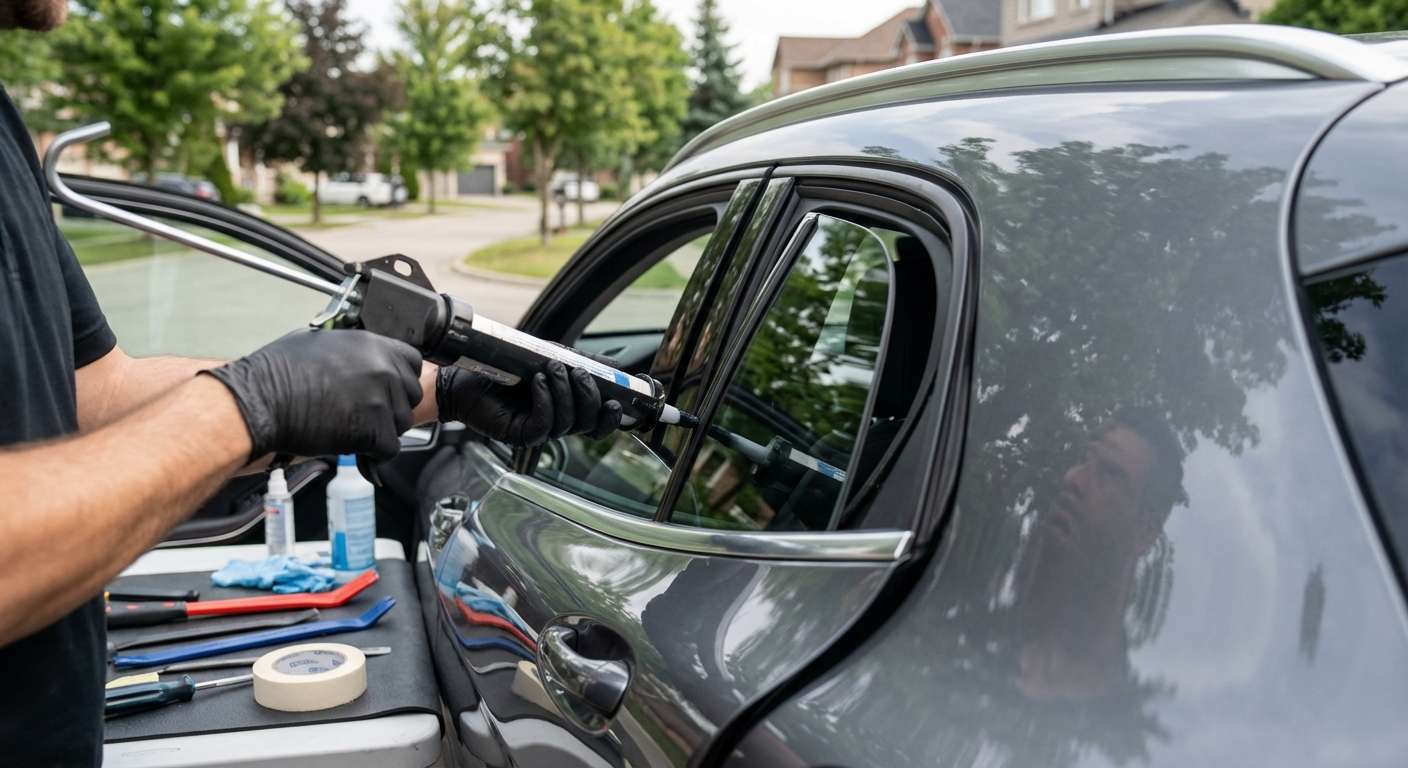
Each rear passenger door on this compact crossover features a stationary quarter window tucked behind the movable roll-down pane. Because it sits in a framed steel door shell rather than a pillar, it does not move or index downward like the windows on Mercedes coupes. The unit consists of single-layer tempered safety glass molded directly into a rubber perimeter channel with integrated mounting studs. There are no embedded radio or GPS antennas, defroster lines, or tint-integrated rain sensors in this glass; it is entirely mechanical. The critical division between this fixed pane and the roll-down window is managed by a vertical metal division bar channel that guides the main glass while clamping the inner edge of the vent assembly.
Matching the replacement glass accurately comes down to the factory tint package ordered on the vehicle. Base GLA 250 models typically feature a lighter solar green tint, whereas GLA 250 4MATIC builds and performance AMG GLA 45 models almost always carry dark AS3 privacy glass from the rear doors backward. Mercedes-Benz assigns part number A1567300318 for the rear left assembly and A1567300418 for the rear right, alongside color-matched suffixes like -64 and -65 depending on whether the cabin has privacy tint. Matching the exact shade ensures the replacement piece blends seamlessly with the adjacent cargo glass and roll-down pane.
Sealing the Division Bar and Preventing Cabin Whistles
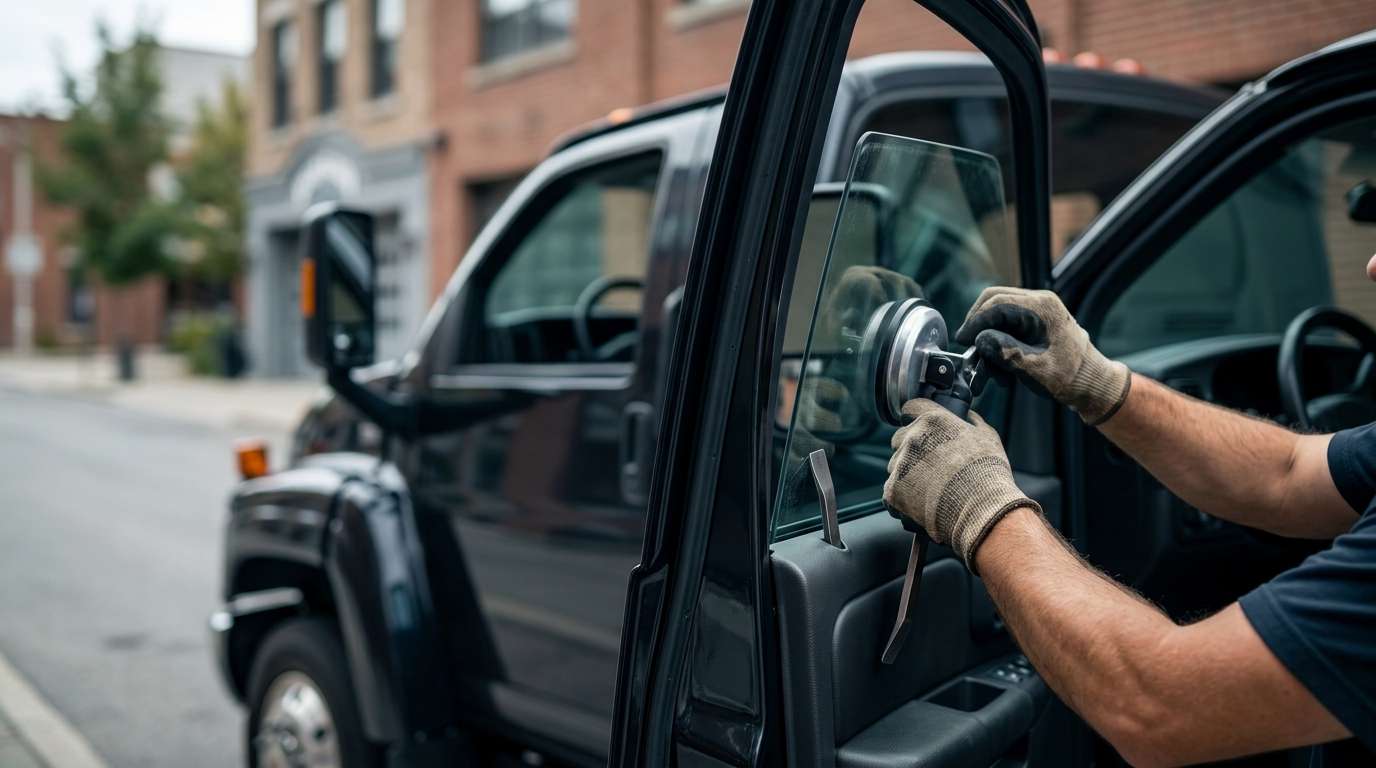
When this triangular window breaks or shifts, the vulnerability is almost always at the rubber encapsulation that borders the division bar and the upper door frame. If the perimeter seal is pinched or fails to seat properly against the top corner of the run channel, wind rush and sharp whistling noises develop right behind the passenger headrests at highway speeds. Water can also seep past an uneven seal, running down past the internal vapor barrier and pooling onto the rear floorboards. Resolving this requires disassembling the interior trim to unbolt the division channel's lower mounting point, allowing the encapsulated rubber to seat squarely in the upper trailing corner of the window frame.
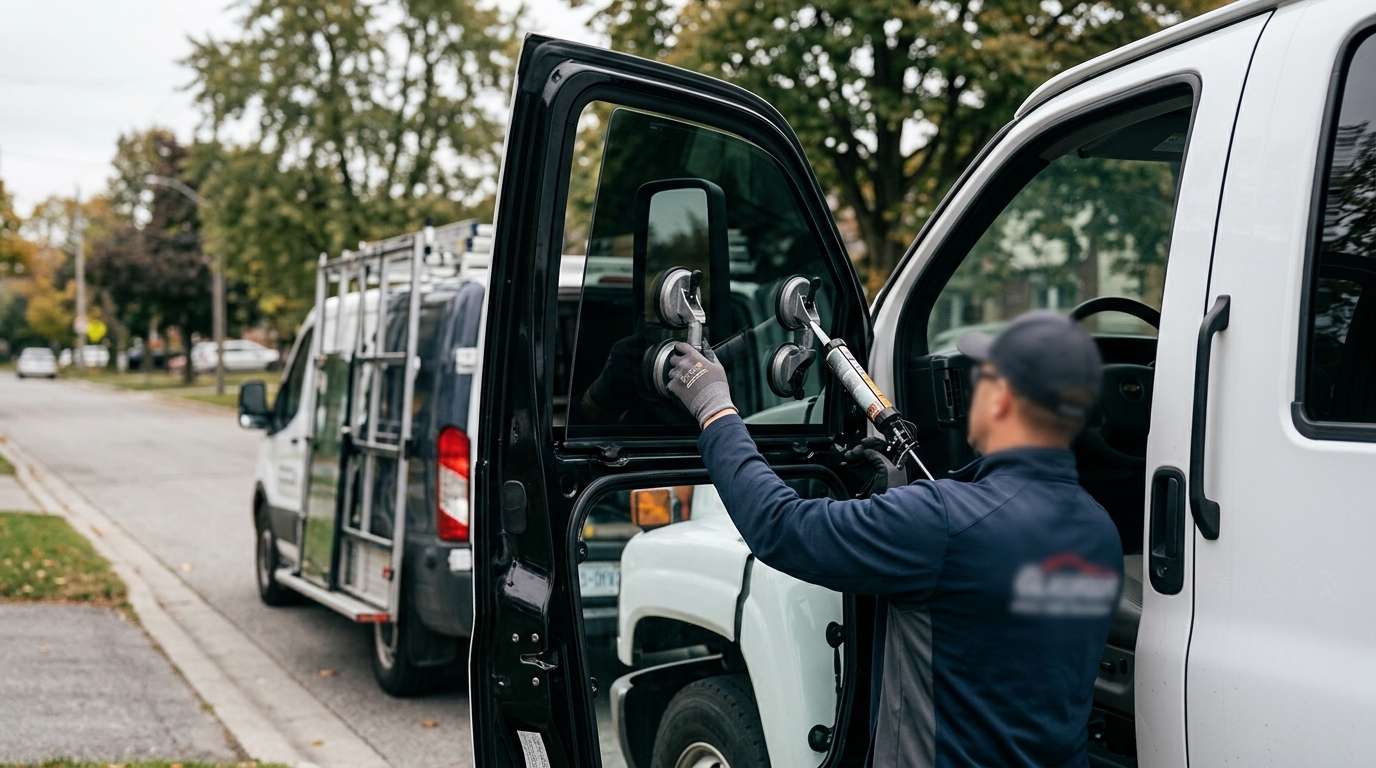
Because shattered door glass leaves your interior exposed to weather and theft, I normally pull up to your location about an hour after you book. Once on site, I also inspect the bottom interface where the glass drops down to meet the rear door beltline molding. Depending on whether your GLA has standard equipment or the exterior Night Package, that trim will be bright anodized chrome or high-gloss black. The lower lip of the glass encapsulation must fit flush into that waistline strip so water drains down the designated path inside the door cavity rather than bypassing the weatherstrip.
Addressing Weatherstrip Fitment and Division Bar Wear
On vehicles built throughout the X156 production run, the exterior finish on the vertical division bar often develops milkiness, oxidation, or fine surface fading over time. When replacing broken glass, keeping that vertical channel aligned prevents the rolling main glass from binding inside its felt run channel. If the division channel tilts even a fraction of a millimeter forward during reassembly, the power window motor will struggle, and the stationary glass will not lock into its perimeter rubber seat. Proper fitment demands that the encapsulated perimeter of the replacement glass fits true to the door's steel flange while the vertical channel sits parallel to the main window regulator track.