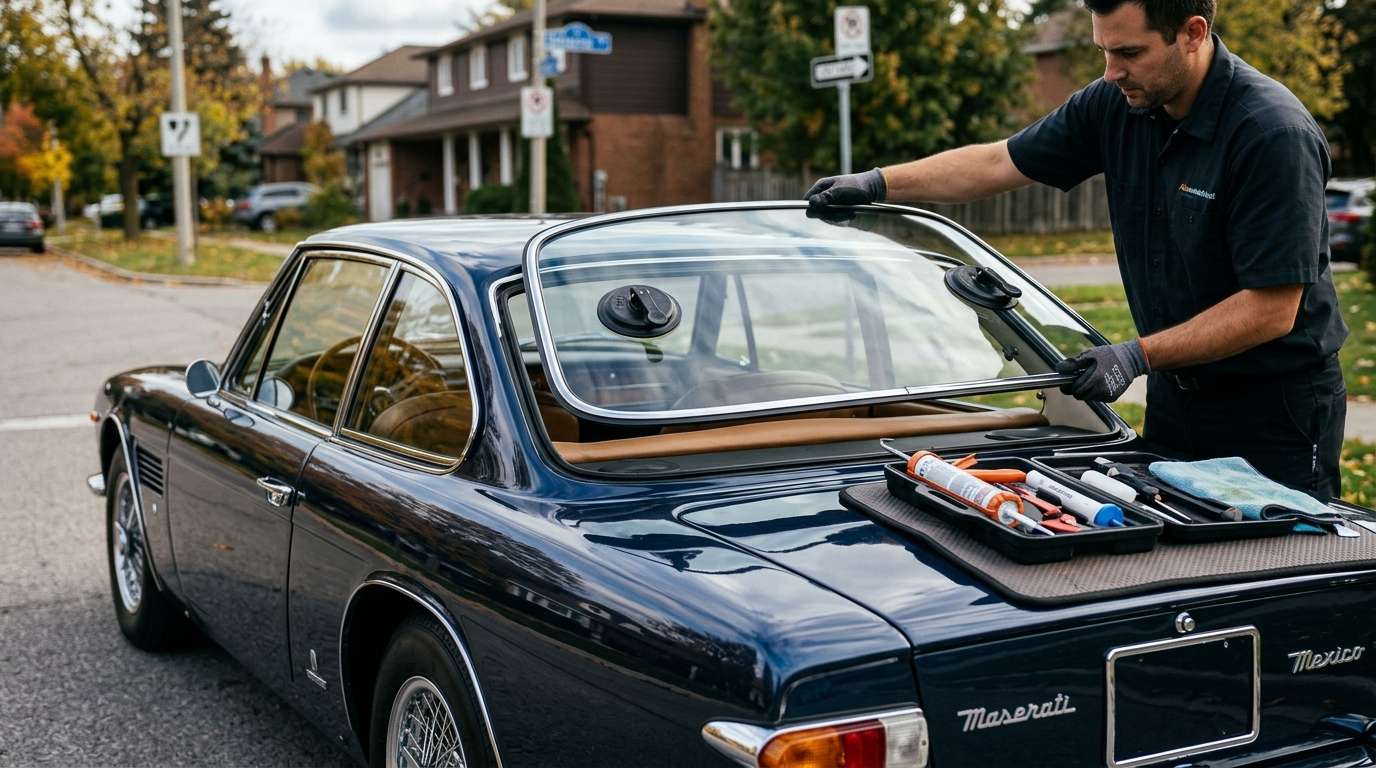
Vignale Coachwork and the Tipo AM112 Rear Window Assembly
Working on the back glass of the Maserati Mexico requires an understanding of how Carrozzeria Vignale hand-finished these bodies. Unlike modern glued-in automotive glass, this classic notchback relies on a continuous rubber perimeter gasket that locks around the rear aperture pinch-weld. Because only 485 examples left the factory between 1966 and 1972, original replacement panels under factory catalog number 112.58.801 are exceptionally scarce, and finding an unbroken original or an accurate reproduction requires extreme care during every stage of handling.
The window is wrapped in external brightwork consisting of multi-piece polished stainless steel and chrome-plated brass reveal mouldings that seat directly into the outer locking channel of the rubber seal. Dedicated metal corner clips and center finishers bridge the moulding joints, securing the trim tightly against the bodywork. If the rubber shrinks, hardens, or splits from decades of heat exposure, water seeps past the glass edge and runs down directly onto the leather-trimmed rear parcel shelf, soaking through to the underlying sheet metal and threatening the upholstered C-pillar sail panels.
Defroster Grid Layout and Glazing Variations
The rear glass on this grand tourer was manufactured with distinct factory tint variations and electrical features depending on original destination:
- Clear versus tinted glass: Vehicles were delivered either with unshaded clear glass or with a factory-specified light green or amber tint, which must be cross-referenced with your build sheets before ordering replacement panes.
- Heated demister grid (filamento termico): The rear screen integrates horizontal heating traces printed across the inner face, connected via concealed wiring to an amber-illuminated dashboard rocker switch.
- Absence of modern clutter: The glass is entirely free of high-mounted third brake lights, wiper arm holes, washer nozzles, and embedded radio aerial wires, keeping the glass surface visually clean and focused strictly on rear visibility.
Because these cars are fragile collector investments that owners prefer not to transport on open trailers, I operate entirely as a mobile service, travelling directly to your home garage or private workshop across Toronto and the GTA to carry out the work on-site. Preserving the delicate surface-printed heating traces is critical when servicing this area, as minor scrapes can sever the filamento termico lines and ruin the continuity of the rear defroster circuit.
Handling Old Rubbers and Aperture Water Ingress
When an aged gasket fails on the Mexico, moisture gathers along the lower horizontal pinch-weld beneath the glass channel. Over years, this trapped water causes unseen corrosion right where the outer body skin joins the structural inner framing behind the cabin's rear seats. Sourcing a fresh rubber extrusion molded to the precise profile of the Tipo AM112 aperture is necessary to prevent persistent leaks, as generic universal weatherstrips will not properly accept the factory chrome reveal mouldings or hold the proper clamping tension against the curved tempered glass.
Can broken defroster lines on the Mexico rear glass be repaired?
If an original screen has isolated breaks in the horizontal conductive paint lines, the circuit can often be bridged using specialized silver-bearing conductive paint without taking out the glass. However, if the electrical tabs at the glass perimeter have sheared off entirely or if there is extensive grid flaking, replacing the panel with a reproduction unit is the only way to restore the rear demister function.
How do I identify whether my car has tinted or clear back glass?
Hold a sheet of pure white paper halfway behind the edge of the glass in natural daylight. If the paper behind the glass shows an olive, soft green, or slight bronze cast compared to the exposed section, the car was equipped with factory-tinted glazing rather than clear glass.
Is it possible to reuse the original stainless steel window trim?
Yes, the original metal mouldings and corner joiner clips are intended to be reused. Because these trim pieces were formed to fit the unique hand-beaten curves of each Vignale aperture, retaining and restoring the car's original brightwork is far superior to attempting to adapt trim from other period Italian sports cars.





