The Truth Behind Vent Glass Inquiries on Italdesign Doors
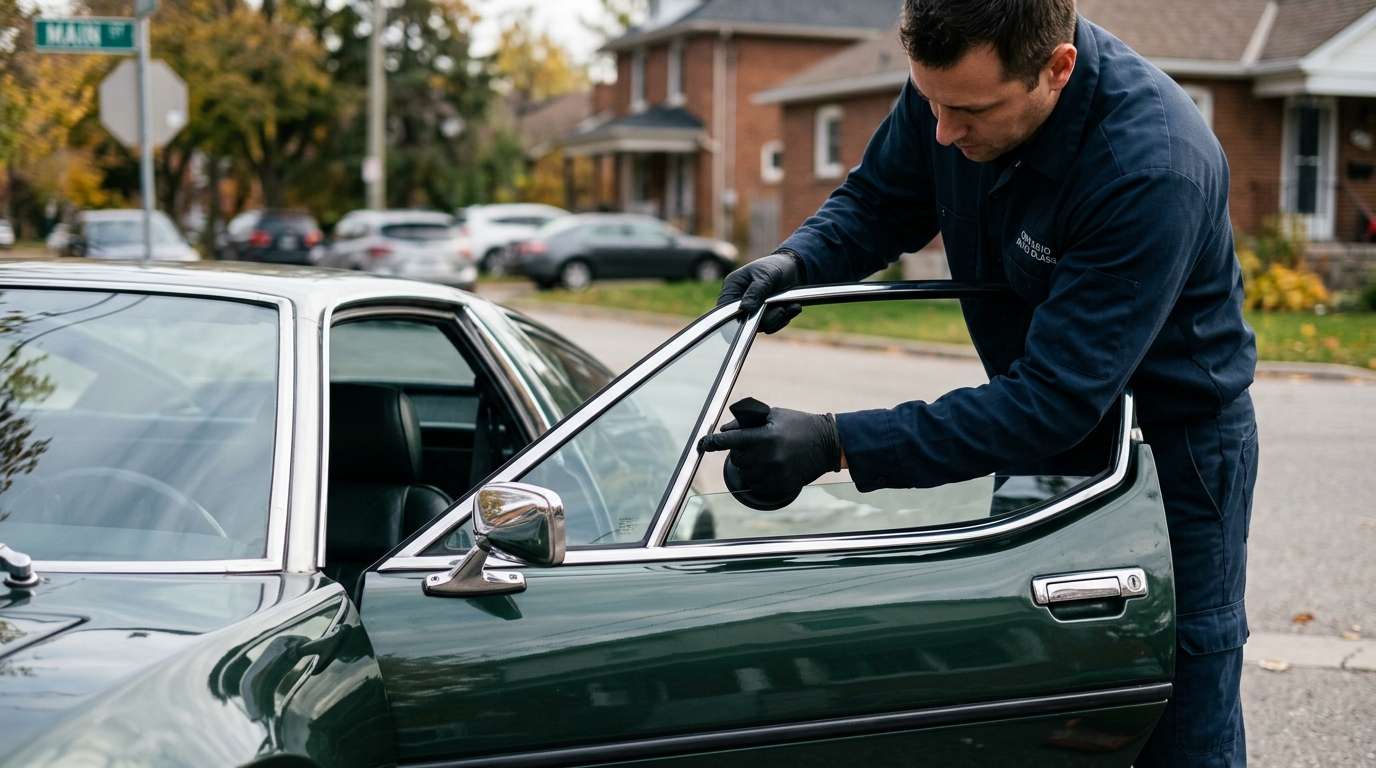
When an owner calls me asking to replace a broken front vent window on either of these mid-engine classics, the first thing I explain is that neither vehicle left the factory with one. Giorgetto Giugiaro engineered both the Tipo 117 (Bora) and Tipo 122 (Merak) using identical, full-framed steel door shells that house a single, unbroken sheet of side glass. There is no vertical division bar, no pivoting triangular pane, and no stationary front vent insert embedded within the door structure. Because the perimeter glass channel seal runs continuously along the entire upper and forward window frame, you will never find an official OEM Maserati part number or a standard NAGS code for a front door vent pane.
In almost every instance where an aftermarket supplier or salvage yard catalogs a "vent glass" for these cars, they are mistakenly referencing the stationary rear quarter windows positioned directly behind the B-pillar. While both cars share the same side glass architecture ahead of the driver, their silhouettes behind the B-pillar diverge significantly:
- Tipo 117 Bora: Utilizes a fixed trapezoidal rear quarter window set flush into the enclosed, glassed-in fastback greenhouse directly adjacent to the mid-mounted 4.7L or 4.9L V8 engine bay.
- Tipo 122 Merak: Incorporates open-air flying buttresses extending to the tail, requiring a distinctly shaped fixed rear quarter pane that finishes the cabin enclosure ahead of the V6 engine cover.
Identifying Side Glass Variants and Regulator Actuation
To determine what glass you actually need remanufactured or cut, you must inspect the rear quarter body profile and note how the drop glass moves inside the door shell. Once you call me to schedule service, I usually arrive at your garage roughly an hour after booking to inspect the exact profile, measure the glass thickness, and verify how your mechanism is currently behaving. Both models carry factory green-tinted safety glass, but the mechanical hardware driving the drop pane evolved across the production run.
| Vehicle Model & Era | Door Glass Style | Quarter "Vent" Profile | Operating Mechanism |
|---|---|---|---|
| Early Tipo 117 Bora (1971–1975) | Single-piece framed drop pane | Enclosed trapezoidal fastback | Citroën high-pressure hydraulic actuator |
| Late Tipo 117 Bora (1976–1978) | Single-piece framed drop pane | Enclosed trapezoidal fastback | Electric cable-and-scissor regulator |
| Early Tipo 122 Merak (1972–1975) | Single-piece framed drop pane | Flying buttress cabin closure | Citroën high-pressure hydraulic actuator |
| Late Merak & Merak SS (1976–1983) | Single-piece framed drop pane | Flying buttress cabin closure | Electric cable-and-scissor regulator |
If your car is an early production model, operating the window switch engages a high-pressure hydraulic ram tied into the central Citroën accumulator sphere. These hydraulic units are notorious for firing the door glass up or dropping it down with violent force. When sourcing replacement glass, the thickness and perimeter edge grinding must perfectly match the original channel tolerances, as the immense hydraulic speed will instantly shatter ill-fitting glass against the top of the door frame.
Why does my parts manual list a vent glass if the door has none?
Vintage European translation errors and third-party parts distributors regularly assign the term "vent" to the stationary rear quarter windows behind the door. If your manual shows a separate triangular glass panel, verify the location: it sits behind the B-pillar, not within the front door frame.
Can I swap rear quarter glass between a Bora and a Merak?
No. While the moving door glass panels interchange freely because the door shells are identical, the rear quarter glass cannot be swapped. The Bora uses a sealed rear fastback greenhouse, whereas the Merak utilizes an open buttress design with a different cabin termination line, making the rear quarter glass dimensions unique to each model.