Coupe Versus Sedan Rear Glass Profiles and Variations
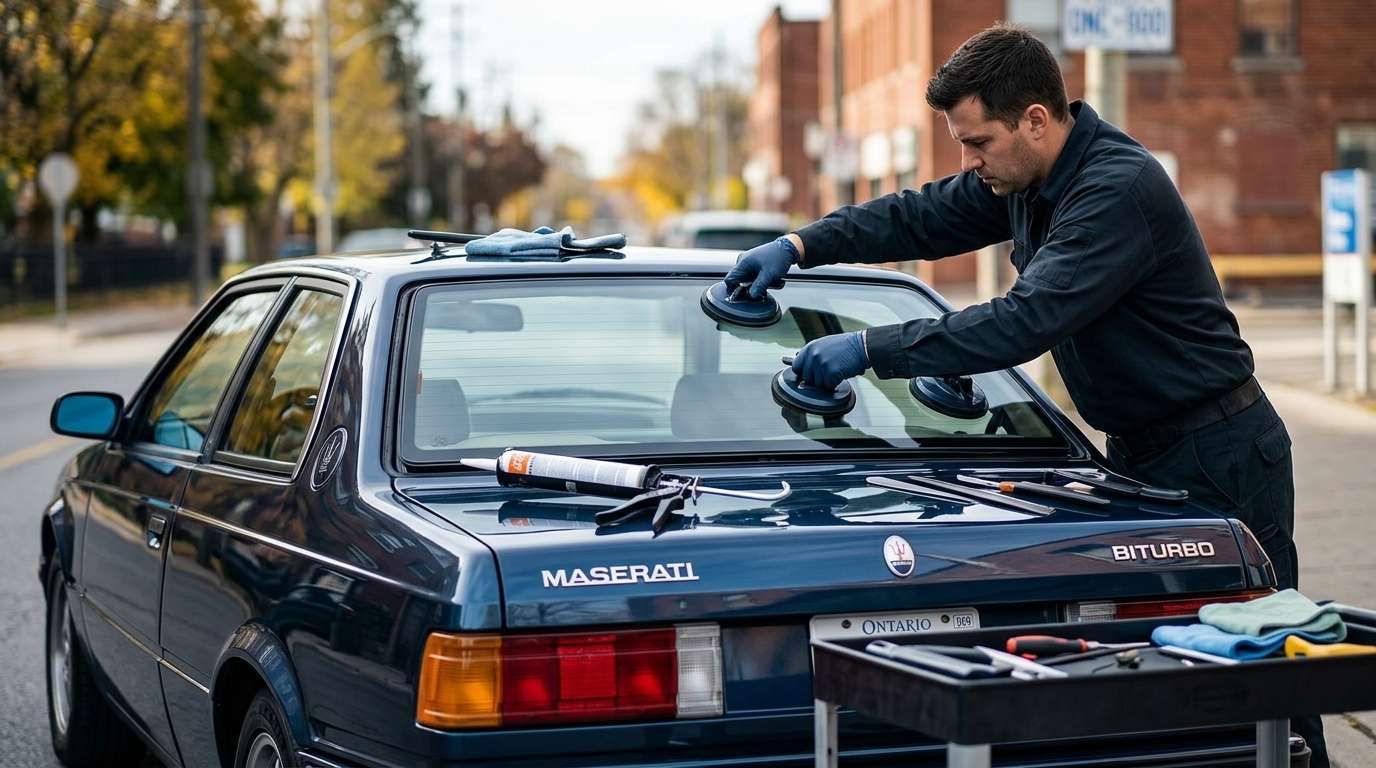
When the rear window breaks on a Biturbo, sourcing the correct replacement requires distinguishing between the two fundamentally different rooflines Maserati engineered for this era. The two-door coupes (including the standard Biturbo, Si, 222, 2.24v, and the rare Racing) utilize a shorter, steeply raked rear window. The four-door sedans (such as the 420, 425, 430, and 4.24v) feature an extended cabin roofline, an altered C-pillar profile, and a taller back glass that does not interchange with the coupe body shell.
All factory back glass produced for these cars consists of single-pane tempered safety glass tinted in factory green (Vetro Verde / Solextra). Maserati did not offer a rear wiper option on any Biturbo variant, nor does the glass house internal radio antennas or acoustic dampening membranes. The table below outlines how the glass divides across these Italian classics.
| Vehicle Variant | Body Configuration | Glass Characteristics | Perimeter Trim Style |
|---|---|---|---|
| Biturbo, Si, 222, 2.24v, Racing | 2-Door Coupe | Tempered Vetro Verde, electric defroster grid | Chrome lockstrip bead (early) / Matte black (late) |
| 420, 425, 430, 4.24v | 4-Door Sedan | Tempered Vetro Verde, taller profile, defroster | Brightwork metal reveal or black perimeter |
Gasket Seals, Metal Trim, and Defroster Grid Failures
Maserati secured the Biturbo back glass directly above the trunk shut face using a traditional rubber perimeter weatherstrip gasket rather than a modern direct-glazed adhesive bond. Early models incorporate a decorative chrome lockstrip bead (cornice) pressed into the outer rubber channel, while later iterations switched to a darkened matte finish. Over decades, this rubber gasket hardens, pulls away at the corners, and lets rainwater seep past the perimeter pinch-weld directly into the trunk floor and the rear parcel shelf foam.
When I replace one of these rear windows, I back the replacement glass with a one-year warranty against defects and cover the installation workmanship for as long as you own the Maserati. Securing the perimeter against leaks is critical because water intrusion accelerates hidden corrosion along the lower steel aperture.
The heating grid (lunotto termico) is another frequent failure point on these cars. The defroster lines operate on spade terminals soldered to the inner glass edges beside the C-pillar sail panels. These soldered electrical contacts frequently snap off due to brittle factory joints. Even when the solder holds, the Biturbo's notoriously sensitive fuse and relay boards suffer from melted solder traces and voltage drop, cutting power before current ever reaches the heating elements.
Third Brake Lights and Interior Trims on North American Models
Beginning in the 1986 model year, North American market regulations mandated a center high-mounted stop lamp (CHMSL). Maserati addressed this by mounting an independent plastic brake light housing onto the interior rear parcel shelf directly behind the glass. Because this third brake light sits on the shelf rather than being glued to the glass surface, it eliminates the need to source glass with specialized ceramic brackets or custom cutouts.
Aftermarket manufacturing for these vintage Italian back windows has long ceased. Replacing a shattered backlite typically means tracking down preserved new-old-stock inventory or salvage glass extracted from an intact parts car, making proper handling of the perimeter trim and rubber channel all the more essential.