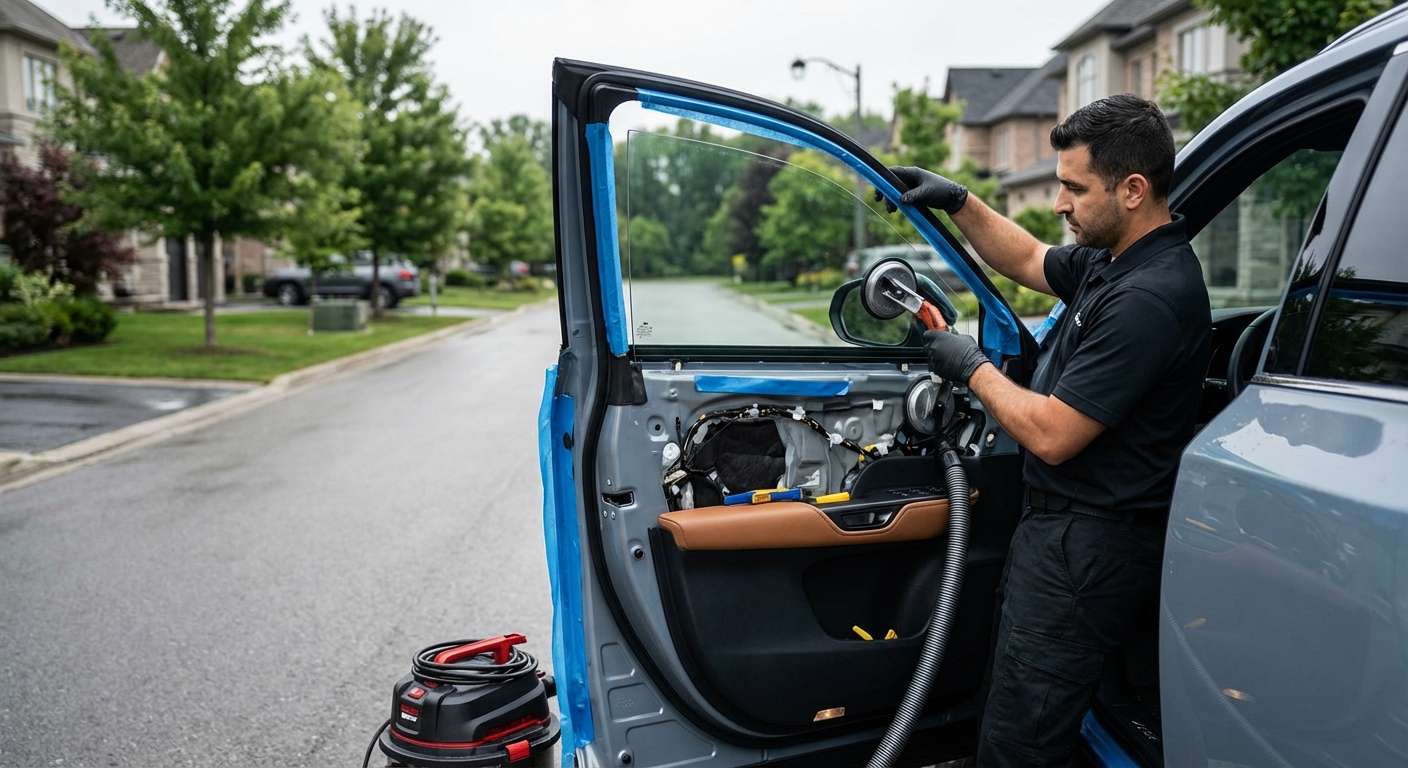
Identifying Front Laminated vs. Rear Tempered Glass on the Lexus TX
If you look at the top exposed edge of the front door window when it is rolled halfway down, you will see a sandwich of two separate glass layers bonded over a clear acoustic vinyl core. Lexus equips every TX 350 and TX 500h trim grade—from the base model up to Luxury and F SPORT Performance—with dual-pane acoustic front door glass to suppress road turbulence. The rear passenger doors are entirely different: they use traditional single-pane tempered safety glass finished with a dark factory privacy tint and green solar-absorbing characteristics, breaking into small pebbles upon impact rather than cracking like the front laminated units.
Because the TX shares core structural architecture with the Toyota Grand Highlander, the rear door glass footprint and mounting points directly match its platform sibling. The front right door glass corresponds to OEM part number 68101-0E270, while replacement rear panels are cataloged under standard industry identifiers like NAGS FD30307YPY for the rear right position. When sourcing replacement glass for your SUV, I supply strictly aftermarket panels manufactured by established names such as Pilkington, PGW, FYG, or XYG, ensuring the acoustic layers and privacy tint values match the original factory appearance.
Interior e-Latch Wiring and Run-Channel Seal Dynamics
Replacing door glass on this vehicle requires working around sensitive electronics that sit along the upper door sill. The TX uses Lexus e-Latch electronic push-button interior release handles linked directly to the Safe Exit Assist radar sensors. Damaged glass debris inside the inner door cavity can interfere with these low-voltage electronic latch switches or the manual mechanical backup release lever hidden beneath the handle trim.
Unlike frameless performance coupes, the TX uses a rigid, fully framed door shell holding a deep interior run-channel rubber seal (OEM part 68142-0E140 on the rear). Some early production builds suffered from faint whistling noises along the highway due to minor channel seating shifts. Correct fitment inside this rubber channel is critical: a pinched channel creates high air-leak pitch and causes the anti-pinch motor logic to trip falsely, sending the window back down when attempting to close.
Driver Window Safety Recall and Window Anti-Pinch Operation
The driver-side door glass plays an unexpected role in vehicle safety systems on the TX. Under safety recall 24V-436 (Toyota recall code 24TA07), early models required inspection because the side curtain airbag might not deploy fully as intended if the driver's front window was rolled down during a collision. Ensuring smooth mechanical travel without binding in the frame ensures the window can roll up securely to maintain cabin structural performance.
Every window motor operates an automatic one-touch system linked to anti-pinch reversal safety logic. If a window stops short of the top header or reverses automatically, the window regulator limit settings simply need a manual travel reset performed via the master door switch.
Post-Replacement Inspection Checklist for Owners
- Inspect the front door glass along the top rim to confirm the dual-pane acoustic construction is present rather than cheaper single-pane tempered glass.
- Verify that the rear glass matches the deep factory solar privacy tint of the adjacent rear quarter panel glass without haze or color mismatch.
- Test the Lexus e-Latch push-to-open button and Safe Exit Assist indicators located near the inner door window sill.
- Operate the one-touch auto-up and auto-down switch to verify the anti-pinch safety mechanism does not falsely reverse mid-travel.
- Check the vertical run-channel rubber moulding around the door frame to ensure the seal sits flat without kinks that generate highway wind whistle.





