Identifying the Moonroof Versus Panoramic Assembly on the Lexus NX
Replacing the overhead glass on this luxury crossover requires knowing immediately whether the vehicle has the standard tilt-and-slide moonroof or the dual-pane panoramic setup. On the base NX 250 and standard NX 350, Lexus fits a traditional single-pane tempered glass panel that retracts internally beneath the outer painted roof skin. Higher trims, including well-optioned NX 350h and NX 450h+ plug-in hybrids, frequently upgrade to the full-length panoramic glass roof. This panoramic version divides into two discrete parts: an operable front panel and an expansive, stationary rear section. Neither setup integrates defroster grids, ADAS hardware, or radio aerials, but the panoramic glass includes deep solar-control acoustic laminates with dedicated infrared and ultraviolet filtering to reduce cabin heat load.
Mechanical Differences Across AZ20 Roof Panels
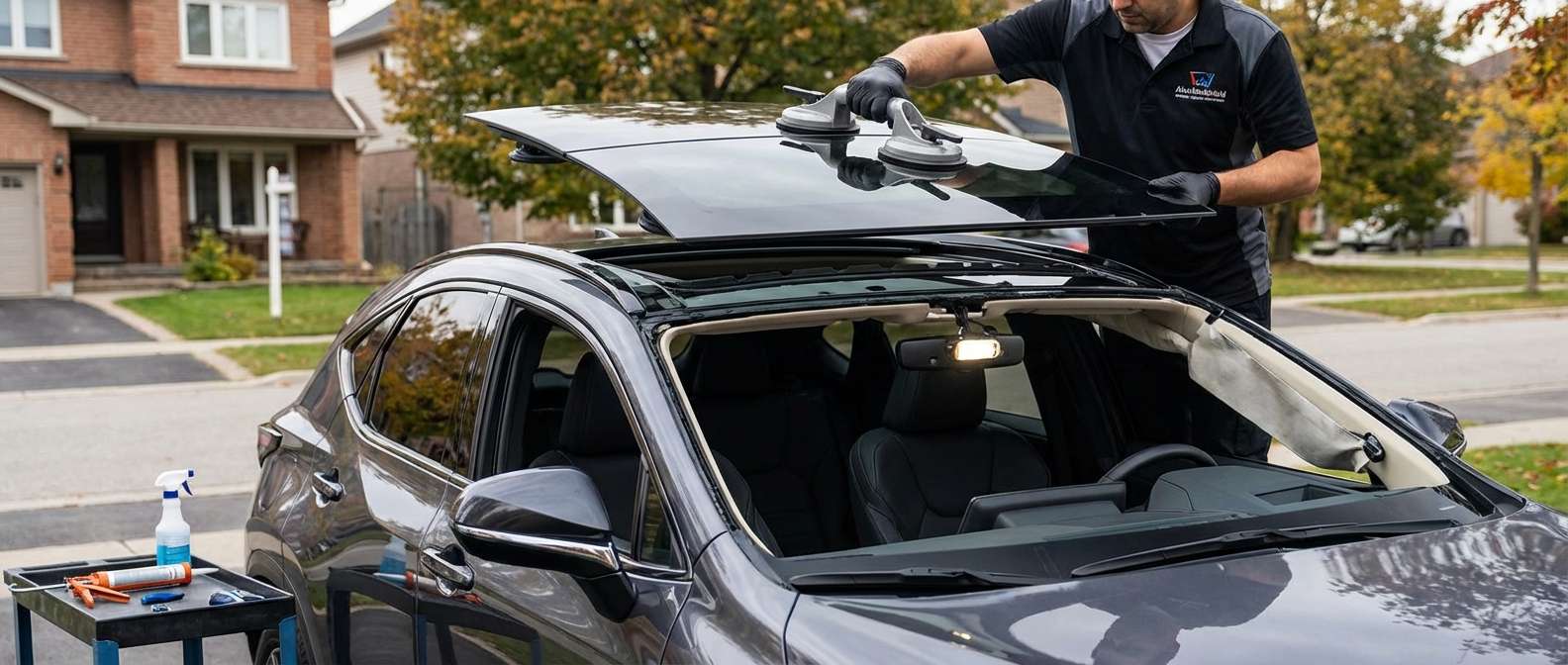
Working on the AZ20 platform reveals how differently these two mechanisms interact with the surrounding unibody structure. When dealing with damaged glass on the dual-pane system, the operable front pane does not drop inside the headliner when opening; instead, its motorized linkage tilts the rear edge up and glides it back over the top of the stationary rear glass. That external reverse-slide motion means the exterior seals endure direct highway airflow and heavy weather exposure along the seam where the two glass panes meet. Below the sheet metal, both glass configurations sit within a perimeter cassette sub-frame bolted directly into the vehicle's structural roof crossmembers and inner roof rails.
| Glass Configuration | Panel Type | Operation Style | Key Structural Border |
|---|---|---|---|
| Standard Moonroof | Single tempered panel | Internal tilt & slide into headliner | Inner body pinchweld cassette |
| Panoramic Roof (Front) | Operable laminated solar glass | External tilt & slide over rear panel | Central bridge & outer perimeter track |
| Panoramic Roof (Rear) | Fixed laminated solar glass | Stationary | Flush roof rail perimeter channels |
Whenever a rock strike or stress fracture forces a panel replacement, I source exclusively aftermarket replacement glass from established automotive glass manufacturers like Pilkington, FYG, PGW, and XYG to guarantee the proper edge contours and factory-matching tint depth. A proper fit ensures the integrated edge gasket seats flush against the surrounding roof perimeter, preventing wind buffeting around the low-profile flush roof rails that line either side of the NX roof deck.
Drain Routing, Headliners, and Cassette Access
Accessing the mounting brackets, motor drives, or cable tracks on this Lexus demands dropping the interior headliner entirely, which also secures the motorized roller fabric sunshade mounted underneath the glass cassette. Any water that passes the outer rubber weatherstripping is captured by an integrated water channel built directly into the frame. Four large corner drain tubes direct this water downward through the cabin architecture: two run through the forward A-pillars while the two rear lines route through the C-pillars down to the wheel arches. If an impact shatters the glass, broken fragments routinely enter these internal drainage channels; clearing those pathways is critical to prevent water overflow from damaging the electric sunshade motor or pooling in the rear cargo floor.
Can the front panoramic glass be replaced without removing the rear glass?
Yes. The operable front sliding panel mounts to its drive mechanisms via dedicated side adjustment screws accessible once the headliner is lowered and the inner side trim valances are detached. The rear stationary glass panel remains secured in its own section of the frame and does not need to be unbolted or disturbed to service the front moving panel.
Why does the roof creak or pop over driveways after a glass replacement?
Torsional flex in the AZ20 unibody places stress on the sunroof cassette when driving over angled curbs or steep approaches. If the cassette mounting bolts securing the mechanism to the roof bows are tightened unevenly, or if the glass panel brackets are torqued without aligning the panel height to the exterior sheet metal, the rubber seal rubs aggressively against the painted frame, producing noticeable creaks and clicks.
Does the panoramic roof replacement require resetting the power sunshade?
Yes. Disconnecting the sunroof drive components or replacing the glass requires an initialization procedure for the power sliding panel and fabric shade. Holding the tilt or close switch until the glass and fabric shade complete a full cycle re-indexes the pinch-protection sensors and ensures the motor slows down properly as the panel compresses against the primary weatherstrip.