Embedded Antennas, Defroster Grids, and Package Tray Integration
The rear window on the ES 350 and hybrid ES 300h houses two distinct electrical networks on a single sheet of acoustic green safety glass. While the majority of the ceramic grid heats the window, the top three or four horizontal lines are isolated from the heating circuit entirely. These upper traces function as the AM/FM diversity antenna, connected directly to an amplifier hidden behind the interior C-pillar trim panels rather than running down to the defroster power leads. When one of these units shatters, the vehicle loses not only rear visibility and heating but also clear radio signal reception.
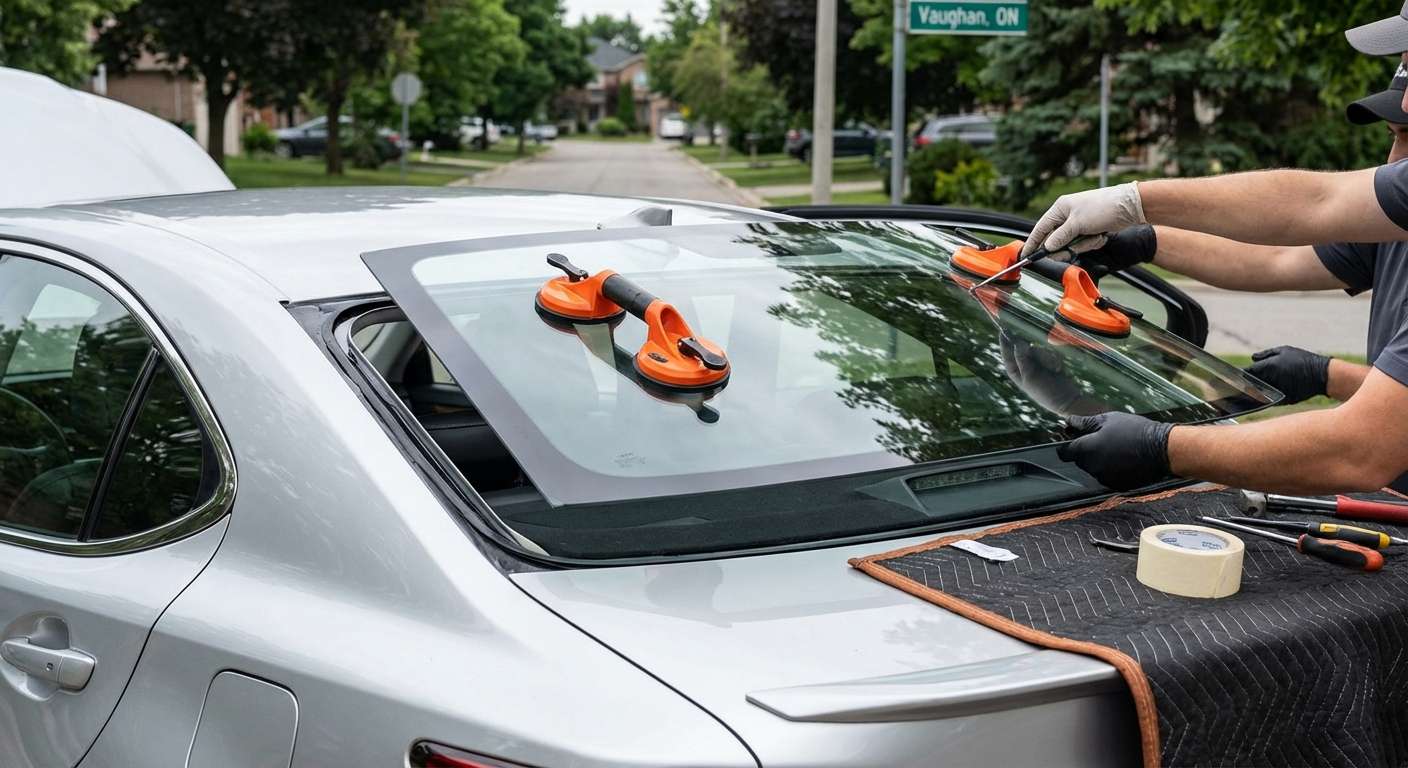
Working around this back glass requires special care near the rear package shelf. Unlike vehicles with glass-mounted stop lamps, this model positions the high-mount third brake light inside the cabin, flush on the rear parcel tray so it projects through the lower clear band of the glass. Vehicles equipped with the factory power-retractable sunshade add another layer of mechanical clearance along the interior baseline. Disconnecting the electrical wiring requires dropping the parcel shelf slightly and popping the upper C-pillar mouldings to unclip the antenna spade terminals without tearing the delicate contact pads.
Plant Origins and Replacement Part Variations
Between 2013 and 2015, all models were manufactured at the Miyata plant in Japan, carrying factory reference 64801-33902 (superseded by 64801-33905). Starting in 2016, Lexus introduced North American production at the Georgetown, Kentucky plant (TMMK) alongside Japan, which introduced alternate dealer reference 64801-06908 for US-assembled sedans. In the aftermarket glass catalog, both lines trace back to standard NAGS identification DB12267.
When you schedule a back glass replacement with me, I typically show up at your vehicle within roughly an hour of booking so the car is not left exposed to rain or theft. Every replacement unit must include a brand-new upper reveal moulding and dam seal, because the original factory upper trim strips stretch and deform upon glass removal and cannot be safely re-seated against the roof seam.
Common Owner Questions
Why do the top few lines of my rear defroster never melt ice or clear fog?
The upper three to four lines are not defective. They are intentionally isolated from the 12-volt defroster circuit to act as the internal AM/FM diversity radio antenna. Because no electrical heating current flows through those top traces, that specific band at the top of the glass remains cold.
Why do headlights behind me look distorted or blurry at night after tinting?
The factory ceramic defroster and antenna lines baked onto the inner glass surface are relatively thick. When an aftermarket window tint film is pressed over them, small microscopic air pockets form along the edges of each raised wire run, creating horizontal refraction lines that cause headlights from following traffic to smear vertically.
Can I scrape stubborn dirt or old window tint off the interior rear glass?
Never use a metal razor blade or harsh abrasive pad on the inside face of this window. The ceramic heating grid and diversity antenna wire runs sit exposed on the inner glass plane, and even minor surface scrapes will sever the fine printed circuits, permanently disabling sections of your defroster or ruining your radio reception.