Why Range Rover Velar Panoramic Glass Shatters and Fails
Highway stone strikes catch the leading edge of the sliding front glass right above the windscreen header, turning the dark-tinted laminated tempered panel into a spiderweb of fractured safety glass. On the Velar, the massive surface area of the panoramic roof sits almost flush with the roof skin, leaving the front panel vulnerable to airborne debris kicked up by transport trucks. Unlike standard steel roofs that take a shallow paint chip, the solar-attenuating, heat-filtering glass absorbs that kinetic impact directly into a surface held under constant mechanical tension.
I also regularly see failures tied directly to the surrounding hardware. The dual-pane panoramic setup shares its D7a architecture and cassette design with the Jaguar F-Pace (X761). Beneath the glass, dual electric drive motors pull heavy mechanical guide cables through an aluminum perimeter cassette frame. When the guide rails dry out or mounting fasteners experience torque loss, the assembly binds. That binding exerts twisting force on the front movable pane as it attempts to slide back over the rear fixed glass panel, occasionally shattering stressed glass or jamming the pop-up mesh wind deflector against the frame.
Replacing the L560 Sliding Panel and Hardware Complications
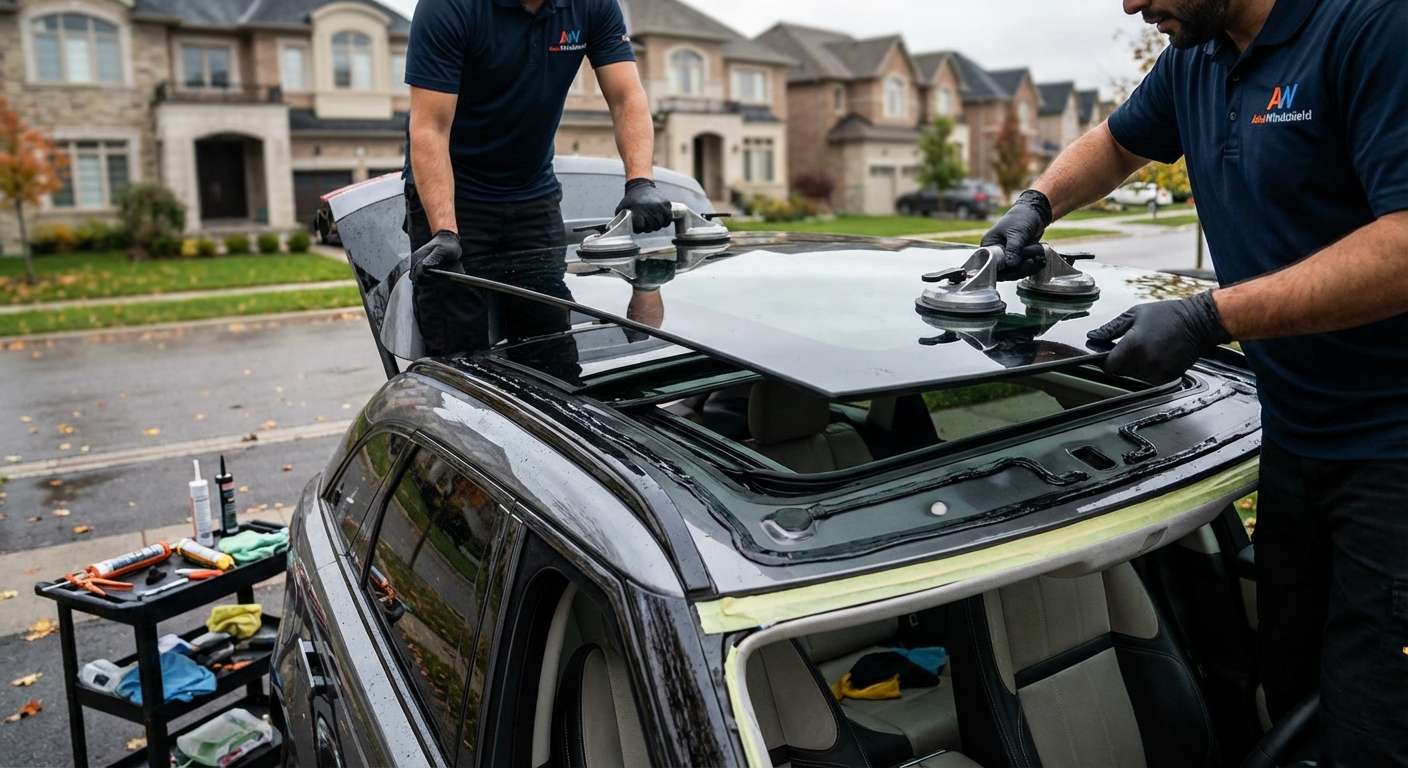
When replacing the movable front glass (originally dealer reference LR093995, superseded by LR177819), the glass panel must be separated from its guide mechanism without damaging the encapsulated perimeter rubber weatherstrip seal. The tight tolerances against the gloss-black exterior roof skin panels and side finisher mouldings leave zero margin for misalignment. JLR has tracked multiple issues with loose side finisher trim strips detaching at speed, so verifying those retainers during glass replacement is mandatory.
Inside the cabin, the work sits directly above the full-length fabric roller sunblind, which features overhead console sensors for gesture control on higher trim levels. The interior headliner and A-pillar trim panels conceal the four internal corner drain tubes. If an impact shatters the tempered pane, fine glass gravel frequently drops straight down into the front track channels and enters these drain tubes. I ensure the drain lines down the A and C/D-pillars are cleared of foreign debris so water doesn't pool and flood footwell wiring harnesses; I back my installation workmanship for life alongside a one-year warranty on the replacement glass panel itself.
Fixed Glass vs. Sliding Panoramic Configurations
| Component / Feature | Sliding Panoramic Roof | Fixed Panoramic Roof |
|---|---|---|
| Glass Structure | Two-piece split: movable front panel, stationary rear panel | Single continuous stationary glass panel |
| Replacement Reference | Front movable glass panel: LR177819 (replaces LR093995) | Full single-piece fixed panoramic unit |
| Wind Management | Integrated mechanical pop-up mesh wind deflector at front | None required |
| Interior Shade Mechanism | Electric powered roller sunblind (supports gesture control) | Electric powered roller sunblind |
Can a cracked Velar sunroof panel be repaired instead of replaced?
No. The movable panel uses safety glass engineered to fracture completely to prevent large cutting edges during an impact. Once the laminated pane sustains a structural crack or stone puncture, it loses its rigidity and solar performance, requiring a complete panel replacement.
Does replacing the sunroof require removing the shark fin antenna?
No. The shark fin antenna sits on the painted roof sheet metal just behind the rear fixed glass section. Working on the front sliding glass panel or even the rear stationary section does not require disturbing the rear roof antenna or its interior coaxial connections.
Why is my headliner wet after the sunroof was hit by debris?
When the front glass cracks or breaks loose from its encapsulated perimeter seal, driving rain overwhelms the cassette tray. Furthermore, glass fragments commonly fall into the aluminum track and plug the front corner drain grommets, forcing runoff to overflow the cassette channel directly into the moulded headliner.