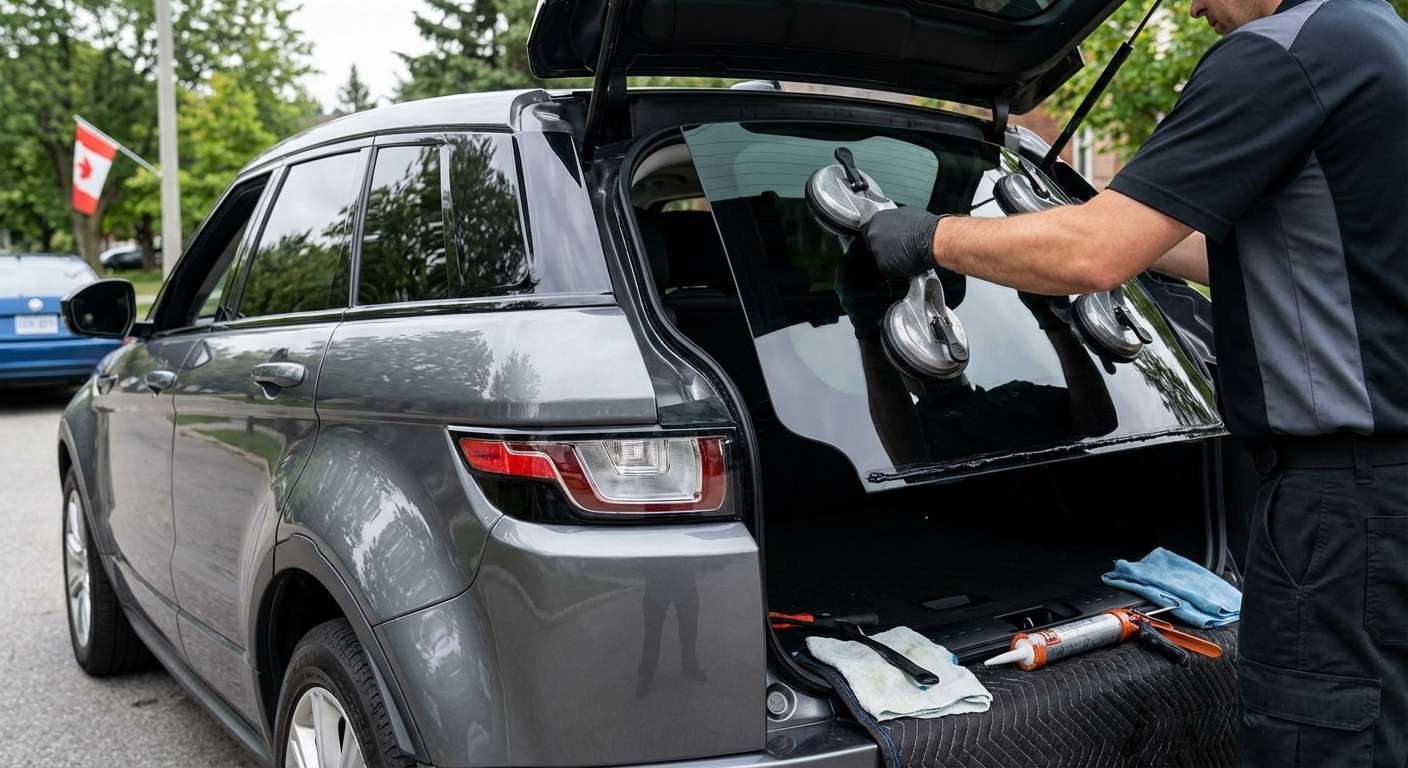
Vulnerabilities of the Heavily Raked Liftgate Window
The aggressive roofline of the L538 Evoque slopes down toward an unusually flat rear hatch angle, positioning the back glass directly beneath the overhanging roof spoiler. Because of this steep rake, tall cargo stacked in the compact boot easily makes direct contact with the inner glass surface. When shifting luggage or sporting gear strikes the panel, it routinely severs the delicate defroster grid lines or fractures the embedded AM/FM radio and remote keyless entry antenna traces bonded to the interior face. Even worse, impact from hard cargo or external road debris readily shatters the tempered panel, showering thousands of glass pellets straight into the enclosed space between the inner structural tailgate framing and the outer body skin.
Once shattered, fragments migrate down toward the power liftgate latch mechanism, causing locking faults that prevent the hatch from closing securely. An overhanging aerodynamic spoiler houses the high-mount third brake light and the washer fluid spray jet immediately above the upper edge of the glass. When the internal washer fluid hose cracks or loosens inside this upper wing—a frequent issue on these hatches—water weeps down across the top seal, pooling moisture along the electrical harness connectors. If your rear liftgate window shatters unexpectedly, I can usually be on-site within about an hour of your call to clean out the fractured glass and start the replacement.
Integrated Antenna Traces and Tailgate Trim Complications
Replacing the back glass on the 5-door SUV and 3-door Coupe configurations requires sourcing the correct NAGS replacement panel, tracked under benchmark part number FB25319. Unlike basic rear windows that carry only horizontal heating elements, this panel functions as a critical communications hub. It routes embedded antenna wires directly across the glass matrix to maintain remote central locking reception and clear radio signals. Solder tab terminals positioned along the inner glass edges link into the vehicle's dual antenna amplifiers hidden behind the upper interior hatch trim.
Matching the replacement glass to your trim level is essential. While base models featured standard green solar tint, higher-spec packages such as the Dynamic, Prestige, and Autobiography typically utilized deep factory privacy glass. The glass also features a factory-machined opening through the lower perimeter to accommodate the rear wiper spindle and its rubber isolator grommet, which isolates motor vibration from the rear window frame.
Electrical Connections and Hatch Disassembly
Accessing the electrical points on this liftgate requires dismantling the multi-piece interior tailgate lining. The lower main carpeted card, the side pillar surrounds, and the upper header moulding that meets the rear spoiler must all be detached. This exposes the electrical pigtails for the heated defroster tabs, the wiper motor housing, and the delicate central locking signal leads. Attempting to detach the rear panel without first unhooking these components risks ripping the vehicle wiring harness away from the roofline grommets.
The exterior of the hatch is bounded by gloss-black side garnish mouldings and lower trim pieces that define the floating-roof styling of this model. These exterior trims must be released cleanly to ensure the replacement glass sits true within the aperture, leaving correct clearance beneath the rear spoiler so the high-mount brake light wiring remains completely uncompressed.