Why the Manual Pop-Up Sunroof Drips Directly onto Your Seats
If water is pooling in your lap while driving in the rain, your pop-up roof panel is doing what almost every factory station wagon roof does once the rubber shrinks. The factory glass setup on the 1993 NAS Defender 110 Station Wagon and the 1995 to 1997 Defender 90 hardtop models differs fundamentally from modern sliding units: it uses no internal cassette, no perimeter water catchment trays, and absolutely no drain tubes running down the A-pillars or B-pillars. Instead, the assembly relies entirely on mechanical compression against the ribbed aluminum roof skin.
When the primary perimeter glass-to-frame weatherstrip (originally under Land Rover parts RTC5942, STC3858, or EEQ500030) hardens and loses its elasticity, any rain bypassing the seal drops straight through the approximately 780 mm by 427 mm aperture onto the front seats and gear shifter. Compounding the issue, the frame-to-roof outer seal (part AWR3320) degrades under UV exposure, allowing water to wick between the outer aluminum flange and the inner finisher ring (AWR3324) secured by the interior clamping screws (STC3859). On forums, owners constantly trace persistent highway whistling and damp headliners to the rear rotary twist-handle mechanism (STC982 / STC2890), which loses its clamping tension as the internal nylon threads strip.
Hardware Breakage, Glass Replacement, and Frame Alignment
The tinted, tempered pop-up glass panel (originally cataloged under Land Rover part AWR3323 and superseded by LR045874) carries no defroster elements, embedded antennas, or acoustic films. It operates purely as a manual tilt-and-removable unit anchored by front hinge pivot clips (OEM kit STC3682 or LR041353). Decades of sun baking the exterior plastic makes these front pivot tongues remarkably brittle; unlatching the rear rotary wheel to lift the glass out for open-air driving often snaps the aged hinge lugs clean off.
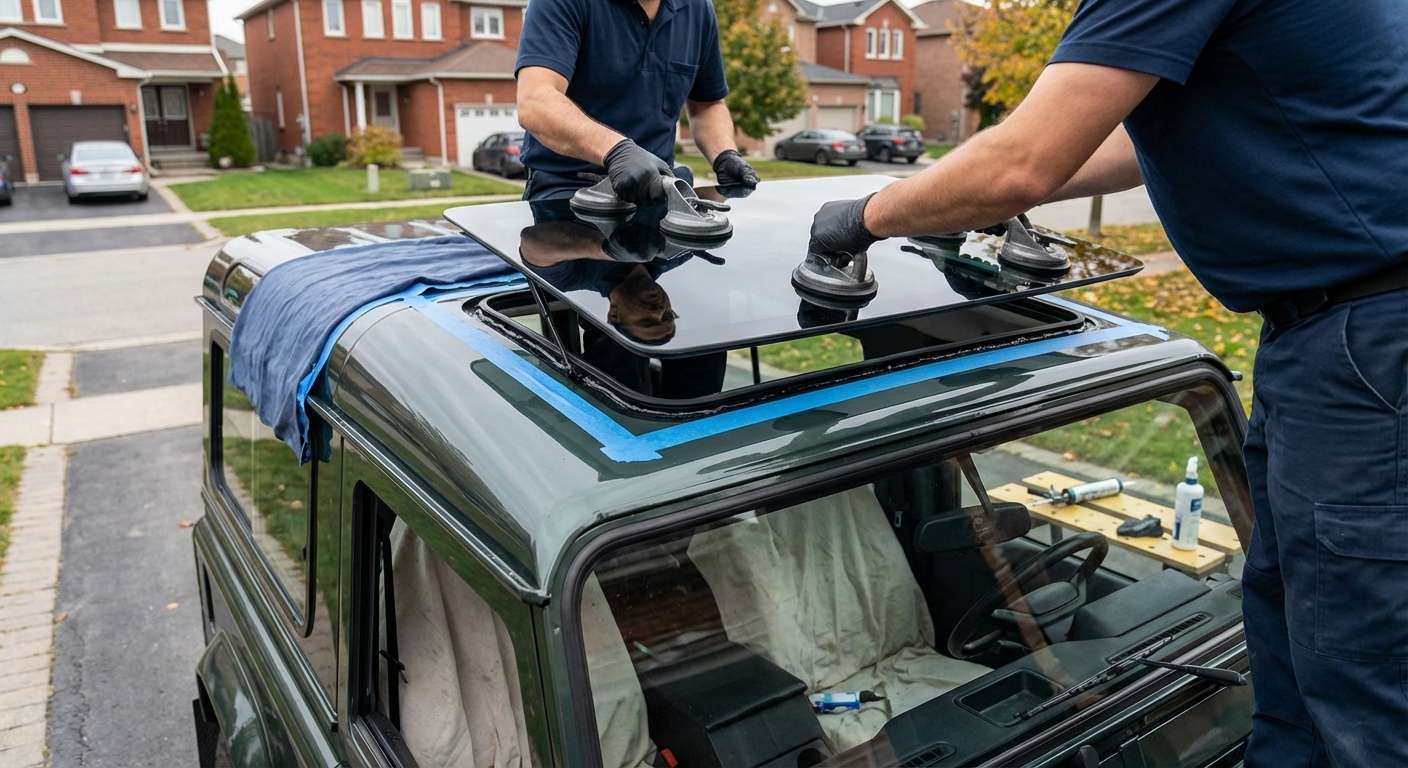
Whenever I replace damaged or shattered panels on these hardtops, I work exclusively with quality aftermarket glass from dedicated automotive suppliers like Pilkington, FYG, PGW, or XYG rather than hunting down discontinued or warped original inventory. Getting a clean fit requires inspecting the sandwich clamp design carefully. If the previous owner tried to stop drafts by overtightening the rear twist latch or the inner frame securing screws, the outer frame distorts against the roof ribs, leaving gaps at the corners where no amount of fresh rubber will seal correctly.
Diagnostic Reference for Classic Roof Leaks
Before replacing components on a hardtop wagon, isolating the failure point saves the molded cloth or vinyl headliner from further water staining:
- Broken Hinge Tabs: If the front edge of the glass lifts at highway speeds or creates a distinct buffeting roar, the plastic tabs in hinge kit STC3682 have sheared, preventing the forward edge from compressing the seal.
- Stripped Rotary Latch: If turning the rear handwheel STC2890 clockwise feels loose or fails to draw the rear edge tight into the aluminum frame, the internal locking cam is worn, breaking the compression seal.
- Skin Seepage: Water showing up along the inner edge of finisher ring AWR3324 rather than dropping from the glass itself indicates that the seal between the roof panel and outer frame has failed.
Can the glass be replaced without removing the lower interior trim ring?
Yes. If the aluminum frame is undamaged and sealed tight to the roof, the glass panel detaches independently. You release the rear rotary latch arm from its receiver bracket and tilt the glass upward beyond its standard venting angle, allowing the front pivot pins to slide out of the forward hinge sockets.
Can I add drainage hoses to keep the factory manual sunroof from leaking?
No. The Defender hardtop roof frame has no internal channel, tray, or provisions for drain hoses. Sealing depends entirely on the outer perimeter rubber seal and the downward clamping force exerted by the rear latch and front hinges. If the weatherstrip fails or the handle cannot clamp down firmly, water enters the interior immediately.
Is the glass panel laminated or tempered?
The removable factory panel is single-pane tempered safety glass with a light green/smoke tint. When impacted by low-hanging trail branches or gravel, it shatters completely into small blunt pebbles rather than cracking like a laminated windshield.