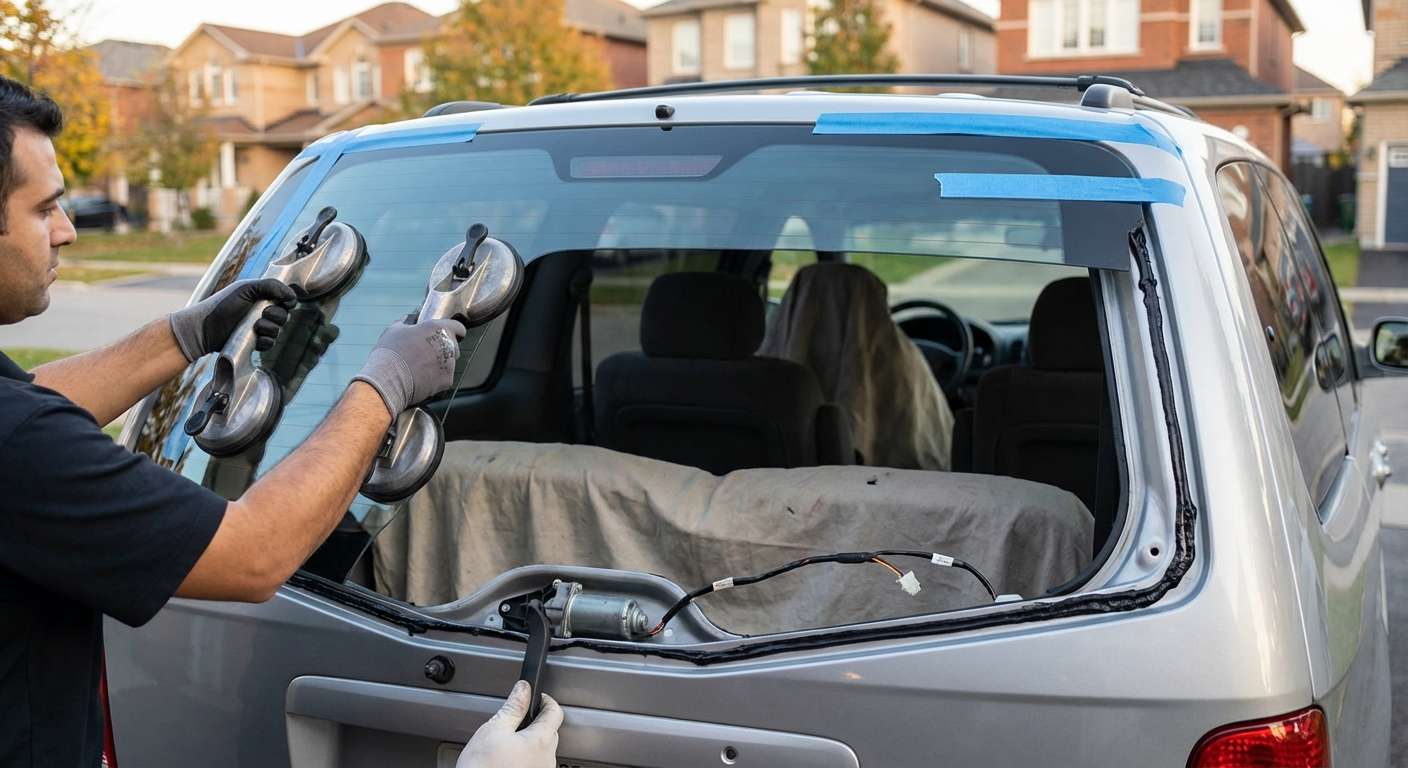
Rear Window Glass and Liftgate Structure on the 2002–2005 Sedona
When the rear window breaks on your Sedona, the shattered tempered panel exposes the entire cabin to rain and cold. This minivan relies on a solid tempered panel bonded directly to the steel tailgate, rather than a separate flip-up hatch window. Both the LX and EX trim levels share this exact layout, incorporating a dark factory privacy tint and an embedded horizontal defroster grid across the span of the glass.
At the bottom center of the pane, a factory-bored mounting hole allows the rear wiper motor spindle to pass through the glass from inside the liftgate. When I replace this back glass, I supply aftermarket glass manufactured by brands such as Pilkington, FYG, PGW, or XYG, ensuring the hole dimensions and perimeter profiles align accurately with the factory steel pinchweld. Surrounding the perimeter, the pane uses specialized upper and lower glass dam strips alongside an encapsulated edge molding to keep moisture off the bonding line and cushion the glass edge against the sheet metal.
Hardware Points and Electrical Connections Behind the Hatch
Replacing the back glass on this first-generation GQ platform involves working around several specific tailgate components that interact directly with the window assembly:
- Wiper Spindle Grommet: The pass-through hole for the rear wiper uses an isolated rubber grommet. If this grommet hardens or cracks, rainwater can run along the wiper motor spindle into the inner tailgate cavity, eventually soaking the electric latch mechanism and lower harness.
- Internal Tailgate Garnish Panels: The interior pinchwelds and defroster wiring terminals are fully shielded by plastic trim panels. Removing these reveals the defroster power leads and grounds, which connect directly to the copper busbars bonded to the glass edge.
- Upper Liftgate Header: Directly above the top edge of the back window sits the center high-mount stop lamp (CHMSL). The wiring for this brake light and the rear defroster feeds into the vehicle body through flexible rubber boots at the top hinge area.
- Hatch Support Struts: The steel liftgate relies on dual gas-charged lift cylinders (OEM part references 0K52Y-62-620A and 0K52Y-63-620A). Over time, these struts lose pressure in freezing weather; without adequate pressure, the weight of the tailgate and new glass combined can cause the hatch to slam shut unexpectedly during service.
Common Electrical and Mechanical Issues with Sedona Back Glass
Owners frequently assume their broken rear defroster traces are caused by window failure alone. On these vans, the rubber wiring conduit bridging the roof to the top edge of the rear hatch is a common point of mechanical stress. Constant bending every time the hatch opens can snap the defroster power wire or wiper feed inside the harness loom, cutting off current even if the glass grid appears intact.
Inside the vehicle, cargo loaded too close to the rear glass easily clips the defroster spade tabs right off the surface of the tempered glass. Because the radio antenna on these model years is placed on the side quarter glass or external mast rather than on the rear window itself, the lines printed on the back glass serve purely for clearing frost and ice.
Does the rear window glass open independently from the liftgate?
No. On the 2002 to 2005 Sedona, the back glass is permanently glued into the tailgate frame. It does not unlatch, swing upward, or drop down on hinges; the entire rear hatch must be opened to access the cargo area.
Why did the defroster stop working after carrying large cargo?
The electrical busbars and soldiered spade tabs are exposed along the inner left and right sides of the pane just past the trim edge. Stacking boxes, luggage, or lumber against the glass often shears these tabs off the glass or gouges the horizontal grid lines, breaking the electrical circuit.
Can I reuse the existing rear wiper arm and motor?
Yes. The wiper arm and motor assembly unbolt during the glass replacement process. Once the new pane is set, the motor spindle is aligned through the new factory-drilled wiper hole with its rubber weather seal, and the original arm is torqued back into position.





