Spontaneous Shattering and the TF Panoramic Glass Layout
Exploding roof panels while cruising on the highway are a frequent topic among TF platform drivers, leading to extensive NHTSA defect inquiries and class-action lawsuits like Kondash v. Kia Motors America. The ceramic enamel frit baked around the edge of the tempered glass, combined with torsional body flex through the roof frame, compromises the structural integrity of the dark-tinted panes over time. Even though cabin occupants often describe a sound like a shotgun blast followed by a shower of safety pellets, neither Transport Canada nor the NHTSA mandated an official safety recall for these roofs.
The roof design divides the top of the cabin across three distinct sections rather than a single sheet of glass. Finding the exact broken segment requires identifying which piece sustained the failure, as the moving and stationary sections mount separately:
| Glass Section | OEM Reference | Operation Type |
|---|---|---|
| Front Header Panel | 81621-2T000 | Fixed wind deflector pane |
| Center Sliding Panel | 81631-2T000 | Tilt and slide mechanism |
| Rear Overhead Panel | 81616-2T000 | Fixed stationary pane |
A full factory replacement module carries part number 81600-4C01087, superseding older references like 81600-2T01187 and 81600-2T03087. The panoramic assembly was standard equipment on the SX Limited (SXL) and offered as an option packages on the EX, SX, and Hybrid trims.
Hardware, Perimeter Seals, and Sunshade Components
Surrounding the glass are dedicated perimeter rubber weatherstrips (OEM 81614-2T000 and 81619-2T000) that isolate the exterior frame from the outer stamped roof skin. Inside the car, the glass does not embed any antenna wiring, rain sensors, or defroster lines; the GPS and radio shark-fin sits directly on the rear steel section behind the fixed glass, while moisture and light sensors mount to the front windshield glass.
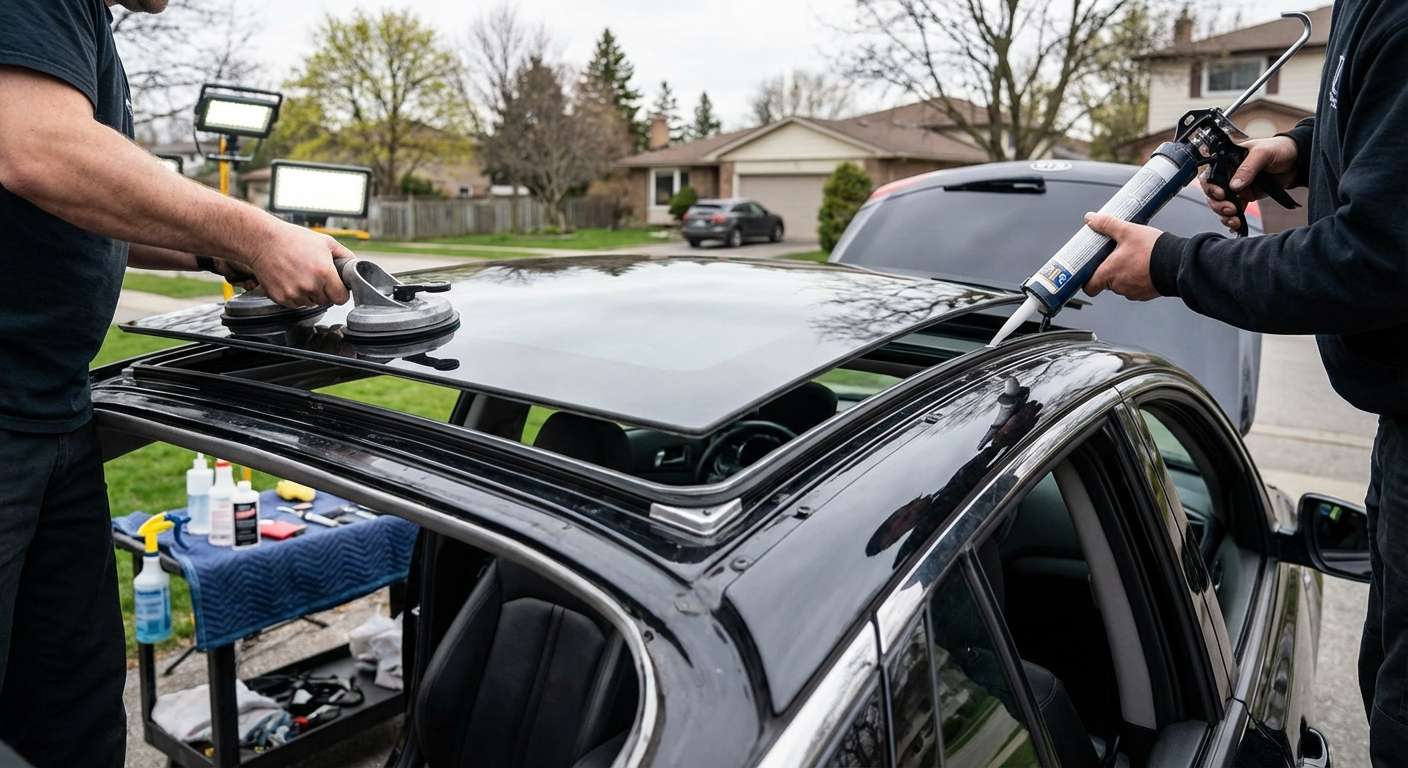
Whenever I replace one of these damaged roof panels, I use aftermarket glass supplied by manufacturers such as Pilkington, FYG, PGW, or XYG to restore the structural barrier without the dealership markups. Mechanically, the forward edge works alongside a pop-up fabric mesh wind deflector (part number 81611-2T000) that springs upward when the center section retracts backward. Directly underneath the assembly, a dual-roller motorized fabric sunshade (81660-2T00087) runs along internal side tracks to block sunlight from entering the passenger compartment.
Diagnosing Cabin Leaks and Mechanism Failures
Aside from sudden glass breakage, mechanical issues within the track system are common complaints on forum threads. The center sliding panel relies on side guide tracks that can bind if factory lubricant dries out or catches fine grit. When alignment slips, the drive motor strains against the cables, causing the glass to stop short or pop out of its track during auto-reverse cycles.
Interior moisture around the headliner or wet floor carpets usually traces back to the pan catch channels beneath the perimeter mouldings. Water is engineered to pass by the outer rubber seals and collect in an internal perimeter tray, which funnels liquid outward through corner drainage points. If these passages clog with pine needles or road silt, overflow dumps directly past the inner headliner border and down the cabin pillars.