Factory Trim Packages and Moulding Variations on the D-Pillar
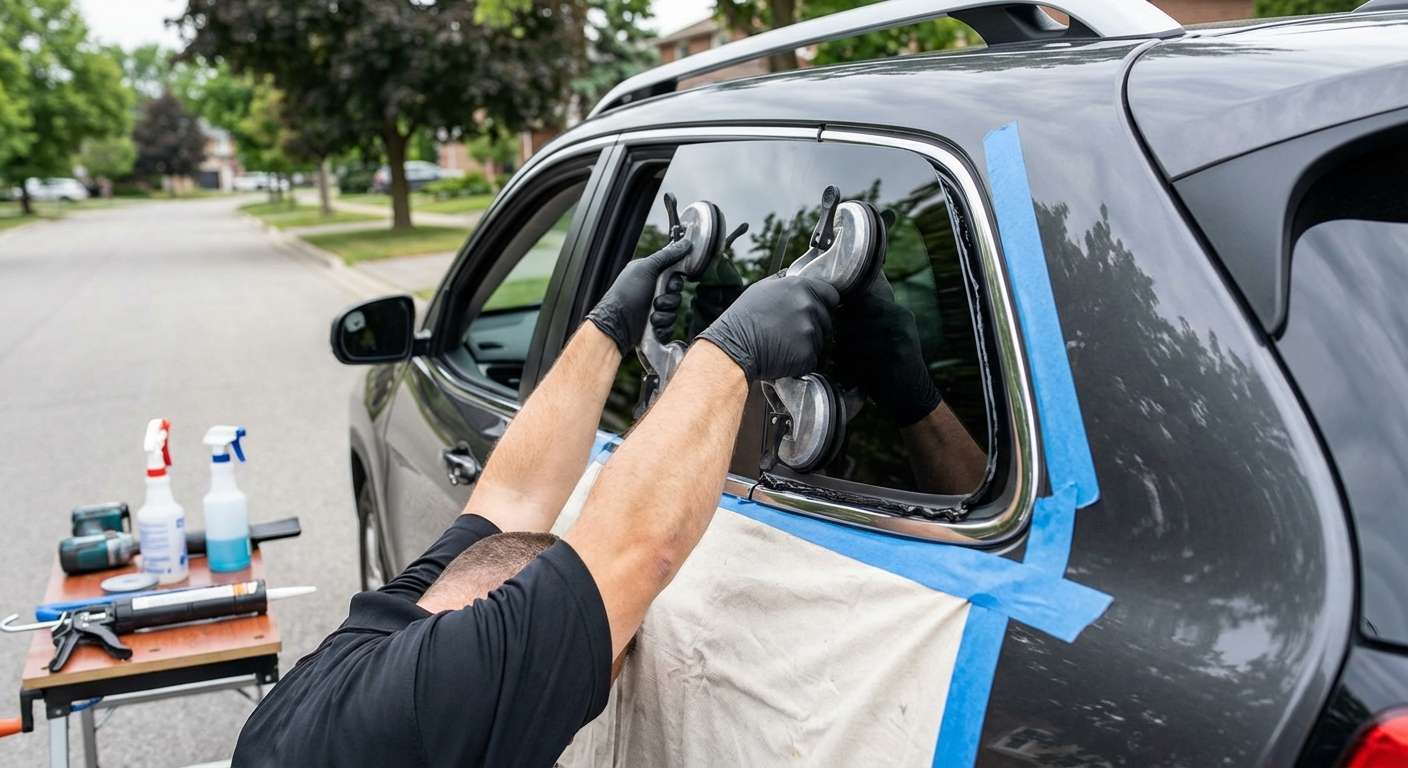
The rear quarter window on the Cherokee sits bonded directly to the unibody D-pillar, sealing the space between the rear passenger door frame and the power liftgate shut face. Replacing this glass requires identifying the exact perimeter trim finish that left the factory, because the exterior moulding is fully encapsulated onto the glass assembly rather than clipped on afterward. If an improper replacement unit is installed, the window line along the roof gutter will not match the rest of the vehicle.
Jeep split these encapsulated glass units primarily by aesthetic package and tint level. Luxury-oriented trims like the Limited and Overland carry bright chrome perimeter trim (Mopar reference 68224804AA for passenger side and 68224805AA for driver side on earlier model runs). In contrast, rugged or blacked-out editions like the Trailhawk and Altitude run a matte or gloss black moulding. The table below breaks down how these encapsulated quarter units are typically configured across the run.
| Trim Level | Encapsulated Moulding Style | Glass Privacy Tint | Integrated Antenna Feature |
|---|---|---|---|
| Trailhawk / Altitude | Textured or Gloss Black | 70% Solar Deep-Tint | Optional Diversity Grid |
| Limited / Overland | Bright Chrome | 70% Solar Deep-Tint | Diversity Grid Present |
| Sport / Latitude | Black Moulding | Solar Tint / Deep-Tint | Audio-Package Dependent |
Embedded Diversity Antennas and Interior Cargo Clearance
Unlike the liftgate window, the quarter glass on this vehicle contains no heated defroster grids. However, higher-tier audio systems route the AM/FM diversity radio antenna directly onto the inner surface of the rear quarter window. These fine, printed metallic lines act as secondary radio reception points. When replacing broken or shattered glass, the interior antenna lead must be cleanly decoupled without tearing the wiring pigtail connected to the vehicle's body harness.
Accessing the interior pinchweld and releasing the encapsulated locating studs means clearing out the cargo interior. I unbolt the rear seatbelt anchors and carefully pull back the hard plastic cargo quarter panels alongside the upper D-pillar interior garnish. Because I operate entirely on a mobile basis across Toronto and the GTA, I handle this interior teardown directly in your driveway or workplace parking spot before setting the replacement glass.
Resolving Cabin Whistles and Leak Paths
A recurring complaint on these vehicles involves a high-pitched wind whistle along the rear roof rail trim or damp carpet pooling beneath the rear spare tire tub. Because the quarter glass moulding forms the aerodynamic transition between the trailing edge of the door and the rear liftgate channel, any distortion in the encapsulated rubber creates turbulence at highway speeds. A forward leading edge that sits even two millimeters proud of the C-pillar frame will catch crosswinds and project noise into the rear passenger row.
Water intrusion typically traces back to gaps where the roof ditch meets the top corner of the quarter frame. The factory uses locating pins on the back of the glass encapsulation to set the height and depth within the unibody aperture. If these pins do not seat square into their sheet-metal receiver grommets, the moulding cannot compress evenly against the exterior paint, allowing runoff from the roof rails to track behind the trim and bypass the seal into the luggage area.





