Identifying Your Jaguar XF Windshield: Heated vs. Non-Heated Acoustic Glass
Determining the exact replacement glass for your car comes down to whether your front screen includes Jaguar's Quickclear defroster grid. Every factory glass on this model came equipped with an acoustic sound-dampening interlayer and rain/humidity sensing capabilities, so you do not have to worry about missing out on cabin quietness or automated wipers. The primary distinction lies entirely in the embedded micro-wires that clear winter frost.
You can verify which windshield you have without taking anything apart:
- Physical grid examination: Look closely at the windshield from outside the car under direct daylight. If you see thousands of tiny, vertically squiggled tungsten wires running through the center glass layer, you have the heated system. These fine wires can occasionally cause slight spiderweb-like optical diffraction around oncoming headlights at night.
- Climate control switch: Check your climate control stack below the central touchscreen. Models with the heated front screen have a dedicated button marked with a windshield icon containing wavy vertical heat lines, placed next to the standard rear defroster button.
- Heating performance check: If your car has the button but one side stays frosted in cold weather, your glass is still the heated version. The defroster operates on split left and right electrical busbars fed at the lower corners, and moisture can corrode the wiring harness plugs beneath the scuttle panel, killing half the grid.
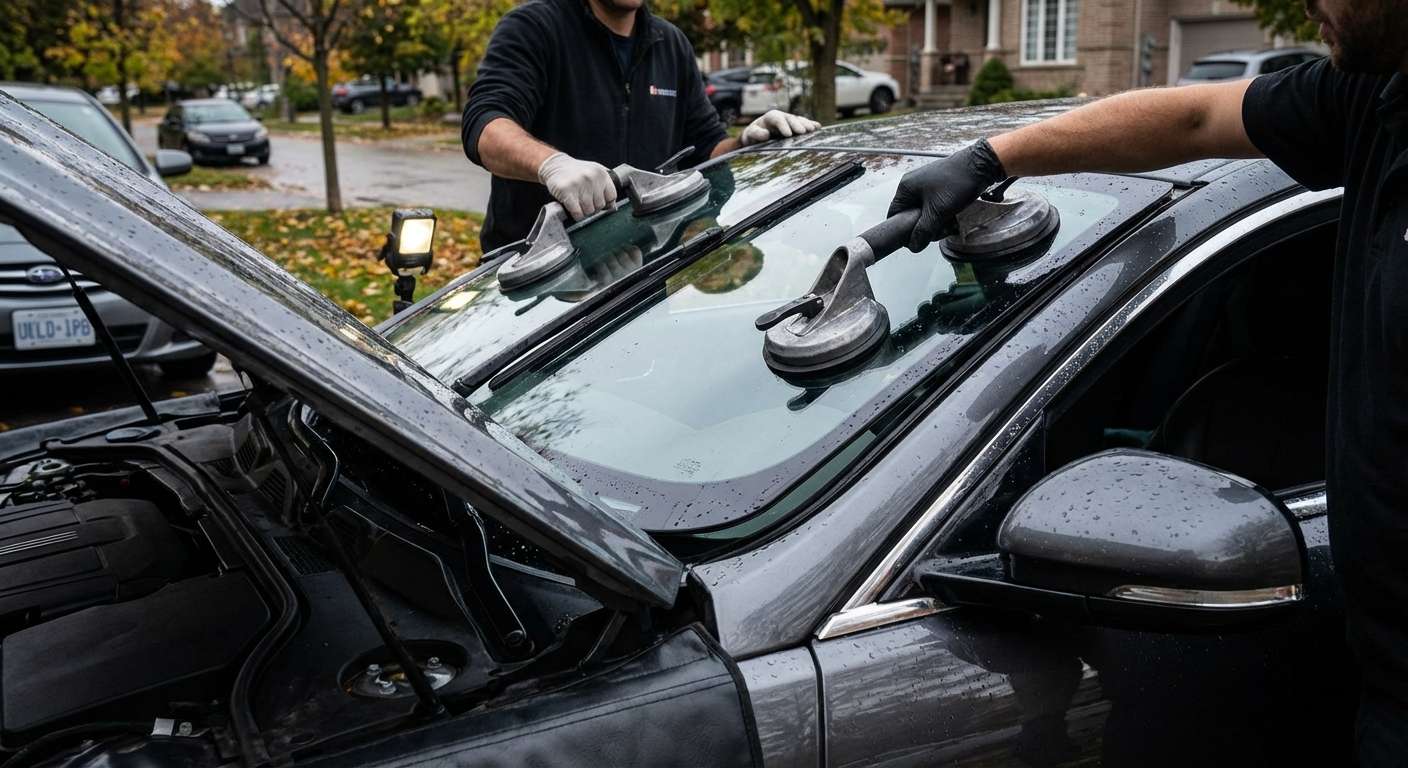
I operate entirely as a mobile service, bringing the replacement glass and tools directly to your home or workplace throughout Toronto and the GTA so your car stays parked while the work is done.
Glass Codes and Hardware Differences
When sourcing aftermarket replacement glass for the X250 body, the industry relies on standard NAGS part numbers that reflect the thermal and acoustic features of the vehicle.
| Glass Specification | NAGS Number | Eurocode | Dealer Reference Equivalents |
|---|---|---|---|
| Acoustic, Rain Sensor, Non-Heated | FW02942 | 4333AGAMOVZ2B | C2Z17109, C2Z23302 |
| Acoustic, Rain Sensor, Heated ("Quickclear") | FW02943 | 4333AGAHMVZ1B | C2Z28994 |
Both variants feature the lower ceramic blackout frit with a factory cutout for reading the dashboard VIN plate, along with an upper third-visor dot matrix around the rearview mirror to block sunlight between the sun shades.
Critical Trim and Sensor Considerations
Replacing the windshield on this car involves several trim pieces that require delicate handling to avoid common post-installation headaches.
The exterior A-pillar finisher mouldings flanking the sides of the glass are secured using brittle plastic slide-and-snap clips. If these mouldings are pulled carelessly, the internal clip channels snap, leaving the trim loose against the roofline at highway speeds.
At the base of the glass, the two-piece plastic cowl screen overlays the cabin fresh-air intake. If this scuttle panel is warped or its lower clips are improperly seated against the bottom edge of the new glass, water running off the windshield can bypass the drainage channels and drip straight into the passenger cabin footwell. On this model, footwell water intrusion can soak the Central Junction Box (CJB), leading to electrical faults throughout the vehicle.
Finally, the combined rain and humidity condensation sensor mounted behind the rearview mirror requires a completely bubble-free optical silicone gel pad against the glass bracket. Reusing an old, dry gel disc or allowing air pockets between the sensor face and the bracket will cause the automatic wipers to sweep intermittently on clear days or fail to activate when it rains.