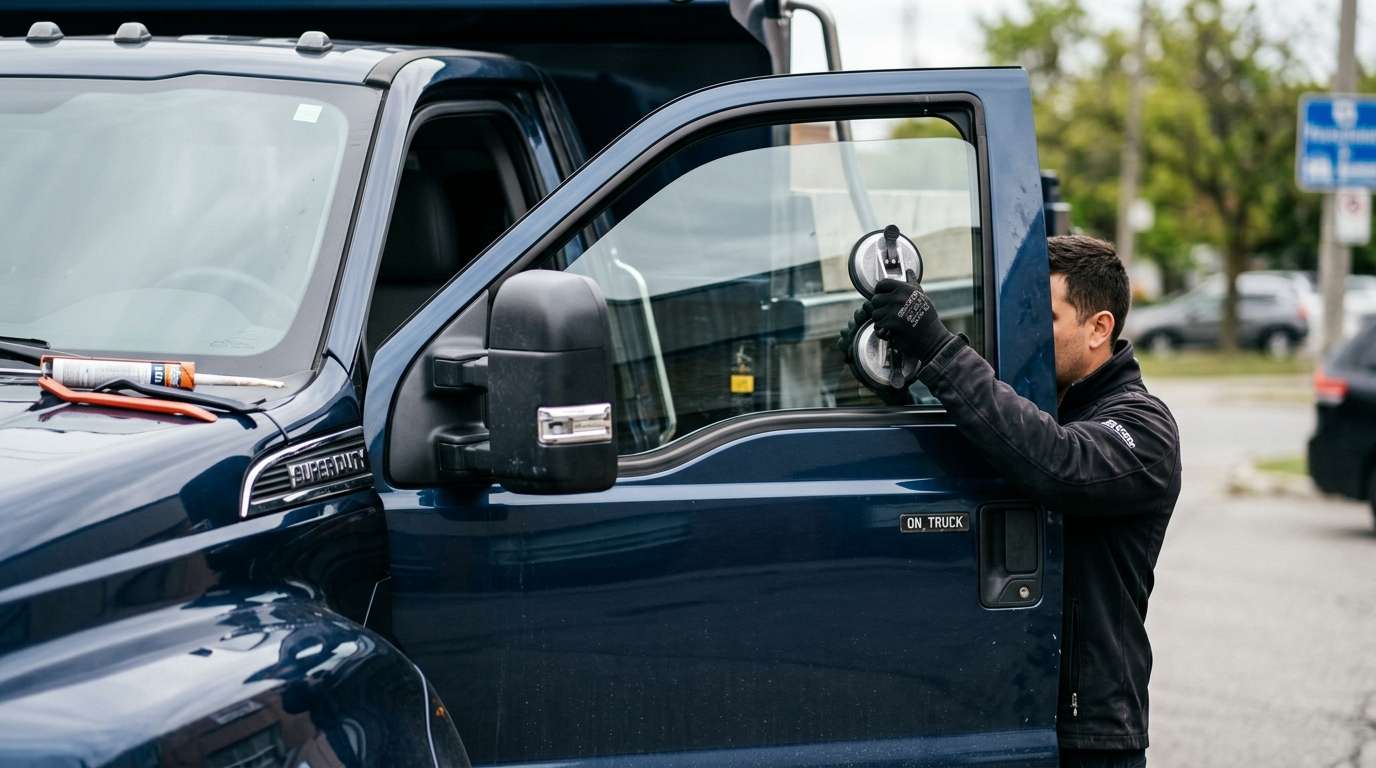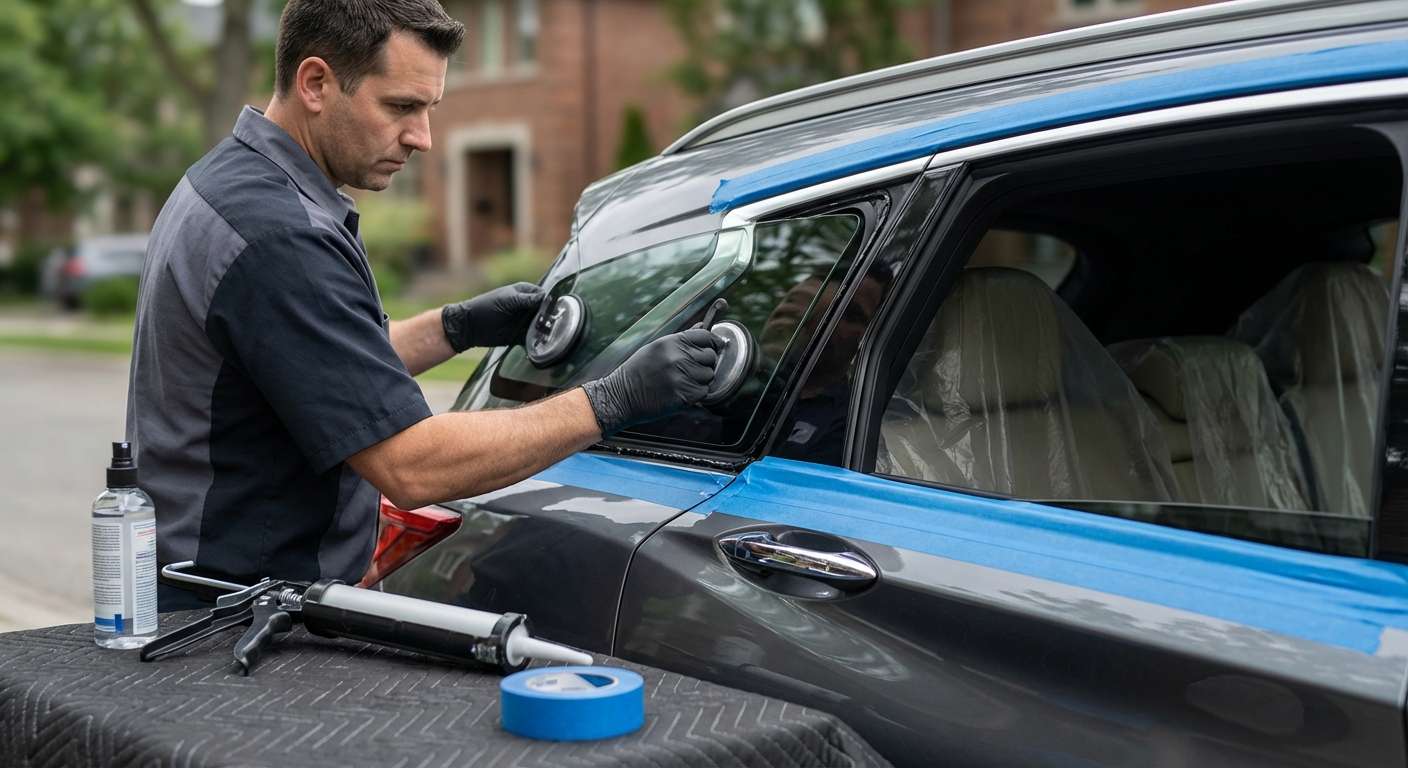
Pre-Installation Checks for the Infiniti QX50 Crescent D-Pillar Assembly
Matching the fixed rear quarter window on this luxury crossover requires inspecting the integrated trim assembly before any work begins. Built on Infiniti's J55 platform, the stationary side quarter glass fills the body aperture between the rear door frame's C-pillar and the rear liftgate seam. Because the factory engineered this panel as an encapsulated direct-glazed unit, aftermarket replacement glass comes with the exterior perimeter trim and polyurethane border already fused to the tempered glass slab. When unpacking NAGS part DQ12678 YPN for the passenger side or DQ12679 YPN for the driver side, I check that the integral factory locating clips are present and straight, as they govern mechanical alignment against the vehicle unibody.
The defining visual feature of this glass is Infiniti’s reverse crescent-cut arc. On standard trims including Pure, Luxe, Essential, Sensory, and Autograph, this moulding carries a bright chrome finish that must flow uninterrupted from the upper roof drip line down into the lower quarter belt moulding. When dispatching to clean up vandalism or accidental breakage, I generally pull up to your driveway roughly sixty minutes after you book your appointment so the exposed cargo compartment is not left open to weather. I verify immediately that the replacement panel matches the existing brightwork rather than a dark-finish trim variant, and that the pre-bonded rubber lip seal is free of tears or distortion along the tight D-pillar radius.
Critical Tolerances and Fitment Post-Installation
Once set into the unibody aperture, the quarter glass must align flush against adjacent sheet metal to avoid highway turbulence. The QX50 features a prominent rear quarter panel shoulder line directly beneath the glass, alongside interior luggage compartment side trim panels that clip close to the inner pinchweld. Any slight deviation in how the replacement sits causes wind noise or an audible air rush at cruising speeds, which owners frequently mistake for a faulty rear door seal.
- Chrome Arc Continuity: The forward edge must sit strictly parallel to the trailing edge of the rear passenger door frame, while the rear crescent curve must maintain an equal gap against the D-pillar sheet metal.
- Height Relative to the Moonroof Line: For vehicles outfitted with the panoramic sliding moonroof, the upper edge of the encapsulated moulding must tuck evenly beneath the roof rail channel without pinching the exterior garnish.
- Passive Glass Integrity: This unit does not house defroster grids, antenna lines, or rear wiper hardware. I confirm that no interior pillar garnishes contact the glass face internally, which prevents cabin creaks over rough pavement.
- Superseded Dealer Reference: The glass matches the profile of original dealer part numbers 83300-5NA0A and 83300-5NA0C (passenger side) to ensure the exterior depth matches the factory passenger-side counterpart exactly.
Does the replacement glass match the factory rear door tint?
Yes. The aftermarket replacement glass comes with standard dark solar privacy tint baked directly into the tempered safety glass, matching the optical density of the original rear passenger door windows and rear liftgate.
Why does the exterior chrome trim have to be replaced with the glass?
The bright crescent moulding is mechanically encapsulated into the perimeter of the glass during manufacturing. It cannot be cleanly detached or transferred from a damaged original panel without destroying the inner locking channels and weather seals.
Can broken quarter glass damage the interior luggage compartment trims?
When the tempered pane shatters, fragments fall behind the lower quarter interior garnish and the inner wheelhouse sound deadening. I pull the perimeter trim back slightly to clear out loose glass debris so it does not rattle inside the quarter panel wall.