Framed Door Construction on the Y50 Platform
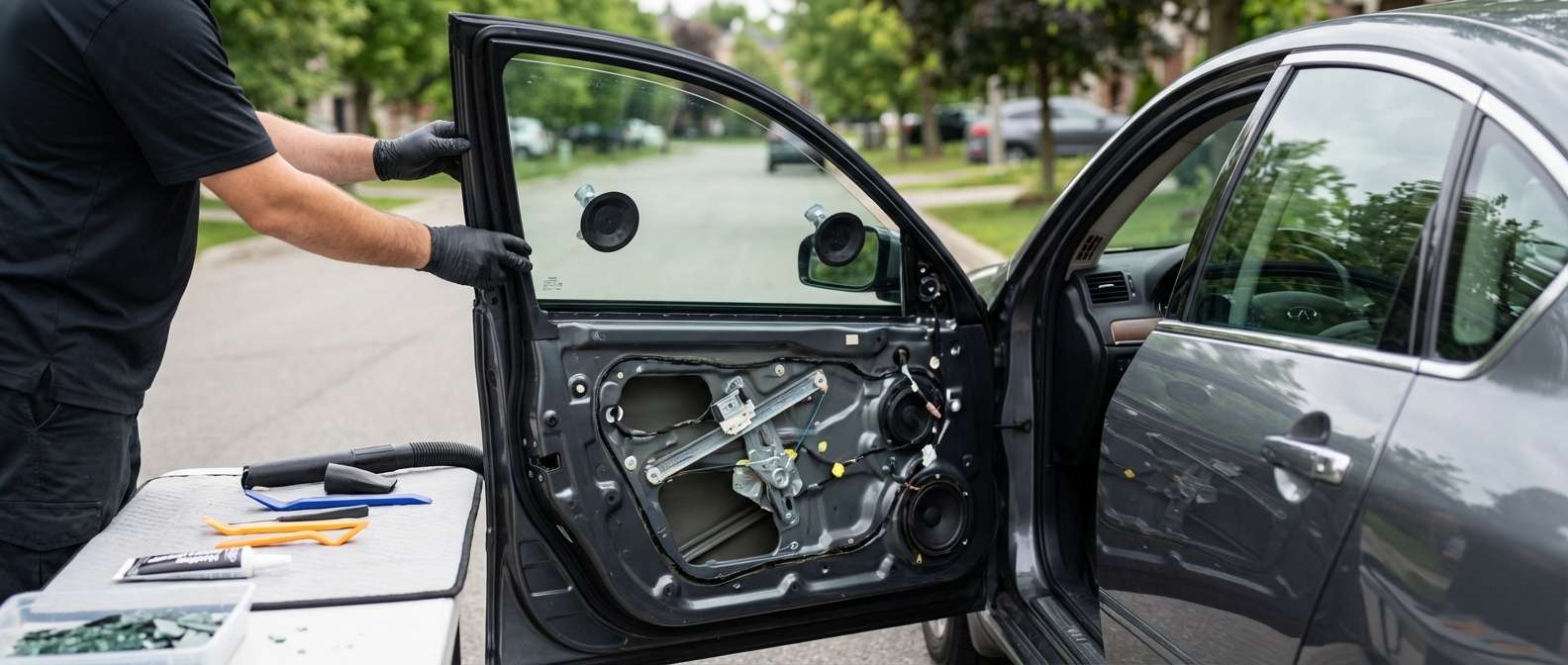
Unlike the frameless glass found on the contemporary G35 and G37 coupes, the side glass on this luxury sedan sits within a rigid, full-perimeter steel door frame. The pane travels along an enclosed rubber run channel and drops between an outer chrome belt waist molding and an inner felt weatherstrip scraper. The glass itself is green solar-tinted tempered safety glass engineered to filter UV radiation without needing embedded antenna traces, heating grids, or light-sensor hardware, which Nissan housed elsewhere on the Y50 body.
At the base of the movable pane, two bolt-in clamp brackets attach directly to the carrier plate of the cable-and-drum window regulator. Because the mechanism uses steel drive cables routed around a plastic spool behind an inner metal module panel, age and tension often cause the cables to fray, bind, or snap. When this happens, the glass will either cock sideways in the run channels or drop straight down into the bottom of the door cavity.
| Glass Position | OEM Reference (Early / Updated) | Mounting Design |
|---|---|---|
| Front Right (Passenger) | 80300-EH100 / 80300-EJ80A | Dual-clamp carrier mount |
| Front Left (Driver) | 80301-EH100 / 80301-EJ80A | Dual-clamp carrier mount |
| Rear Right | 82300-EH100 / 82300-EJ80A | Dual-clamp, division bar guided |
| Rear Left | 82301-EH100 / 82301-EJ80A | Dual-clamp, division bar guided |
Rear Split-Pane Assembly and Track Alignment
The rear passenger doors are divided into two distinct sections: the operational drop glass and a stationary triangular rear quarter glass. Separating the two is an upright metal division bar that acts as both the structural divider and the rear vertical guide track for the main glass pane. Road grit and dried wax frequently collect inside this division channel, creating excess drag on the regulator motor.
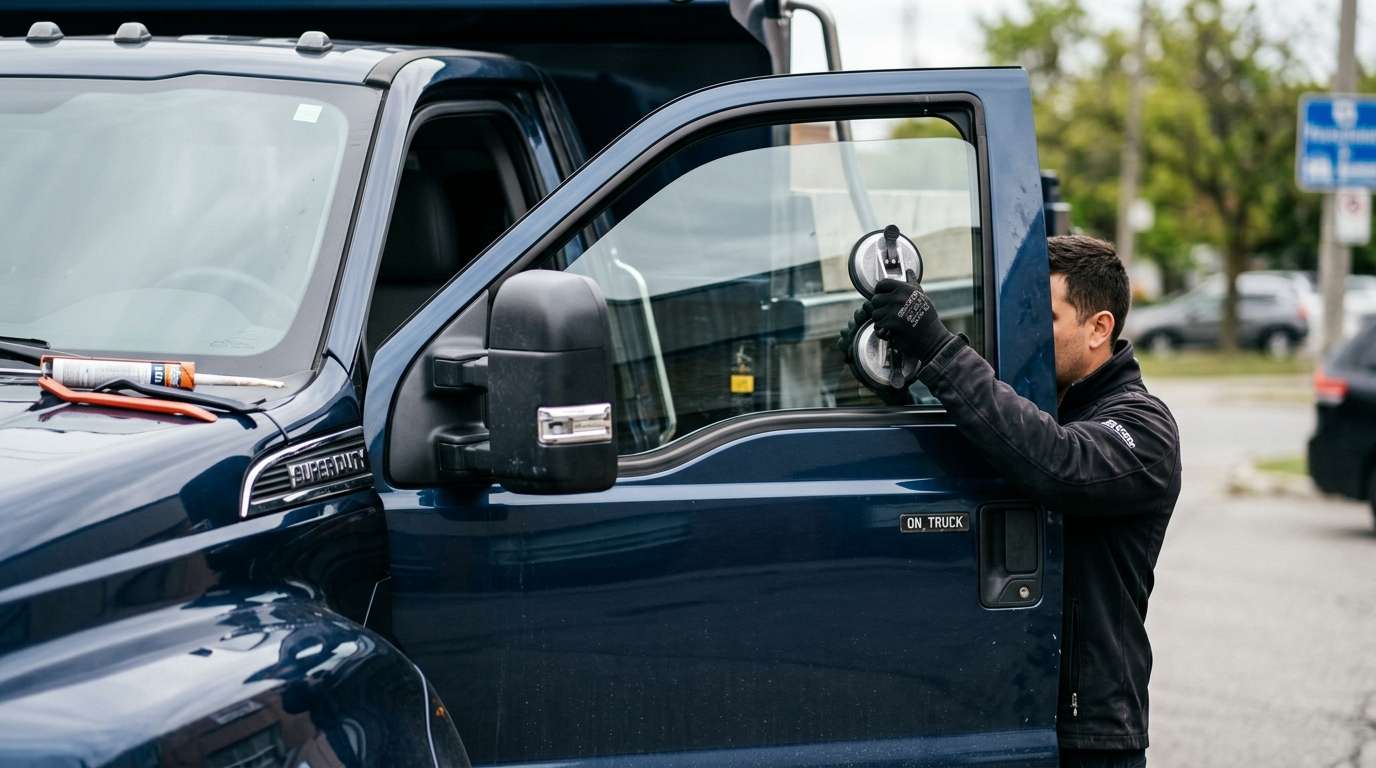
When side glass shatters on an M35x or M45 Sport, leaving the cabin exposed to weather and theft, I normally reach the vehicle within roughly an hour of a confirmed booking to clear the inner door panel and fit the replacement pane. Ensuring the glass slides cleanly requires precise alignment against the vertical division bar before tightening the regulator clamps. If the bar is misaligned by even a fraction of an inch during glass replacement, the motor will bind halfway through its upward sweep.
Limit-Switch Initialization and Anti-Pinch Operation
Every side window on this platform incorporates one-touch auto-up and auto-down functionality tied to an anti-pinch safety reverse system. The encoder inside the window motor constantly reads the rotational resistance of the drive gear. If the run channels harden with age, or if a new glass pane is clamped into the regulator without re-indexing the system, the motor interprets the slight increase in mechanical resistance as an obstruction, causing the glass to stop and bounce back down several inches just as it reaches the top frame.
Resolving this requires accessing the reset switch located directly on the motor housing behind the door trim. The limit-switch reset must be performed anytime the glass is detached from the regulator or when the master power switch module loses its baseline travel memory:
- Raise the new glass to the top position manually using the door switch.
- Depress and hold the reset button on the motor body while running the glass down to its lowest stop.
- Release the reset button and operate the switch to drive the glass back up until it seats fully into the upper rubber run channel.
- Verify that the one-touch auto-up stroke seals tightly against the upper frame without triggering the anti-pinch reverse cycle.