Identifying the Rear Window on Your 2007–2010 Elantra
Determining the correct rear window for this car comes down to verifying the body style, because Hyundai sold two completely different vehicles under the same nameplate during these years. The four-door sedan uses a bonded, stationary backlite, whereas the Elantra Touring—introduced for 2009—is a five-door wagon built on the overseas i30 CW platform with an upright liftgate glass and a rear wiper hole. If your car has a traditional trunk lid, an enclosed rear parcel package tray, and no rear wiper arm, you have the standard sedan that takes the fixed rear glass assembly.
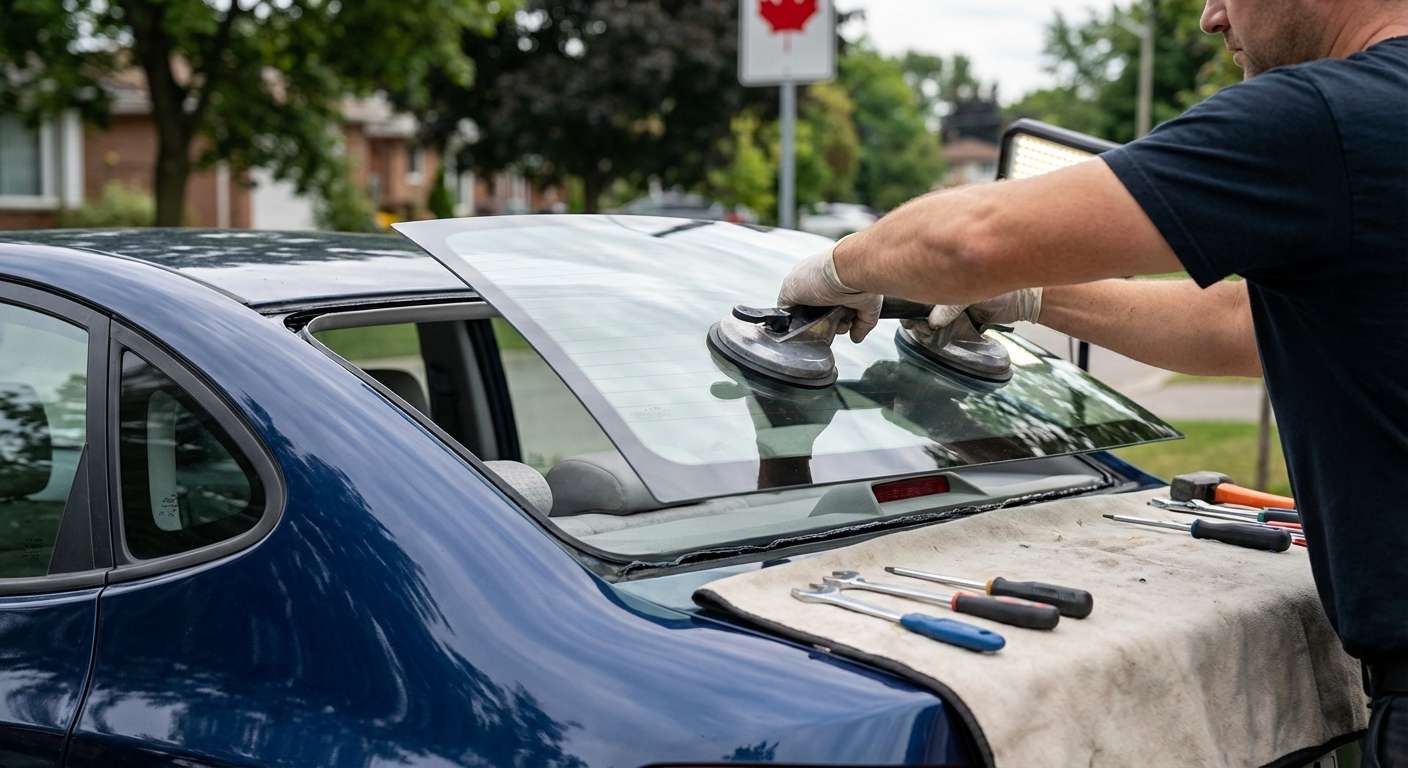
On the sedan, the rear glass sits flush between the C-pillar interior trim pieces and extends down toward the trunk line. At the base of the window, you will notice an unprinted, clear area in the black ceramic frit border. This cutout is specifically aligned with the parcel-shelf-mounted Center High-Mounted Stop Lamp (CHMSL). Because the third brake light sits on the interior package tray rather than in the trunk lid or against the roof headliner, the glass must feature this exact frit window so the brake light shines through unobstructed.
| Component / Feature | Sedan (HD) Specification | Touring Wagon (i30 CW) |
|---|---|---|
| Body Fitment | Fixed 4-door notchback | Hinged 5-door liftgate |
| Rear Wiper Provision | None (smooth glass) | Hole drilled for wiper motor |
| Third Brake Light | Frit cutout for shelf CHMSL | Integrated into upper spoiler |
| AM/FM Antenna | Embedded in rear glass grid | External roof-mounted whip |
Integrated Grid Traces and Factory Hardware Details
The backlite on the sedan does double duty: it heats the glass and pulls in your radio signal. Hyundai eliminated the external rod antenna on these sedans by integrating the AM/FM antenna leads directly into the upper section of the orange defroster grid on the interior glass surface. If someone used a razor blade or an aggressive scraper to peel off old window tint, they often sliced through these thin copper lines. That damage creates cold horizontal dead zones across the window when the defroster timer runs, and it can introduce severe radio static whenever you turn the rear defrost on.
When I replace one of these rear windows, I fit aftermarket glass sourced from major glassmakers like PGW, Pilkington, FYG, or XYG rather than paying dealer markups. The aftermarket glass matches the factory green solar tint and includes the factory-style grid configuration to preserve both radio reception and defogging performance.
The glass perimeter relies on specific mounting hardware to seat correctly against the body frame:
- Outer Perimeter Moulding: The glass edge is surrounded by an exterior rubber reveal moulding (original Hyundai part 87131-2H000) that finishes the gap between the glass and the painted roof pillars.
- Lower Glass Spacers: Two mechanical glass stoppers (part 87114-3K000) sit along the lower pinchweld shelf near the trunk opening to hold the heavy tempered glass at the correct height while the sealant sets.
- Internal Dam Pads: The perimeter uses foam dam spacers (part 86114-3D000) around the border to maintain uniform spacing between the glass frit and the vehicle body.
Part Number Transitions and Trim Consistency
Across the GLS, SE, and Limited trim levels from 2007 through 2010, the rear glass shape and electrical connections remained consistent. Hyundai updated their internal catalog from the original part number 87110-2H110 to the revised 87110-2H130, but the physical glass perimeter and defroster terminal locations did not alter. As long as your car is an HD sedan, the glass geometry matches across all four model years.