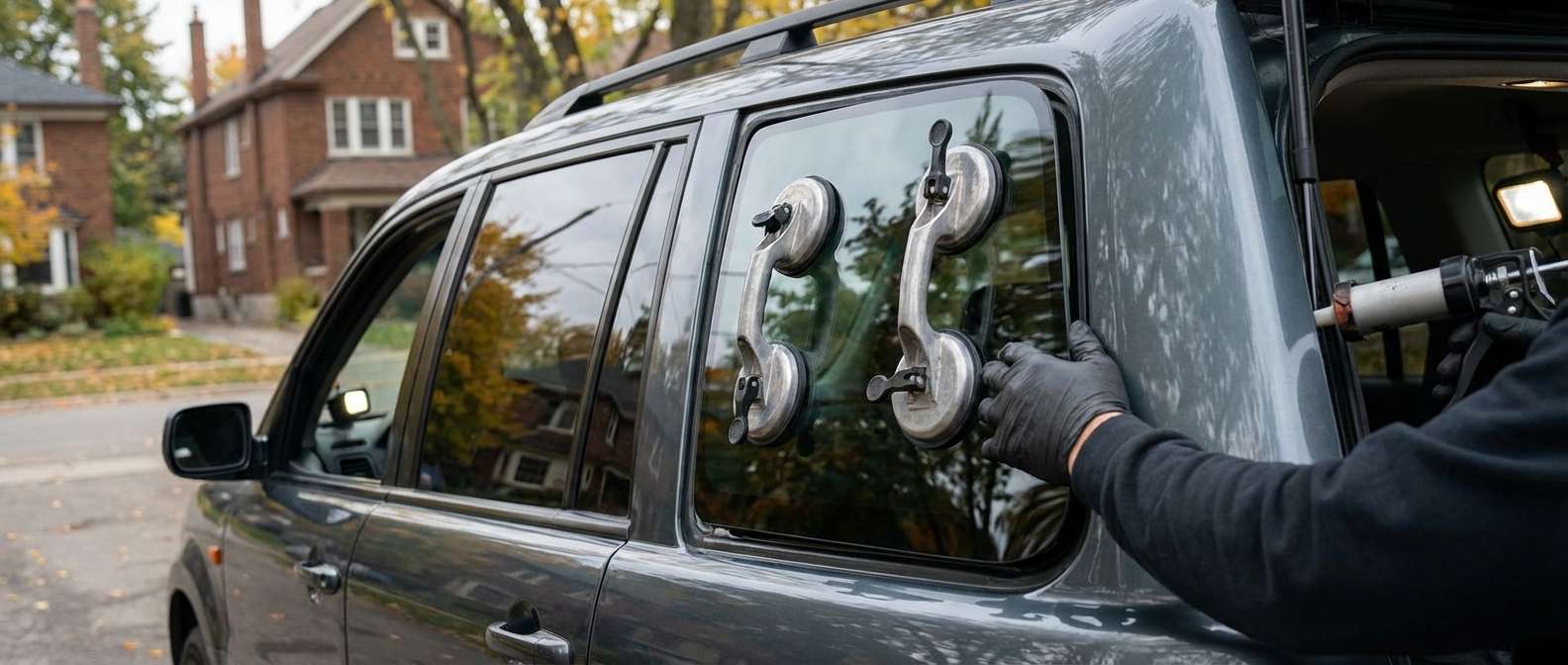
Left-Side Antenna Damage and Break-Ins on Pilot Cargo Glass
Replacing the stationary cargo glass on this SUV is almost always prompted by one of two scenarios: smash-and-grab break-ins targeting the third-row trunk area, or ruined AM/FM radio reception. While the passenger-side panel is standard tinted safety glass, the driver-side panel incorporates printed radio antenna lines across the inner surface. When owners attempt to scrape off bubbled aftermarket window tint with a razor, or when cargo shifts against the inside of the left glass, those printed conductor traces get severed. Once broken, reception drops completely on local stations, and replacing the driver-side pane is the only permanent remedy to restore the factory antenna circuit.
The stationary rear quarter windows bridge the space between the rear C-pillar and D-pillar trim, sitting just ahead of the liftgate door gap and directly below the roof drip edge. Both sides come from the factory with deep privacy tint embedded in the tempered glass, along with a pre-attached encapsulated outer perimeter moulding that seals flush against the quarter panel sheet metal. The glass does not feature heating grids, rear defrosters, or wash-wipe components, keeping the glass structure focused solely on cargo privacy and radio signal pickup.
Driver and Passenger Quarter Glass Differences
Because the left pane contains the radio harness hookups while the right pane is purely passive glass, the replacement parts are not interchangeable across sides:
- Driver Side (Left): NAGS part number FQ21715 (listed as FQ21715YPN or FQ21715YPY). Features the embedded printed antenna traces with quick-connect electrical tabs along the interior edge.
- Passenger Side (Right): NAGS part number FQ21714. Standard encapsulated privacy glass without internal electrical grids.
Interior teardown requires unfastening the third-row seatbelt anchors and loosening the rear cargo-area lower side panels along with the upper D-pillar plastic trim. I handle this repair purely as a mobile service, travelling directly to your driveway or office parking spot across Toronto and the surrounding GTA so you avoid driving with an open, taped-up cargo window. Because shattered tempered glass scatters everywhere inside the rear cabin, clearing the interior quarter trim cavity and vacuuming fragments out of the seat folding wells is a necessary part of the job before the replacement glass is bonded to the vehicle aperture.
Water Leaks Behind the Quarter Trim
Owners often suspect the quarter glass urethane seal has failed when they find damp carpet in the rear trunk corners or inside the spare tire tools compartment. On this platform, wet cargo trim is seldom caused by adhesive failure around the glass frame itself. Instead, the factory roof seam sealer located beneath the black roof rack ditch moulding hairline-cracks with age. Water seeps into the roof seam above the C-pillar, runs down the inner metal structure behind the interior trim panels, and puddles at the base of the quarter glass. I inspect this seam area whenever replacing broken glass on these vehicles to ensure genuine body leaks are identified rather than blamed on the stationary window seal.
Why did my radio stop picking up stations after removing old window tint?
The driver-side quarter glass carries the main AM/FM radio antenna printed on its interior face. Scrapers or blades used to strip tint film easily slice these fine wire lines, breaking the circuit to the head unit and killing reception.
Can I install a passenger-side glass on the driver side to save time?
No. The left and right quarter panels are mirror opposites in shape, and only the driver-side unit (FQ21715) provides the printed wire grid and terminal clips required to connect your radio antenna harness.
Does this quarter glass have a defroster grid?
No. Although the orange lines on the driver-side quarter glass look like rear defogger elements, they function exclusively as the vehicle radio antenna and generate no heat.





