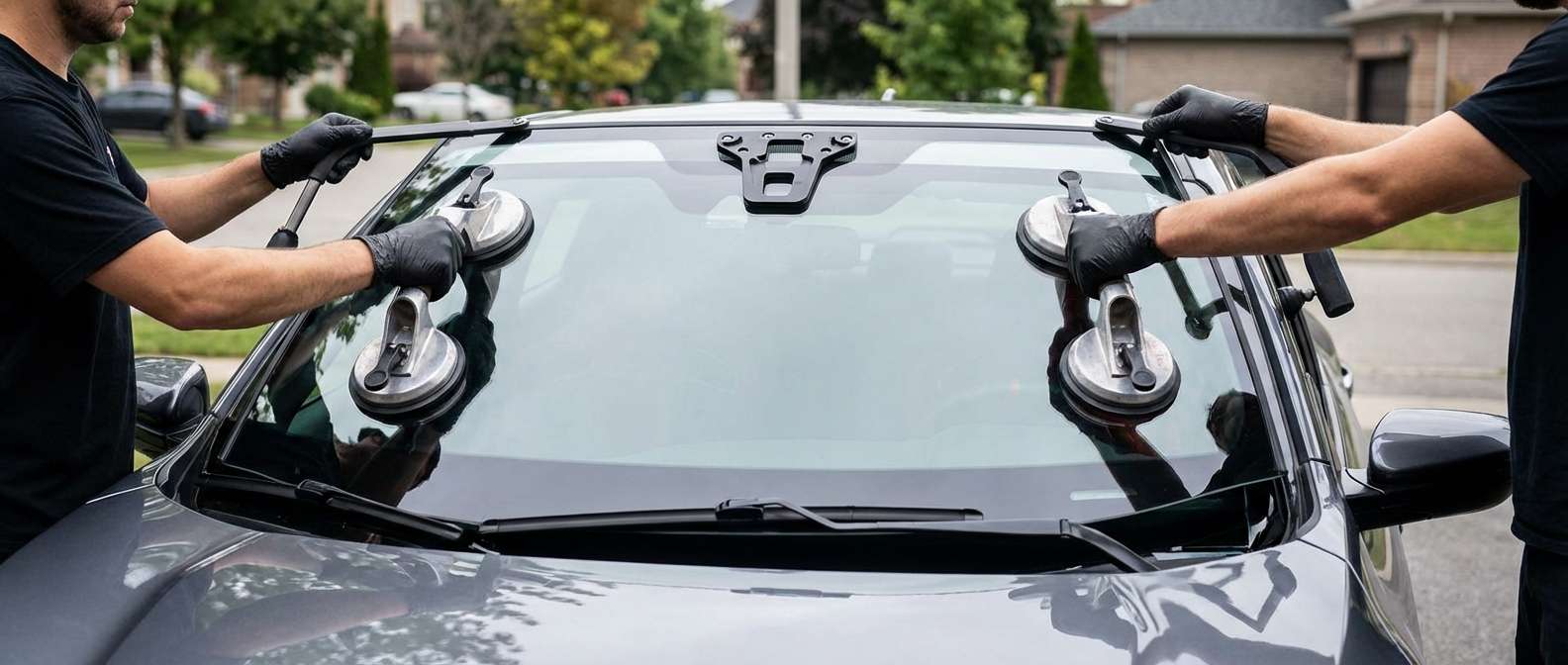
Perimeter Frit Fractures and Road Debris Impact Patterns
Most broken glass I pull off this vehicle displays a distinct failure pattern: tiny rock chips struck near the outer edge rapidly snake across the entire view area. Because the perimeter ceramic frit band sits right over the structural bond line, torsional stress from the body transfers straight into edge chips, turning an ignorable speck into a horizontal runner overnight. The steep rake of the glass deflects direct blows better than upright truck screens, yet stones bouncing off the low front hood tend to pepper the lower third right where the wiper defrost area and bottom blackouts sit.
Thermal shock makes these edge cracks run instantly during winter defrost cycles. When hot air shoots up through the defrost vents against freezing laminated glass, the sharp temperature contrast between the center pane and the cold urethane-anchored perimeter causes fractures to creep past the A-pillars. Road gravel thrown from highway traffic also tends to concentrate along the driver's side line of sight, creating dense clusters of sub-surface pits that scatter oncoming headlight glare long before an actual crack develops.
Hardware Variation Across Coupe, Sedan, and Hatchback Trims
Selecting replacement glass for this vehicle requires matching the exact trim options, because the front glass changed significantly between 2016 and 2021. Base LX and DX models without camera-based driver assistance use bare solar glass, categorized under NAGS number FW04260 (matching dealer baseline reference 73111-TBA-A01). When Honda made the monocular Honda Sensing camera standard equipment for the 2019 refresh, the glass shifted to FW04316, which incorporates a factory-bonded bracket directly onto the inner ceramic frit to house the forward camera assembly behind the rearview mirror.
Touring editions complicate matching further by adding an integrated gel-pack bracket for automatic rain-sensing wipers alongside the camera mount, covered under NAGS FW04317 or factory reference 73111-TBC-A02. Sound insulation is another major dividing line. Trims like the EX-L and Touring depend on an acoustic vinyl interlayer within the laminated sandwich to suppress cabin turbulence and 1.5-liter engine drone, whereas standard non-acoustic replacement sheets omit this noise-dampening core. Swindon-built five-door hatchbacks carry distinct glass curvature and unique molding positions under dealer number 73111-TGG-306, meaning Hatchback windshields will not seat correctly into Sedan or Coupe apertures.
Trim Fasteners, Water Retention, and Perimeter Moldings
Every replacement requires stripping down trim components that cannot be safely salvaged. The side and upper perimeter reveal moldings, factory referenced under 73125-TBA-A01, utilize one-time snap-in locking tabs that distort and shear upon removal. Reusing deformed exterior trim allows highway air to catch the rubber lip, generating noticeable wind whistles at speed or letting channel water bypass the outer water deflector tracks.
Below the wiper line, the bottom edge of the windshield docks into an integrated plastic bottom retainer strip, part 73151-TET-H01, hidden beneath the interlocking two-piece plastic cowl grille. Whenever I replace this windshield, I cover all my labor with a lifetime workmanship warranty and include a full year of warranty coverage on the aftermarket glass itself. The wiper arms must be pulled and the cowl clips disengaged to access this channel; leaving the bottom retainer unseated or misaligned causes rainwater draining from the windshield to miss the under-hood drainage troughs, risking cabin water leaks through the cabin air intake box behind the firewall.





